
from Men's Gear

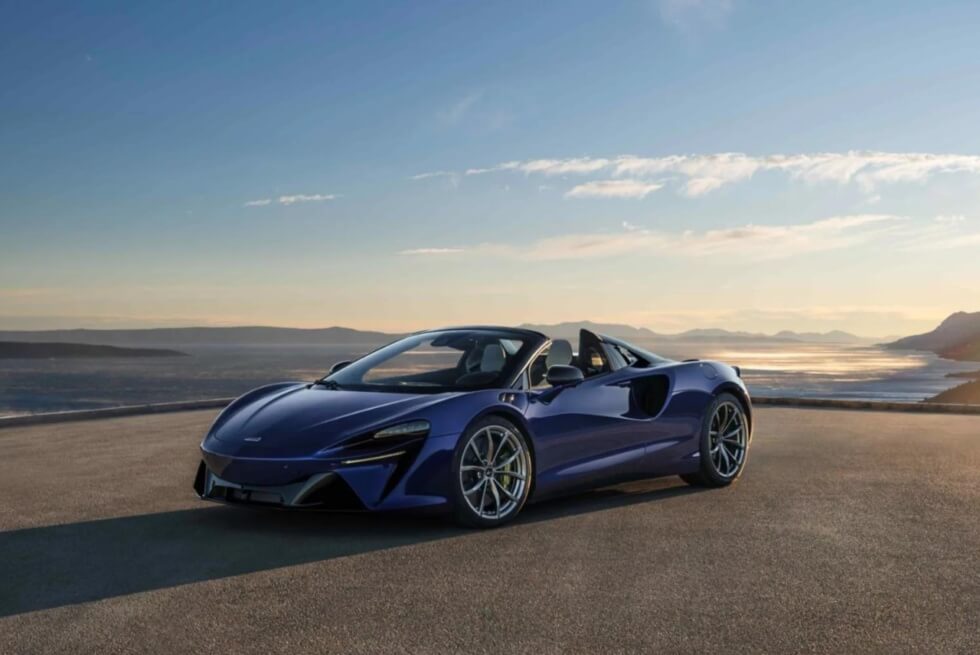



The automotive industry is rapidly changing due to emerging technologies like electrification, autonomy, and connectivity. But, despite government support and growing economies of scale, these technologies remain rather expensive to develop and commercialise. Not only that, battery electric vehicles (BEVs) have low entry barriers, making the car business a lot more difficult, even for luxury manufacturers.
Needless to say, brand differentiation becomes critical in such situations, which in turn necessitates a greater emphasis on design, aesthetics, and visual appeal by the automakers. “Design works. Because it translates what a brand is at its core—where it comes from, where it’s going, and what makes it unique,” said Michael Mauer, Head of Volkswagen Group Design. “People automatically relate to a brand through design because it communicates with them as an emotional language.”

VW Group and other European carmakers are, of course, well-recognised for their design roots, having produced icons such as the Porsche 911, the Jaguar E-Type, the Lamborghini Miura, and the BMW Z8. Mauer himself led the Porsche team that won the coveted Red Dot: Design Team of the Year award in 2012. Meanwhile, his counterparts at Ferrari won the same accolade under Flavio Manzoni in 2019. Besides, Ferrari has won 26 Red Dot awards between 2015 and 2023, more than any other automaker.
What has proven to be particularly effective in the designs of European carmakers is their consistency. For example, the Porsche 911’s basic structure hasn’t changed much through the years. Meanwhile, the kidney grille has been a feature of BMW since 1933. And Ferrari’s motorsport DNA is generally reflected by the red color. Without such visual cues, these brands would have struggled to develop a unique character.

However, highlighting Europe’s aesthetic excellence does not imply that automakers from other regions are not coming up with memorable designs.
In fact, some vehicles from American and Chinese upstarts, such as the Tesla Model 3 and the NIO ET7, perfectly embody the sleek, minimalistic styling that buyers expect from high-tech luxury these days (thanks to Silicon Valley and Apple). And these firms have won plenty of plaudits for their work, too. The Model 3 was Automobile magazine’s Design of the Year in 2018 and received an impressive 4.77 (out of 5) rating in Bloomberg’s Tesla Owners Survey. Similarly, the NIO ET7 won the Red Dot Product Design award in 2021.

While these entrants typically differentiate themselves via innovation or software, they understand the value of design in getting consumer attention and visibility. “Design is not an expense. Design is a fundamental investment for the growth of any company,” said Javier Verdura, Tesla’s Director of Product Design, in an interview with GeneXus. “I strongly believe that, without design, a company can’t move forward nowadays. What is offered to consumers has to be well thought out and carefully designed and must provide a pleasant experience.”
Having said that, Silicon Valley’s obsession with sophisticated minimalism did not deter Tesla from taking a bold and dramatic approach with the Cybertruck. The USD 60,000 pickup’s futuristic styling is polarizing and almost ostentatious, but it perhaps supports the notion that high-end brands are not supposed to appeal to everyone.
Incidentally, Tesla’s rival Lexus too had a similar idea in mind when it came up with the “Spindle Grille” over a decade ago. The conspicuous front fascia of the company’s cars alienated many customers, however, Toyota was eager to give its luxury marque a stronger personality after years of being criticised for “bland” design.

Such a strategy may not always work, but Lexus didn’t make design its core proposition anyway. Instead, that has usually been quality and durability. The Japanese brand was placed first in both the J.D. Power Vehicle Dependability Study and the Consumer Reports Reliability Rankings. A more attractive design would undoubtedly aid in competing with the German establishment, but it is not going to take away the company’s focus from the more important aspects of product development.
After all, aesthetics can only take you so far. Over the years, many car companies have thrived in design, but their growth has been restrained because of struggles in other departments.
Case in point: Jaguar Land Rover. Though aesthetically alluring, JLR’s vehicles don’t exactly have a good reputation for quality, and its previous CEO, Thierry Bollore, said the company was losing out on 100,000 sales because of that. “The dissatisfaction of our customers was detrimental to our natural volume,” he observed.

Similarly, JLR’s compatriot Aston Martin has consistently produced exquisite supercars, but its market cap is less than USD 2 billion, whereas competitor Ferrari is valued at over USD 75 billion. It is due, in part, to the fact that Aston Martin has been somewhat “over-defined by James Bond” and lacks the racing pedigree of its Italian counterpart.

Make no mistake – design and aesthetics do matter. Especially in the luxury market, where they often persuade customers to spend far beyond the car’s functional value. But visual appeal is meaningless if there is not enough substance to back it up. And car companies that lose sight of that will find it difficult to stay relevant in the long run.
For more on the latest in luxury automotive reads, click here.
The post Does Great Design Lead to Great Automotive Brands? appeared first on LUXUO.