
from Men's Gear
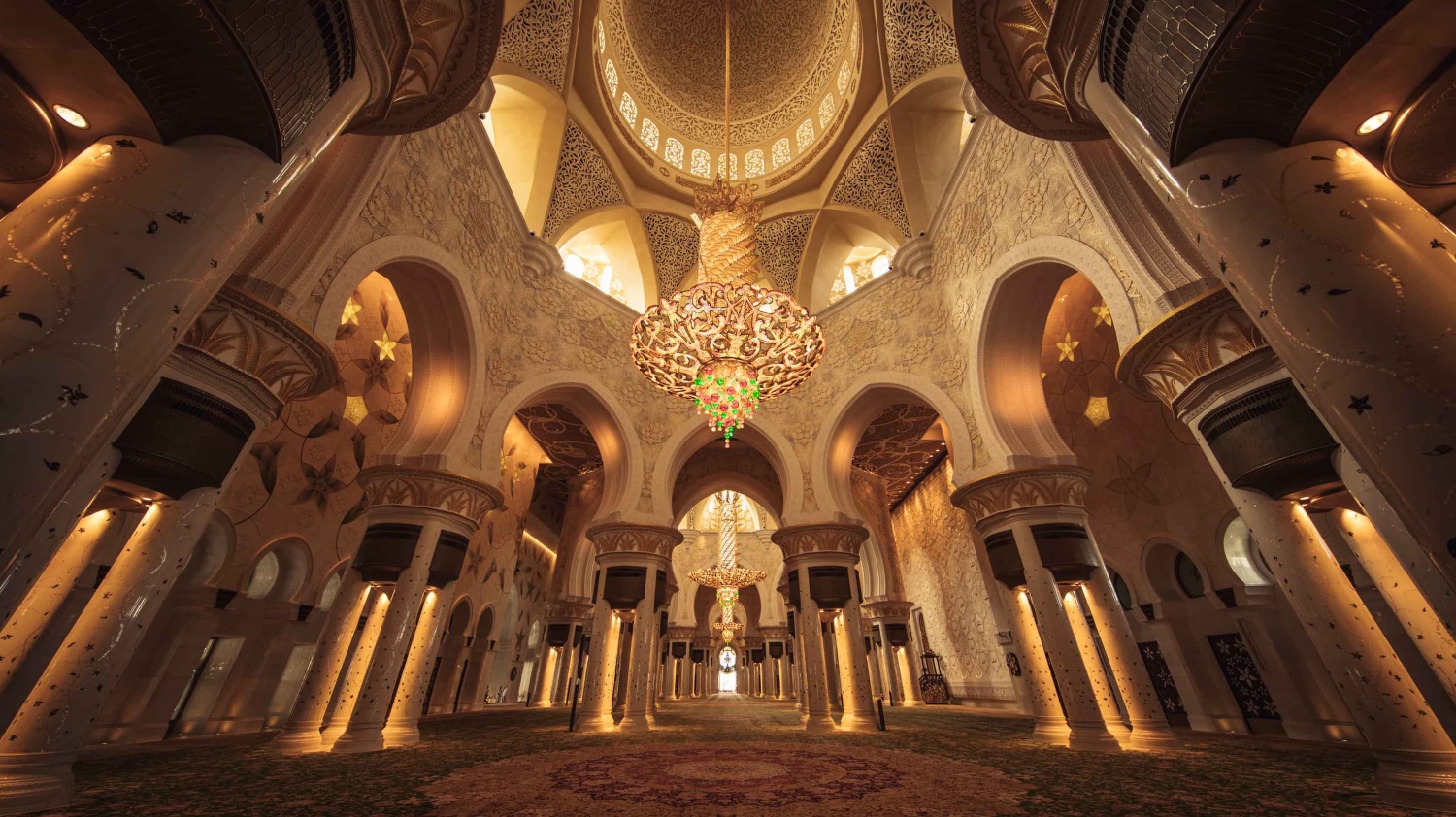
Abu Dhabi’s cultural ambitions are approaching a defining moment. On 11 December 2026, Guggenheim Abu Dhabi is scheduled to open on Saadiyat Island, adding one of the world’s most recognisable museum names to a cultural district that already includes Louvre Abu Dhabi, teamLab Phenomena Abu Dhabi, Natural History Museum Abu Dhabi and Zayed National Museum.
Taken individually, they are major cultural institutions. Together, they reveal something more consequential that Abu Dhabi is no longer merely investing in culture as an extension of wealth and tourism. It is attempting to establish cultural authority of its own.
For decades, the capital of the United Arab Emirates was most readily associated with oil wealth, monumental architecture and luxury. Today, museums, heritage institutions and cultural programming are becoming equally important to how the emirate presents itself internationally.
The shift is critical because culture offers something wealth alone cannot guarantee: legitimacy, memory and influence that can outlast an economic cycle.
Saadiyat Cultural District is the clearest expression of that ambition. Louvre Abu Dhabi provided the first major international statement when it opened in 2017. Designed by Jean Nouvel, the museum remains one of Abu Dhabi’s most recognisable pieces of architecture, its vast geometric dome filtering sunlight into what has become known as its “rain of light”.
Its significance, however, has always extended beyond the building.
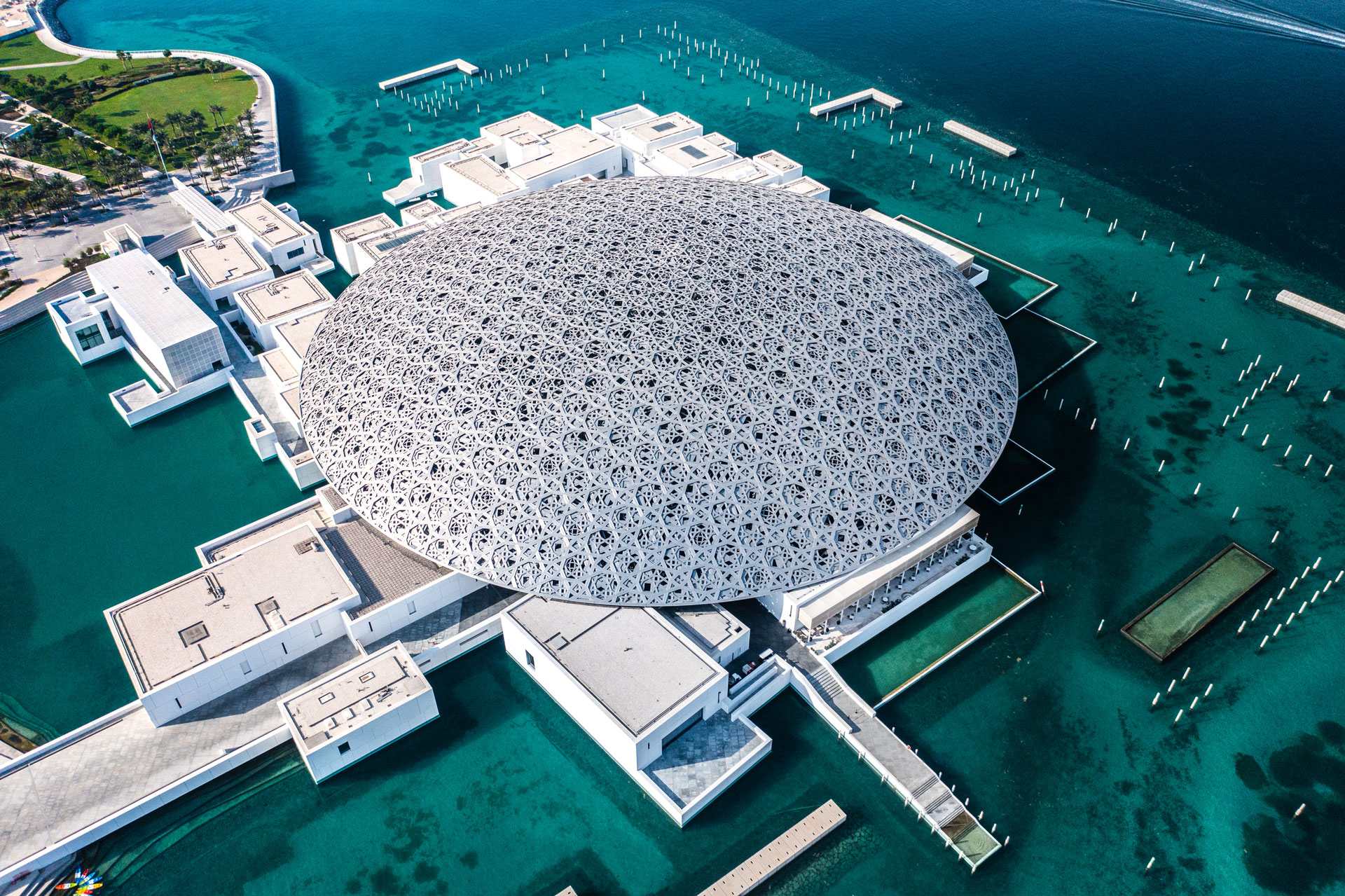
Louvre Abu Dhabi was conceived as the Arab world’s first universal museum, presenting objects and artworks across civilisations rather than organising history strictly by geography. Its underlying proposition — that cultures have developed through exchange as much as isolation — established an intellectual direction that would later become increasingly visible across Saadiyat.
The museum’s relationship with France also gave Abu Dhabi immediate access to established cultural expertise, institutional partnerships and loans while the emirate developed its own collections and curatorial infrastructure. That initial statement has since expanded into a broader cultural district, with each new institution adding another dimension to Abu Dhabi’s ambitions.
In April 2025, teamLab Phenomena Abu Dhabi introduced a radically different kind of cultural experience. Created by Japanese art collective teamLab, the immersive institution uses light, sound, movement, water and digital technology to create environments that respond to visitors. Rather than standing outside the artwork, audiences become part of it.
Later that year, Natural History Museum Abu Dhabi expanded the district’s reach from contemporary experience to billions of years of planetary history. Its collections span the origins of the universe and the evolution of life, including a Tyrannosaurus rex skeleton, a blue whale specimen and material from the Murchison meteorite.


Left to right: Current exhibition display at Natural History Museum Abu Dhabi and the multi-sensorial and immersive experience at teamLab Phenomena Abu Dhabi. Images courtesy of visitabudhabi.ae
Then came Zayed National Museum, which opened in December 2025 as the national museum of the UAE. Its role is fundamentally different. Where neighbouring institutions look outward towards global art, science and contemporary culture, Zayed National Museum looks inward, exploring the history, heritage and development of the Emirates while placing the life and values of Sheikh Zayed bin Sultan Al Nahyan at the centre of the national narrative.
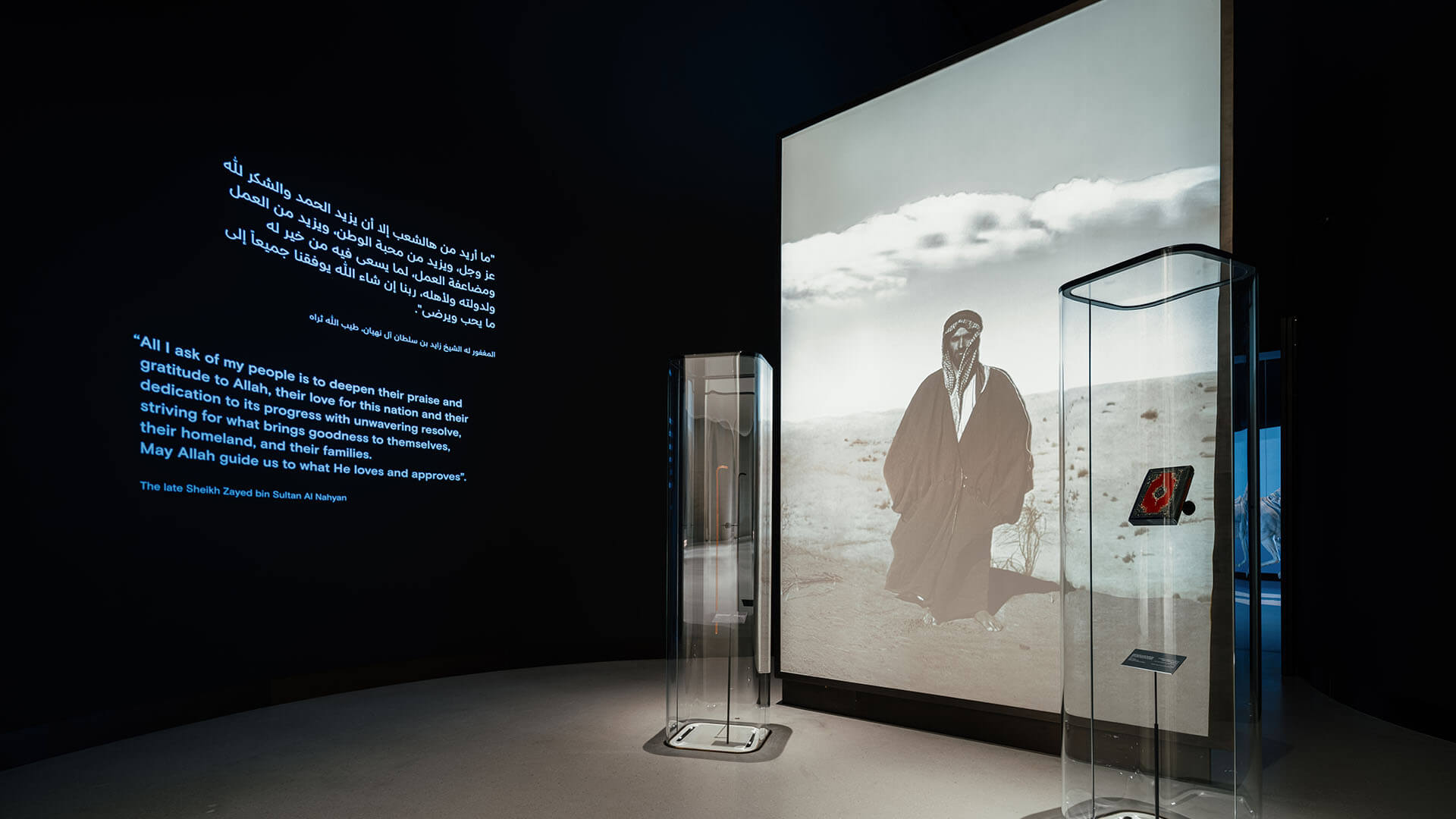
The result is important. Saadiyat is no longer simply assembling prestigious museum brands. Art, science, technology and national history now occupy the same district, giving Abu Dhabi the beginnings of something far more difficult to create: a coherent cultural destination.
Read more: What Does Luxury Style Look Like in Abu Dhabi?
Guggenheim Abu Dhabi will add another interesting layer when it opens in December. Designed by the late Frank Gehry, the museum will focus on modern and contemporary art while positioning Abu Dhabi within a global network of Guggenheim institutions.
Its collection has been developing since 2009, with an emphasis on artistic production from the 1960s onwards and connections across regions, generations and disciplines.
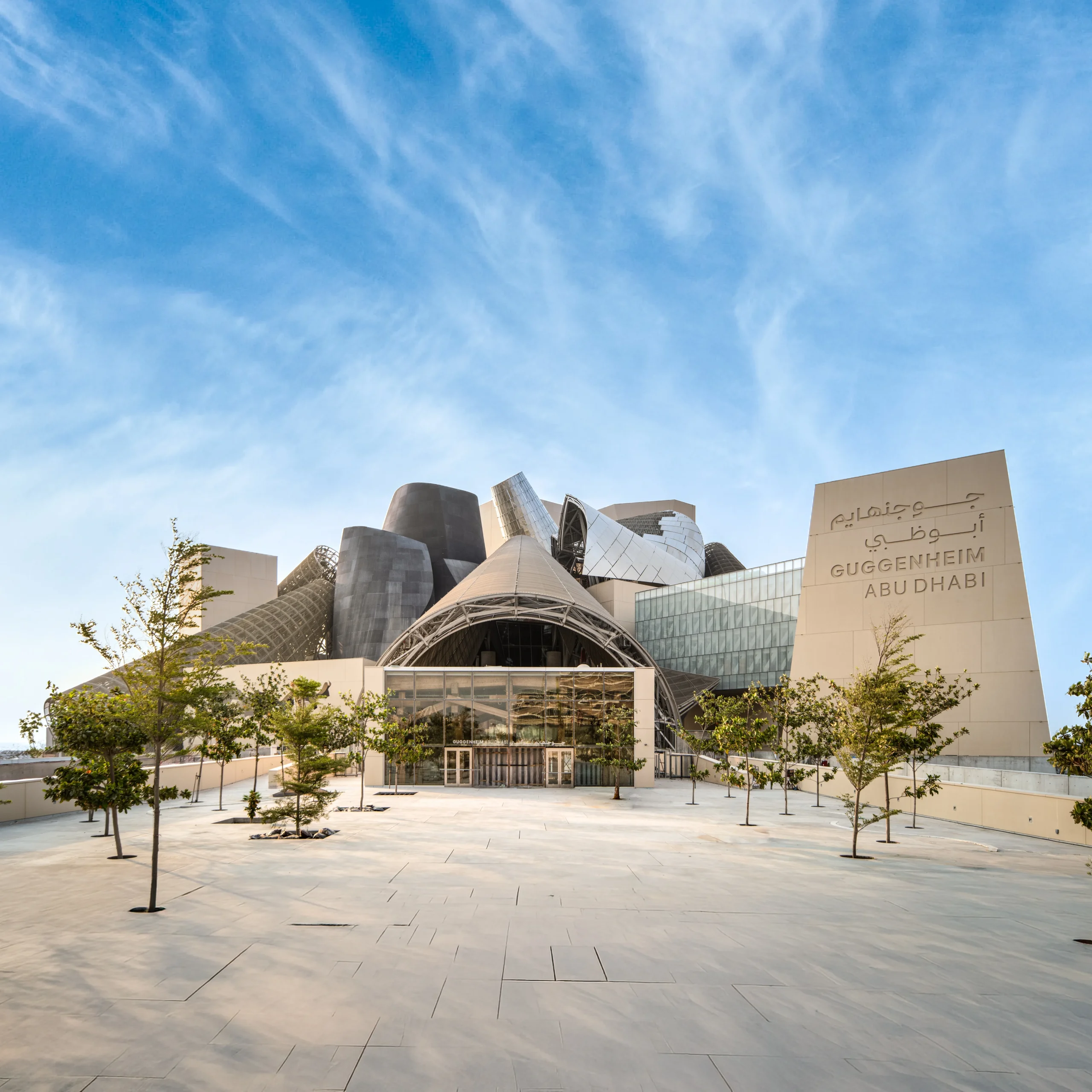
The architecture is characteristically Gehry: monumental galleries, irregular forms and sculptural cones organised around a central atrium. Yet the greater significance is strategic.
Modern and contemporary art has historically been narrated primarily through institutions in Europe and North America. Guggenheim Abu Dhabi has an opportunity to complicate that geography by placing the Middle East, North Africa, South Asia and other underrepresented regions more firmly within the story.
That could ultimately matter more than another landmark building. Abu Dhabi can commission extraordinary architecture relatively quickly. Cultural credibility takes considerably longer and is more intentional.
The risk with any project of Saadiyat’s scale is that culture appears to have arrived fully formed through billion-dollar institutions. Abu Dhabi’s story is much older.
At the centre of the city, Qasr Al Hosn remains the clearest counterweight to Saadiyat’s architectural ambition. Its original watchtower, built around the 1790s, is Abu Dhabi’s oldest permanent structure. Over time, the site became a fort, royal residence, seat of government and national archive before reopening as a museum following extensive conservation.
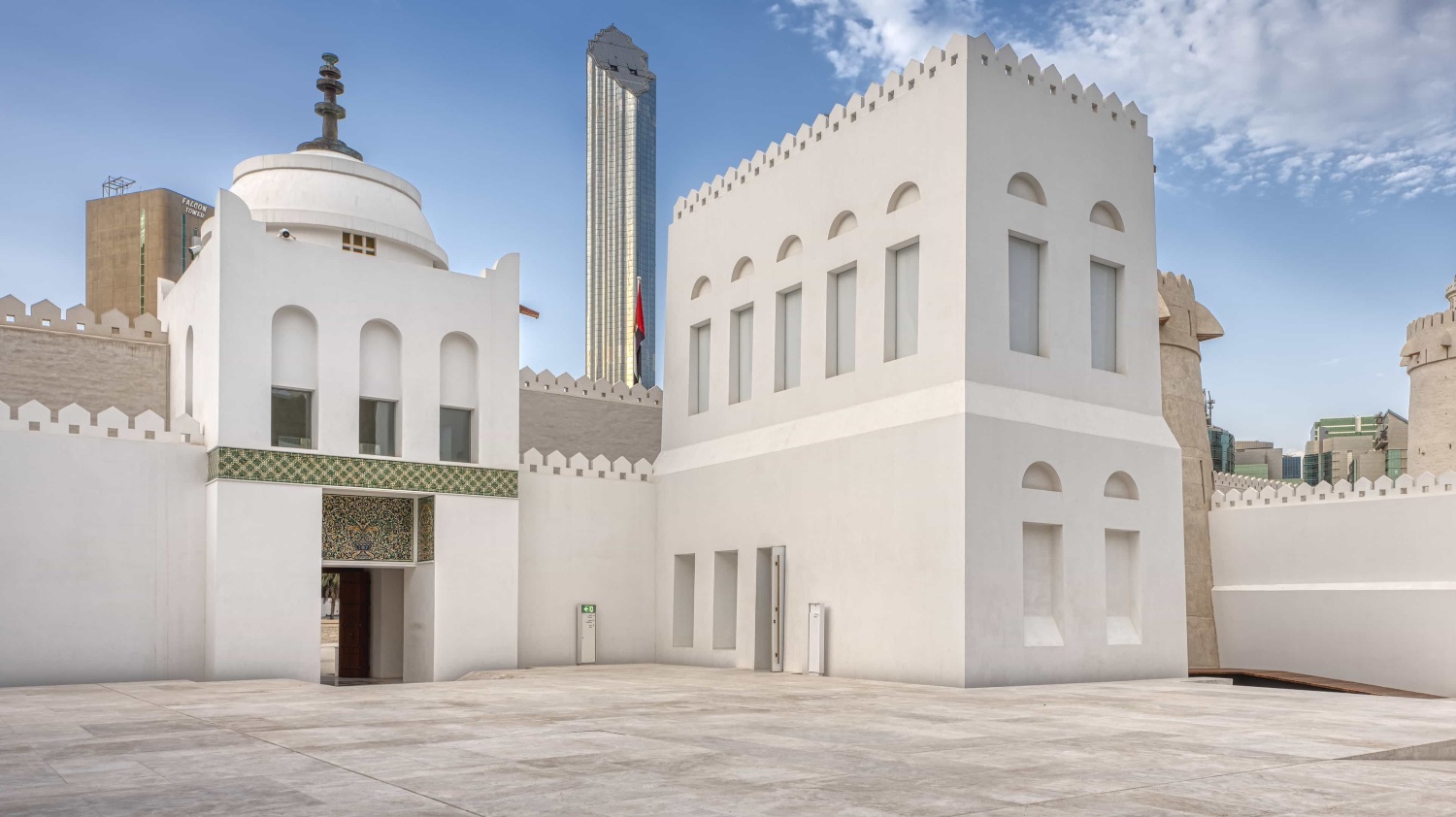
Its history traces Abu Dhabi’s development from a settlement dependent on fishing, pearling and maritime trade into a global capital. Within the wider Al Hosn complex, the House of Artisans preserves traditional Emirati practices including Al Sadu weaving and other crafts, placing skills passed through generations into a contemporary cultural setting. The institution explicitly positions itself around the preservation and transmission of the UAE’s intangible heritage.
This is where Abu Dhabi’s cultural strategy becomes more convincing. Saadiyat looks outward, while Qasr Al Hosn looks backward. Neither works quite as effectively without the other.
Abu Dhabi’s transformation should therefore not be reduced to the construction of museums. The more interesting development is the attempt to convert economic capital into cultural capital.
That requires more than architecture and acquisitions. It depends on scholarship, exhibitions, local artists, education, audiences and institutions capable of generating ideas rather than simply importing them.
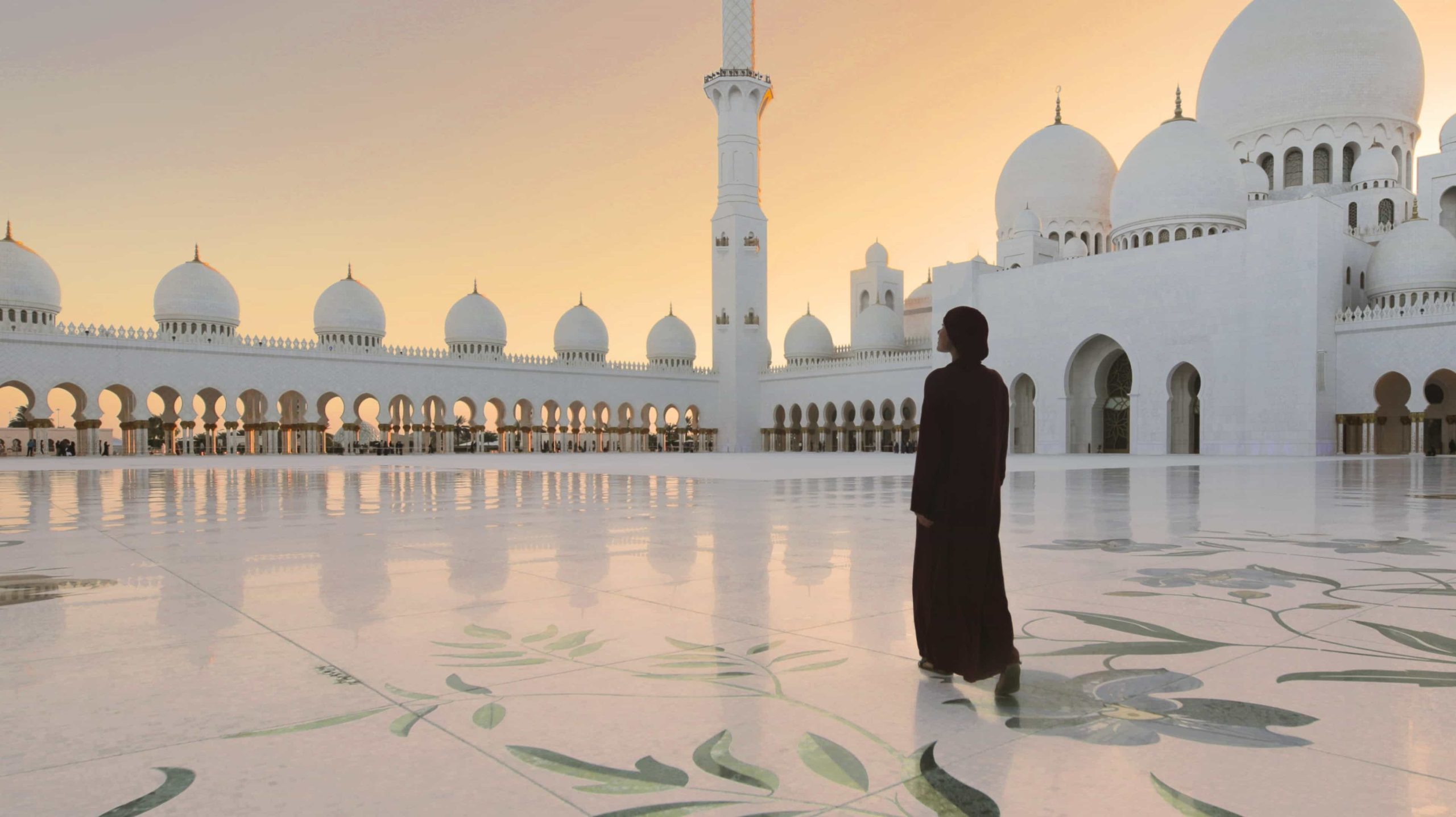
Saadiyat already possesses the architecture and the global names. Its next test is whether those institutions become embedded deeply enough in the city to shape how Abu Dhabi understands itself — and how the rest of the world understands Abu Dhabi.
The emirate is not abandoning the identity built on energy, wealth and ambition. It is adding another layer to it.
And when Guggenheim Abu Dhabi opens in December, the most important question may no longer be what Abu Dhabi has built, but what kind of cultural influence those buildings can ultimately create.
For more on the latest in culture and art reads, click here
The post Culture Is Becoming Abu Dhabi’s New Currency appeared first on LUXUO.

High jewellery has always travelled well. The most exceptional creations are conceived for an international clientele, moving between private presentations, flagship boutiques and collections that increasingly cross geographical boundaries. Abu Dhabi forms part of that global landscape, with affluent clients able to access many of the world’s leading maisons through an established luxury retail network.
The broader market provides useful context rather than a definitive portrait of local tastes. Euromonitor International reported that jewellery in the United Arab Emirates (UAE) continued to grow in 2025, supported by rising wealth and luxury demand, while fine jewellery strengthened its position within the category. In Abu Dhabi, destinations such as The Galleria Al Maryah Island bring Bvlgari, Cartier, Chanel, Graff, Tiffany & Co. and Van Cleef & Arpels into close proximity.
These eight creations are united less by a single aesthetic than by the qualities that tend to resonate with sophisticated collectors in Abu Dhabi: rarity, provenance, technical finesse and unmistakable maison identity.

Images courtesy of Bvlgari.
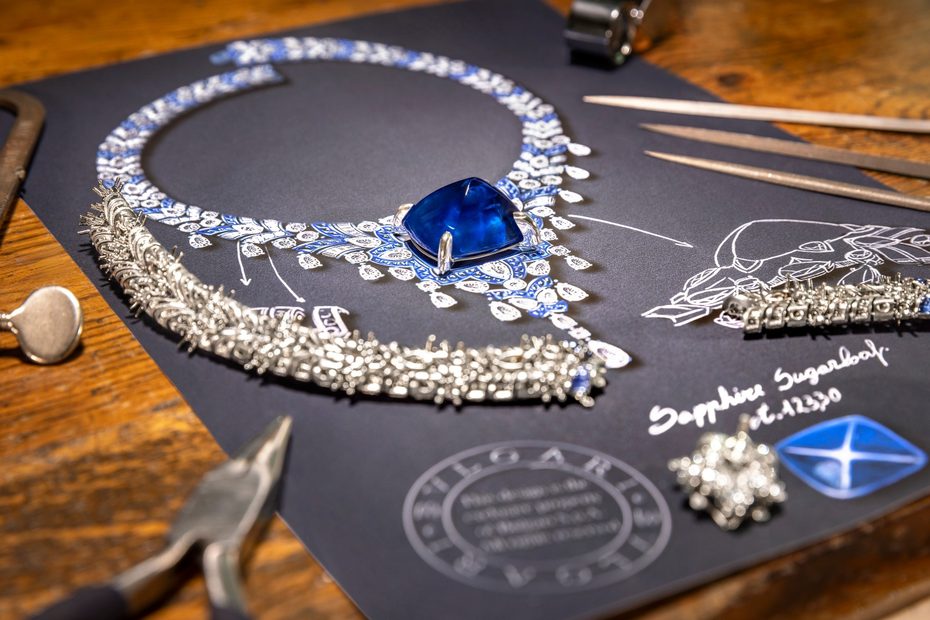
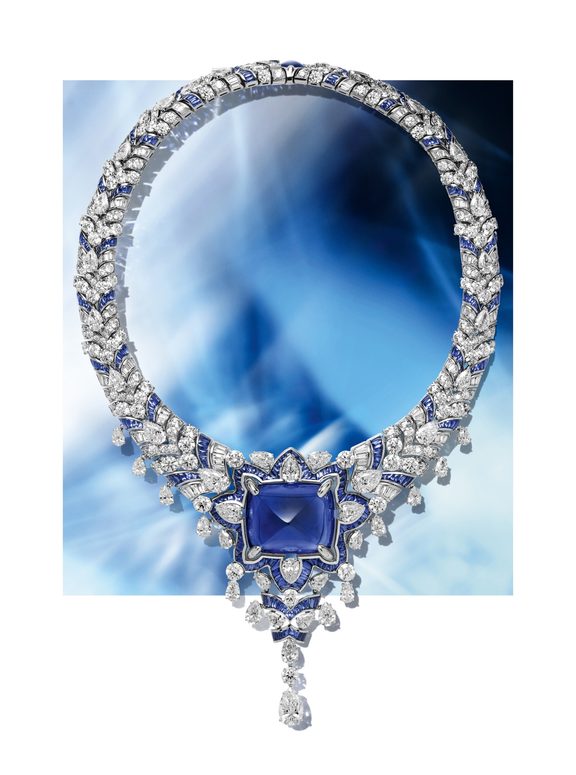
Bvlgari’s Cosmic Vault necklace places a 123.35-carat Sri Lankan sugarloaf sapphire at the centre of a creation inspired by the domes of Rome. Diamonds and buff-top sapphires surround the stone, while more than 200 modular elements give the substantial necklace movement and flexibility. The maison says approximately 1,500 hours of craftsmanship went into its construction.
For clients already familiar with important coloured stones, the attraction goes beyond sheer scale. Bulgari turns the sapphire into part of an architectural composition, giving an extraordinary gemstone an equally recognisable design identity.
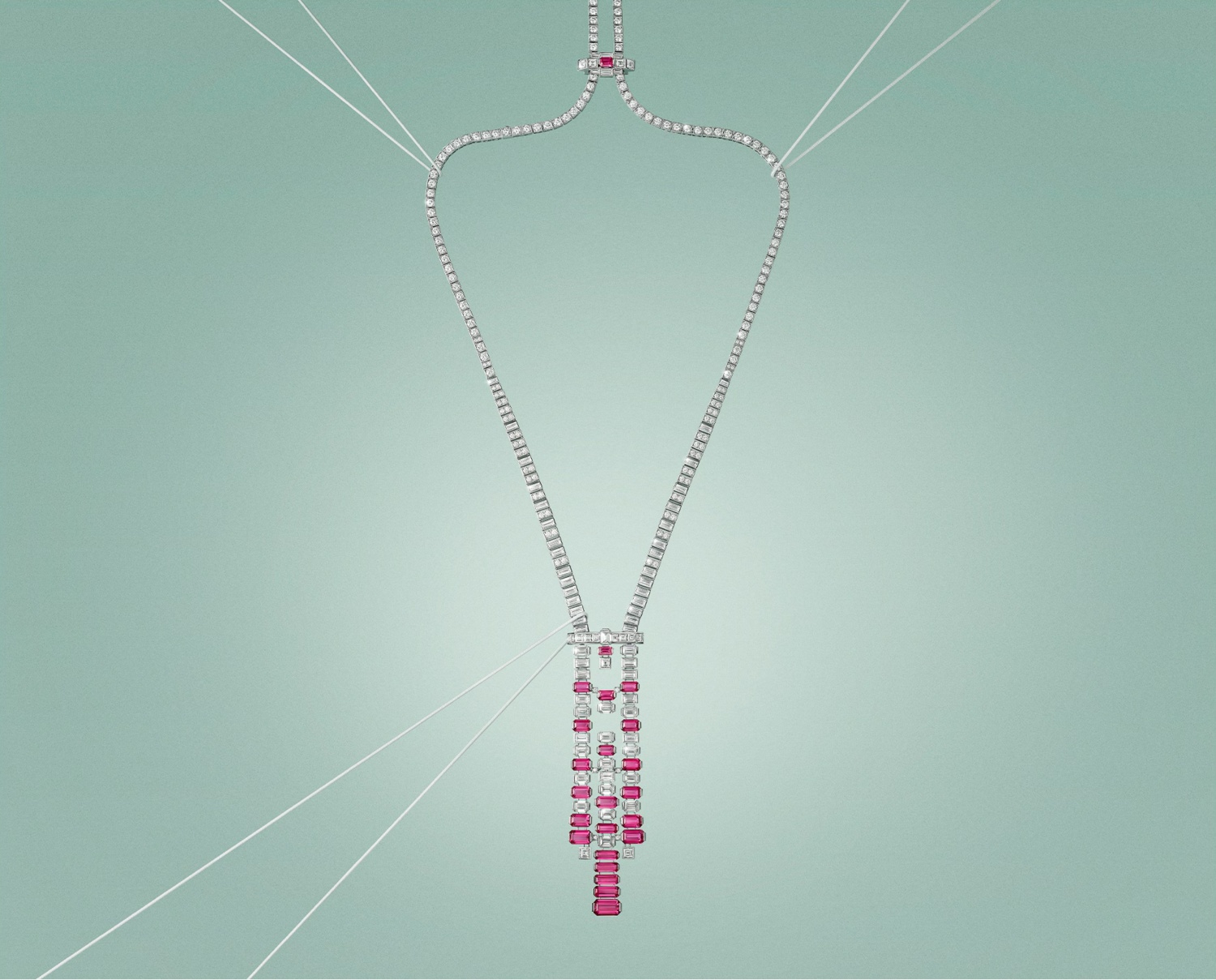
Cartier’s Euphonia necklace, from the En Équilibre High Jewellery collection, combines rubies with emerald-cut, square, baguette and brilliant-cut diamonds in a tightly controlled composition. A sliding clasp allows its length to be adjusted without disturbing the visual balance.
Such technical intelligence offers another level of interest once gemstone rarity becomes expected. Transformability allows the value of the jewel to reside partly in engineering — an increasingly compelling proposition for experienced buyers looking beyond carat weight alone.
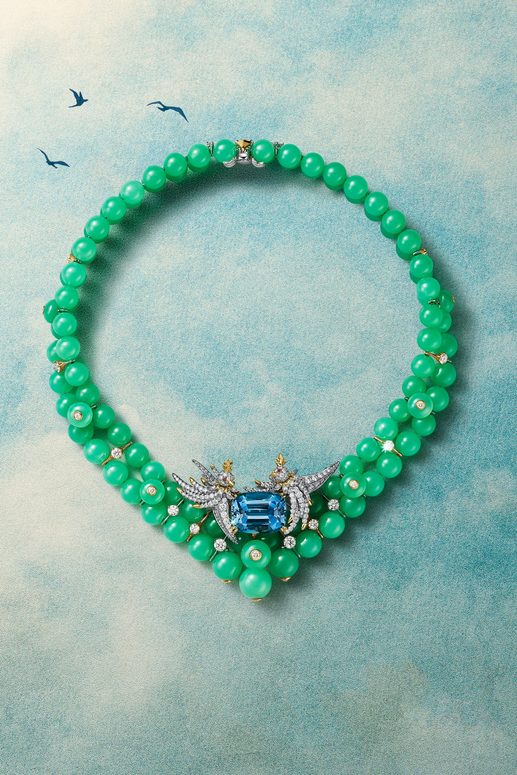
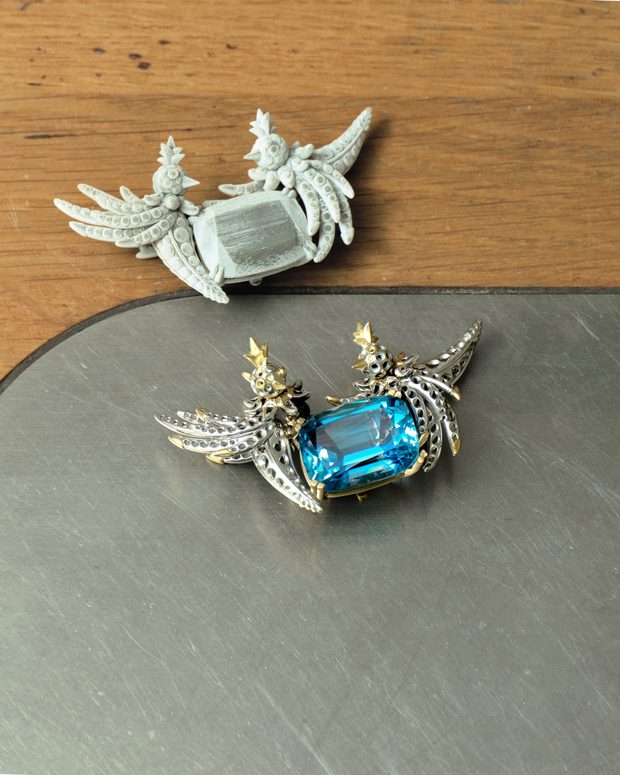
Tiffany & Co.’s iconic Bird on a Rock takes flight with diamond birds perched atop a spectacular 22-carat Brazilian aquamarine. Image courtesy of Tiffany & Co.
For Blue Book 2026: Hidden Garden, Tiffany & Co. revisits Jean Schlumberger’s celebrated Bird on a Rock motif through a statement necklace centred on a 22-carat Santa Maria-hued Brazilian aquamarine.
The stone provides immediate visual impact, but the greater attraction may be its lineage. Schlumberger’s distinctive design vocabulary gives the jewel historical continuity while the new execution introduces contemporary scale. It is the type of piece that works equally as gemstone jewellery and recognisable design.
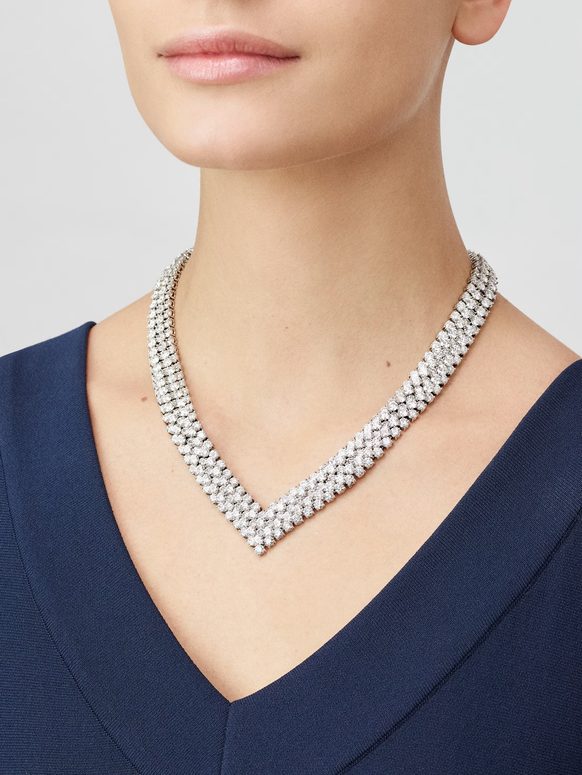
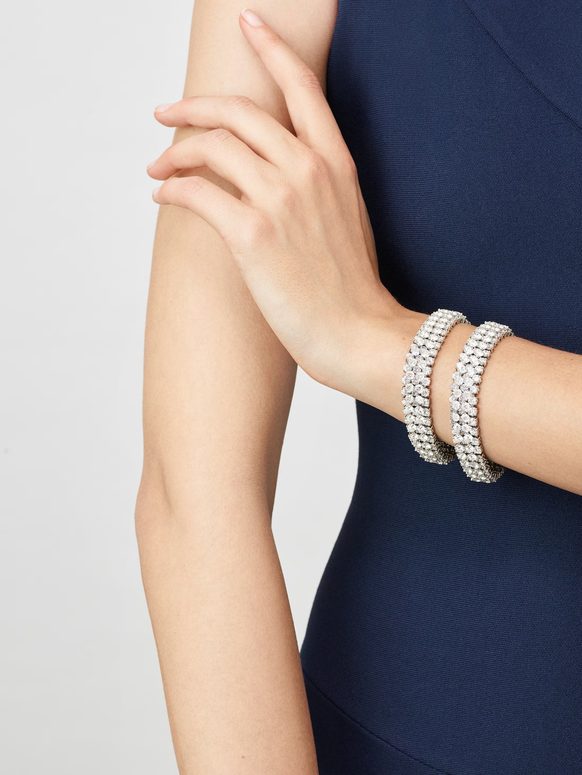
Van Cleef & Arpels’ À Cheval necklace transforms from five rows of diamonds into two bracelets, celebrating the Maison’s virtuoso craftsmanship. Image courtesy of Van Cleef & Arpels.
Van Cleef & Arpels has long incorporated transformability into its high-jewellery vocabulary. The Reflets Adriatiques necklace from Treasure Island combines turquoise, sapphires, emeralds, Paraíba tourmalines and diamonds in a vivid marine palette, with a construction that allows the jewel to assume different forms.
Its appeal is as mechanical as it is aesthetic. Reconfiguring a complex gem-set composition requires considerable technical skill, turning versatility into evidence of savoir-faire rather than mere practicality.

Buccellati brings another definition of scarcity to the conversation. Its Serenissima High Jewellery collection places traditional Italian goldsmithing at the centre, with one white- and yellow-gold bib necklace combining hundreds of brilliant- and rose-cut diamonds with the maison’s characteristic hand-engraving techniques.
For established jewellery collections already rich in conventional diamond pieces, Buccellati offers something harder to quantify. Texture, labour and highly identifiable workmanship become part of the value, making craftsmanship itself a marker of rarity.
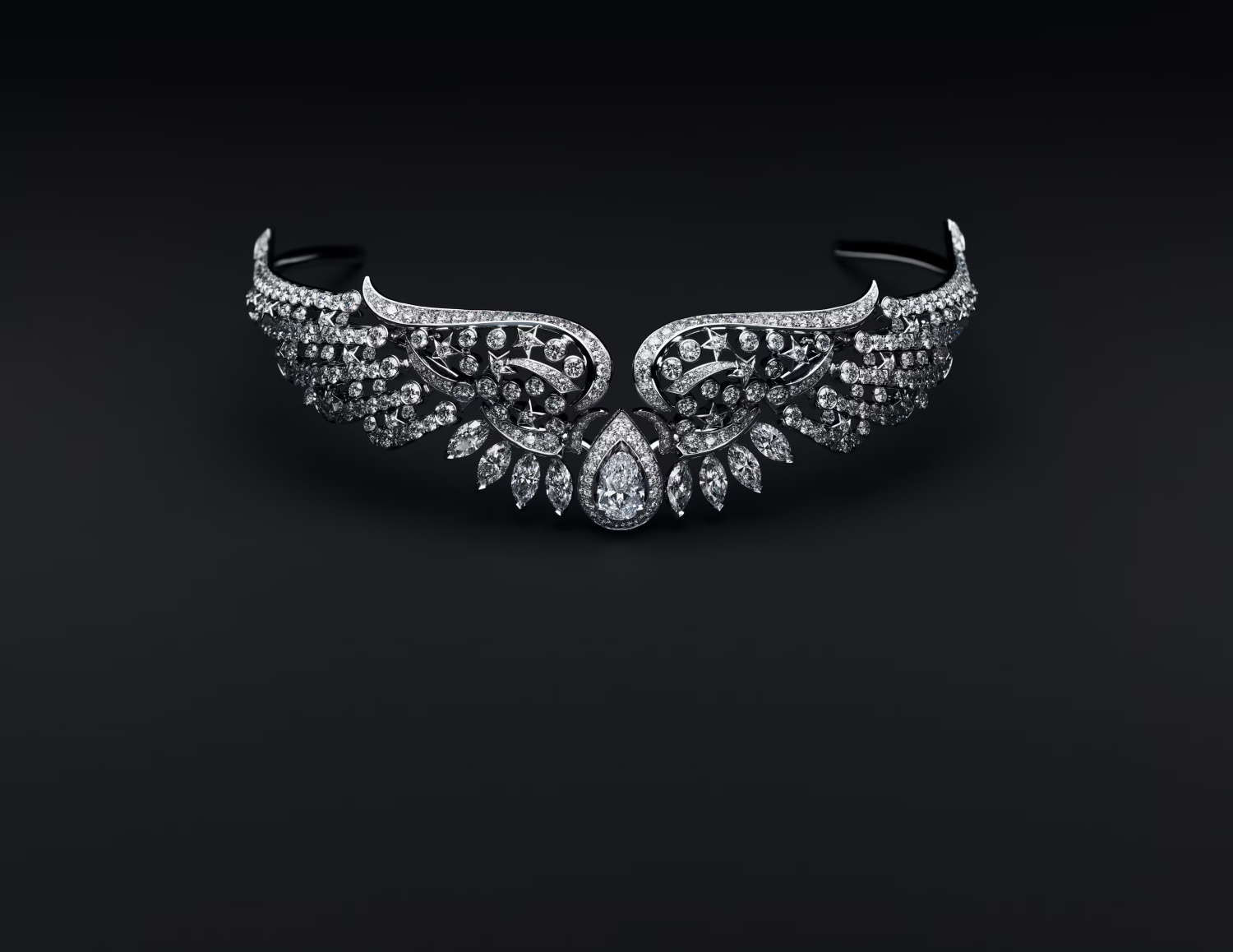
Chanel’s Reach for the Stars collection extends the house’s couture instincts into high jewellery. The Full Swing head jewel centres on a 3.08-carat pear-shaped D Flawless diamond, with openworked white-gold wings set with round and navette-cut diamonds following the contours of the head.
Its unconventional format gives it particular character. Rather than another necklace or bracelet, the piece treats jewellery as part adornment, part couture gesture — an option for clients increasingly interested in distinctive ways of wearing significant gemstones.


These high jewellery earrings by Graff showcase two exceptionally rare 25-carat Fancy Intense Yellow diamonds, totalling approximately 59.63 carats of brilliance.
Graff distils its reputation for extraordinary diamonds into a pair of Fancy Intense Yellow pear-shaped diamonds weighing 25.06 and 25.02 carats. Their impact comes not only from their individual scale and saturated colour, but from the difficulty of assembling two exceptional stones with sufficient similarity to function as a pair.
That symmetry introduces another dimension to rarity. Where a singular important stone can command attention on its own, matched diamonds of this calibre demand consistency in colour, proportion and presence. The result is deliberately spectacular, yet requires little additional ornament to communicate its significance.
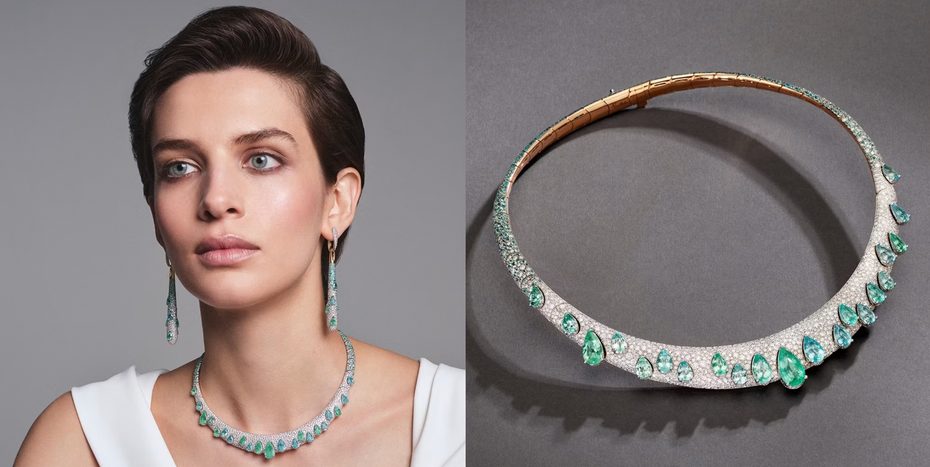
Pomellato offers perhaps the least traditional proposition. Its 2026 High Jewellery preview introduced a semi-rigid choker set with 21 pear-shaped Paraíba tourmalines totalling 20.15 carats, arranged asymmetrically alongside further Paraíba tourmalines and diamonds.
The composition loosens some of high jewellery’s ceremonial formality without diminishing the rarity of its stones. Its combination of intense colour, asymmetry and ease makes a convincing case for clients who want important jewellery to feel contemporary rather than conventionally grand.
Together, the eight creations point to a broader shift in high jewellery, where rarity is no longer defined by gemstone size alone. Technical ingenuity, house codes, artisanal skill and a more individual use of colour are becoming equally important markers of distinction.
That evolution has particular relevance in Abu Dhabi, where affluent clients have direct access to many international maisons and where a sophisticated collection need not be built around scale alone. Provenance, craftsmanship, transformability, unusual design and a recognisable house signature can provide equally persuasive reasons for choosing one exceptional piece over another.
High jewellery therefore becomes more than a display of wealth. At its most considered, it expresses taste, discernment and the ability to recognise rarity in forms that cannot always be measured in carats.
For more on the latest in luxury fashion and style reads, click here.
The post High Jewellery Masterpieces with Appeal for Abu Dhabi Collectors appeared first on LUXUO.












If you’re an expat looking to move to a sunny country, looking for a holiday home, or just an investment opportunity, then Barcelona is by far the best option. It’s not only one of Europe’s most stunning cities, but it’s also known as the go-to place for a beach holiday. It’s home to warm sunshine, amazing food, and incredible architecture.
Despite that, buying a luxury home overseas is more complicated than that, and the best way to start this adventure is by knowing your way around the neighborhoods. So, let’s look at the streets, the culture, and the best places to call home in this Mediterranean paradise.
If you ask any local for luxury Properties for sale in Barcelona, they will instantly point you straight to Pedralbes. Many people say it’s like the Beverly Hills of Barcelona. It’s located at the bottom of the Collserola mountains, which give most properties an incredible view of the whole city.
Wealthy buyers flock here because the neighborhood offers something rare in a busy European place: total privacy and huge properties with open spaces.

Buying a house here feels like getting a whole state instead of just a house, at least in comparison with current standards. The streets are wide, green, and it’s surprisingly quieter than the rest of the city. Inside, or behind the tall walls, you will spot modern mega-mansions, old palaces, and massive gardens with huge pools.
The neighbourhood has everything you can need, from top international schools and several parks to top-notch restaurants and more.
The best part is that it’s located just a few minutes’ drive away from the city centre.
Sarrià is located right next to Pedralbes, and while it shares several traits, like how luxurious it feels, it feels very different. The neighborhood feels like a small town, and in fact, years ago it was actually a separate town outside Barcelona. Even though it is part of the city now, it still holds onto that old-school magic.
There you will find narrow streets, local bakeries that are as old as the town, and all the amenities you would need to live comfortably. From attractions and historical landmarks to parks and great international schools.

Most wealthy buyers love Sarrià because of the strong sense of community and the unique character it has. The homes here are totally one-of-a-kind, and you can find restored townhouses that look almost medieval on the outside but have smart-home tech and glass elevators inside.
On one side, closer to the main avenues, you will spot huge historic villas, and on the other side, those historic townhouses. You get a slower pace of life, amazing food markets, and a real sense of belonging.
People love this neighborhood because it feels safe, friendly, and grounded, which makes it perfect to invest in or move in with kids. It fits anyone who wants a high standard of living without being flashy.
Now, if you love being in the center and being just a few minutes away from almost any attraction in the city, then the best option for you is Eixample Dreta. This neighborhood is the heart of Barcelona, situated right in the middle; it’s not only home to incredible architecture but also to the Basilica of the Sagrada Familia.

Here is where most wealthy families constructed huge, creative homes during the late 1800s to display their wealth. Those same historic buildings now hold some of the most sought-after apartments in Europe.
Not only that, but choosing Eixample Dreta puts you right next to Passeig de Gràcia, which is something like the local version of Fifth Avenue and is the place to go if you want designer shops like Chanel and Gucci as well as Michelin-star restaurants.
The homes here are an architect masterpiece with massive floor plans, high ceilings, colourful tiles, and tall windows opening onto iron balconies. Terrace penthouses remain the most requested properties in the area.
Buying a house in another country is not an easy task, and it may feel like a lot to handle, but picking the right neighborhood changes everything and is basically half of the work. Barcelona has a unique spot for every kind of person; all you need to do is answer simple questions like:
Your home needs to match how you want to live every day. If possible, visit some of those neighborhoods beforehand and check how you feel there. Even better if you can stay up to a month or more to get the real “local” feeling.
Once you find the area that fits your style, you are much closer to opening the door to your dream place.
For more on the latest in architecture and properties, click here.
The post The Most Exclusive Neighborhoods in Barcelona for Luxury Homes appeared first on LUXUO.



As in so many endeavours, timing is key in sports. A split second too late or too early and you do not make it. The more precisely one starts and ends, the better. Broadly speaking, this holds true in all sports, but it can be even more important when speed is essential, as it is in MotoGP, for example. Arguably, this is an efficient, if anodyne, way to start a major story in a watch specialty magazine. It relates this story to the cover quickly and it wastes no words telling you that we are going to discuss precision timekeeping. It is worth emphasizing the real-world challenges here from the start, as plainly as possible.
These true tests of chronometry unfold in real time, in often unforgiving circumstances. Whether under the blistering sun of world-class racing circuits; across exhausting mountain stages spanning thousands of kilometres; or beneath the glare of arena lights, tenths of a second dictate sporting destiny.
For Le Locle-based manufacture Tissot, founded in 1853, sports timekeeping is not an exercise in corporate alignment or logo placement. It represents the core of its industrial and technological identity, even if the marketing potential is somewhat more self-evident. While haute horlogerie purists obsess over hairspring breathing curves, lift angles, beat errors, and the optimal way to record and display elapsed times, Tissot operates on an extraordinary dual plane: developing complex engines on the wrist while orchestrating colossal, multi-sensor mobile timing ecosystems capable of parsing time to the thousandth of a second on the world stage.
From its iconic 25-year alliance with MotoGP to its five-decade deep romance with professional cycling and its high-tech revolutionising of the National Basketball Association (NBA), Tissot translates elite sporting pressure into horological substance that is woven into the fabric of the sport itself. This cover story provides a not-even-close-to-exhaustive deep dive into Tissot’s multifaceted sports universe, unravelling the mechanical inventiveness of novelties such as the openworked Tissot T-Race MotoGP 2026; the composite Tissot Pinarello; the versatile Tissot PR 100 Cycling duo; the tactical Tissot PR 100 Tour de France 2026; and the bold Tissot Supersport NBA Special Edition, with a special appearance by the Seastar WNBA Edition.


Top to bottom: Tissot PR 100 Tour de France 2026 40mm, Tissot PR 100 Cycling 40mm in stainless steel, Tissot T-Race MotoGP Automatic Chronograph 45mm in stainless steel and Tissot Pinarello 43mm in stainless steel and carbon.
Modern motorcycle Grand Prix racing is a discipline defined by extreme physical challenges and unyielding courage. One needs the latter when astride a propulsive machine capable of generating more than 300 horsepower that catapults its rider across asphalt ribbons at speeds exceeding 360 km/h. And one has to lean into the power, literally; riders take apexes at jaw-dropping 65-degree angles where elbow sliders kiss the kerbs. In this environment of sensory overload, human reaction times and mechanical tolerances converge at the absolute limit. Here, victory and heartbreak – or worse – are separated by fractions of a blink.
Tissot’s intimate connection with motorcycle racing is anchored in historical pedigree that long predates the modern world championship era. As early as 1953, the manufacture lent its timekeeping prowess to the Motorcycle Grand Prix of Bern. In the 1980s, Tissot deepened its roots by sponsoring pioneering Swiss 500cc Grand Prix racer Philippe Coulon, forging an authentic bond with two-wheeled culture that cemented the brand’s sporting credibility.
The turning point in modern motorsport timing arrived in 2001, when Tissot was appointed the Official Timekeeper of the FIM MotoGP World Championship. What began as a technical partnership quickly matured into one of modern watchmaking’s most enduring sporting alliances. This is one of the reasons we are so fond of Tissot and MotoGP here since 2001 is an important year for us too <WOW debuted that year, as World of Watches Singapore – Ed>.
In 2003, Tissot unveiled the very first official MotoGP timepiece, establishing an aesthetic and functional lineage that would birth the very successful T-Race MotoGP Limited Editions. The editor recalls reading a Keith Strandberg story in the aughts about Tissot executives discovering that MotoGP fans were wearing T-Race models to the races <Strandberg is today a watch industry executive himself, at another brand – Ed>. Far from a static collaboration where logo placements are the only things that might change, Tissot has continually evolved alongside the sport. In 2023, the brand embraced MotoGP’s dynamic new era with the creation of the Tissot Sprint – a fiercely contested Saturday dash that changed the Grand Prix weekend – while institutionalising the prestigious Tissot Pole Position Awards to celebrate qualifying mastery.

To comprehend Tissot’s role in MotoGP is to look beyond the watch as an accessory and understand the sheer technological magnitude of its timekeeping ecosystem at the races. At every Grand Prix stop – from the high-speed straights of Mugello to the undulating elevation changes of Portimão and the technical tight chicanes of Motegi – Tissot deploys an autonomous and ponderous mobile timing infrastructure. Now, Tissot typically stops right here with this sort of description, what with it not really having much to do with wristwatches and such. Our research directed us to some wonderful nuggets of information about motor racing in general that we just have to include here. You are welcome, racing nerds!
Every motorcycle on the grid is fitted with an ultra-lightweight, high-frequency transponder mounted within its chassis. As bikes rocket around the circuit, these transponders trigger high-precision induction loops and trackside optical sensors embedded at intermediate split points, sector boundaries, and pit entry/exit lanes. Slicing through the finish line at maximum velocity, high-speed digital scanning photo-finish cameras capture thousands of line-scans per second, establishing definitive results down to one-thousandth of a second (0.001s). This verified telemetry is fed instantaneously into race control, broadcasting graphics suites, and team pit walls, guaranteeing uncompromised data integrity under the most extreme vibrational and electromagnetic conditions.
Ok, the motor racing intermission is over, and we return you now to time on a personal scale. Of course, precision timing requires human champions who embody its spirit. In 2023, Tissot welcomed Italian sensation Enea Bastianini into its ambassador family. Renowned for his instinctive racing – some would call it racecraft – late-braking brilliance, and remarkable tyre management, Bastianini’s trajectory, from Moto3 podiums to claiming the 2020 Moto2 World Championship and multiple premier-class MotoGP victories, mirrors Tissot’s ethos of resilience and technological progress. Now racing with Red Bull KTM Tech3, Bastianini continues to prove that championship longevity requires an uncompromising commitment to micro-adjustments and relentless discipline.
The flagship horological manifestation of this partnership is the Tissot T-Race MotoGP 2026 45mm, which you can read more about in the Cover Watch segment, as usual. Right here though, we have thrown up another angle of human ingenuity to obsess about. This is, of course, the automatic calibre Valjoux A05.951…


At the mechanical core of the latest MotoGP collection lies the newly (last year) unveiled skeletonised chronograph Valjoux A05.951. Originating from the historic Vallée de Joux lineage – as indicated by its name – and developed specifically for the flagship T-Race MotoGP Automatic Chronograph, this movement represents a significant evolutionary step over the existing A05.231, according to Tissot.
Engineered with a high-frequency balance beating at 4 Hz or 28,800 vibrations per hour, the A05.951 appears to be very closely related to calibre A05.231, right down to using a Nivachron balance spring and having a power reserve of 68 hours. Furthermore, both calibres use free-sprung balances with variable inertia studs, so no Etachron (or similar) regulators. Interestingly, the new calibre uses 28 jewels, while the older one had one more, though this is superficial, we think. The shock absorber is different, with calibre A05.951 using ETA’s proprietary Nivachoc A; A05.231 used the standard Nivachoc. For reference, these shock absorbers guard the balance staff against a variety of lateral and vertical perturbations.
From a casual visual inspection (at shoot via the editor) and from pictures, the two calibres are a close match, with the skeletonisation-visible dial side being the main difference. The new calibre retains a unidirectional automatic winding system (with high-grade ball bearings). It also retains the reliable cam-lever chronograph architecture with dial-side indications including a 30-minute register at 3 o’clock, a 12-hour register at 6 o’clock, and running small seconds at 9 o’clock. These are all exposed through a striking openworked architecture. As noted in our own story about skeletonising and openworking, the style seen in this version of the T-Race MotoGP is très contemporary and very much in the openworked style.
If motorsport is an exercise in aggressive acceleration and braking, road cycling is the ultimate test of physical endurance, tactical nuance, and psychological fortitude. Here, racers and their bikes form one superhuman unit, but we are getting ahead of ourselves. Spanning gruelling three-week Grand Tours through torrential rain, alpine snow, and searing summer heatwaves, professional cycling demands an extraordinary synchronization of human power and mechanical efficiency.
Tissot’s association with competitive cycling spans more than half a century. In the 1960s, the brand actively supported foundational cycling events, awarding precision timepieces to victors at the Mellaha Circuit in Tripoli (1964) and the demanding Six-Day Races in Madrid (1964–1966). By the 1980s, Tissot had ascended to the pinnacle of race timing, serving as the Official Timekeeper for both the iconic Tour de France and the prestigious Grand Prix des Nations time trials.
In 1995, Tissot cemented its institutional leadership in the sport by forging an enduring partnership with cycling’s global governing body, the Union Cycliste Internationale (UCI). As UCI’s Official Timekeeper, Tissot provides timing and scoring for the entire spectrum of world championships: Road, Track, Mountain Bike (MTB), and BMX, as well as the UCI Track Cycling Nations Cup. In 2016, Tissot renewed its historic bonds as Official Timekeeper of the Tour de France and La Vuelta a España, while actively supporting the Tour de Suisse.
Timing a modern cycling Grand Tour represents one of sports technology’s most complex logistical challenges. Over 21 stages spanning more than 3,500 kilometres, Tissot’s timing specialists deploy satellite-synchronized timing transponders affixed beneath the saddles of nearly 200 riders. These transponders interact with trackside antennas and optical timing traps positioned at intermediate sprint points, categorized mountain summits, and finish lines.
When a bunched peloton thunders towards the finish line at 70 km/h during a chaotic mass sprint, the human eye cannot untangle the physical overlap of front tyres. Tissot’s high-speed line-scan finish cameras record up to 10,000 frames per second directly across the white line, generating a continuous photofinish composite that allows race commissaires to distinguish gaps as infinitesimal as one-tenth of a millimetre.
This technical rigor is embodied on the road by Slovenian cycling maestro and Tissot Ambassador Primož Roglič. A multiple-time Grand Tour champion and Olympic gold medallist, Roglič’s transition from competitive ski jumping to cycling royalty epitomises the relentless calculation, strategic patience, and grit that characterize both elite cycling and fine Swiss chronometry.

The pinnacle of Tissot’s adventure in cycling is represented by the Pinarello 43mm Special Edition (Ref. T162.408.97.061.00). Born from an authentic collaboration between the watchmaker and legendary Italian bicycle constructor Pinarello – builders of bikes that have carried champions to 15 Tour de France victories – this timepiece translates high-performance carbon engineering into wristwear.
The 43.14mm case is sculpted from a lightweight, ultra-dense forged carbon composite combined with 316L stainless steel and capped by a scratch-proof black ceramic bezel. Its striking asymmetrical silhouette repositions the winding crown to 10 o’clock, drawing direct inspiration from the aerodynamic fork flap design of Pinarello’s elite race frames.
The textured anthracite-grey dial features grooved, facetted hands and black-nickelled baton indices illuminated by Superluminova. In a sublime tip of the hat to Treviso engineering, the central seconds hand is formed into Pinarello’s distinctive “P” monogram, finished in the brand’s iconic Borealis iridescent colourway.
Beating within is the COSC-certified chronometer Powermatic 80 calibre, boasting the Nivachron hairspring (see above) and a class-leading 80-hour power reserve. The watch itself is water-resistant to 100 metres. Presented in an exclusive collector’s presentation case, it features an interchangeable strap system including an HNBR technical rubber strap and handcrafted Italian leather band.

Recognizing that cycling passion extends from the professional peloton to weekend club riders and urban commuters, Tissot developed the PR 100 Cycling collection in two distinct case sizes: 40mm (Ref. T150.410.17.037.00) and 34mm (Ref. T150.210.17.037.00).
Housed in slim, ergonomic 316L stainless steel cases measuring an ultra-comfortable 8.25mm thick, these timepieces are engineered for barely-there daily wear. Both models feature distinct thematic embellishments: intricate cyclist motifs engraved across the brushed steel bezel and screw-down caseback. The textured matte-grey dial is framed by clean Arabic numerals and baton indices coated in Superluminova, complemented by a discreet date aperture at 3 o’clock. Powered by a high-precision Swiss quartz three-hand movement with an End-of-Life (EOL) battery indicator, the PR 100 Cycling is paired with a stylish two-tone bicolour white-and-beige / grey textile strap equipped with a quick-release mechanism and 100-metre water resistance.

For dedicated followers of La Grande Boucle, the Tissot PR 100 Tour de France 2026 40mm (Ref. T150.417.37.057.00) delivers specialized race timing in a stealthy, high-contrast package. Encased in 40mm of 316L stainless steel treated with an asphalt-black PVD coating, this 11.26mm thick chronograph captures the electric energy of the world’s greatest bike race.
Powered by the robust Swiss ETA G10.212 quartz chronograph movement, the timepiece provides split-second timing capabilities including central 60-second chronograph timing, a 30-minute counter, a 1/10th-of-a-second counter, and ADD/ SPLIT intermediate timing functions. The central chronograph seconds hand features a distinctive yellow bicycle counterbalance that sweeps across the dark textured dial, referencing the legendary maillot jaune. Complete with a scratch-resistant sapphire crystal and interchangeable black textile and rubber straps, it serves as the ultimate companion for cycling enthusiasts.

Basketball is a game governed by rhythm, explosive acceleration, and the relentless countdown of the clock. In modern professional basketball, a single possession can alter a franchise’s destiny. Every inbound pass, defensive rotation, and buzzer-beating three-pointer is dictated by a strict 24-second boundary.
In 2015, Tissot made sports marketing and horological history by becoming the first Official Timekeeper of the National Basketball Association (NBA), the Women’s National Basketball Association (WNBA), and the NBA G League. In January 2025, during the NBA Paris Games at the Accor Arena, Tissot CEO Sylvain Dolla and NBA leadership announced a landmark multiyear extension of this global partnership, securing Tissot as the Presenting Partner of NBA Global Games in Europe for the next 10 years.
This commitment is evident across marquee international fixtures, including the NBA Berlin Game 2026 at the Uber Arena and the NBA London Game 2026 at The O2, featuring the Orlando Magic and Memphis Grizzlies. The global expansion continues into 2027 with scheduled stops in Manchester and Paris. Aligning with these European milestones, Tissot officially inducted hometown Berlin sensations and Orlando Magic stars Moritz and Franz Wagner into its ambassador roster, joining established luminaries such as eight-time NBA All-Star Damian “Dame Time” Lillard, NBA legend Tony Parker, and 2024 WNBA Champion Sabrina Ionescu.
Perhaps no sporting timing device is more visible and important to millions of global viewers than the shot clock positioned directly atop the backboard. Debuting across all NBA and WNBA arenas for the 2025–26 NBA and 2026 WNBA seasons, Tissot and the NBA co-developed a ground-up redesign of this iconic apparatus.

Drawing aesthetic inspiration from traditional circular horological instruments, the new shot clock introduces the world’s first round shot clock architecture. Constructed with a streamlined aluminium chassis that is 20% lighter than previous generations, the unit facilitates safer, more rapid installation and modular arena maintenance. Technically, the clock incorporates full RGB LED light strips capable of dynamic multi-colour illumination, including the seamless integration of the green Coach’s Challenge visual indicator. Powered by an upgraded high-throughput signalling distribution network, the system guarantees instantaneous latency-free synchronisation with arena horns, whistle audio-sensors, and the NBA Replay Center in Secaucus, New Jersey, providing referees and arena operating staff with unprecedented operational speed.
Capturing the vibrant urban aesthetic and athletic pulse of the hardwood, the Tissot Supersport NBA Special Edition 45.5mm brings courtside DNA to the wrist. Its commanding 45.5mm case (11.92mm thick) is crafted from 316L stainless steel finished in a matte black PVD coating, offering 100 metres of water-resistance.

The watch’s visual architecture is rich in subtle basketball cues. The black aluminium bezel ring integrates a specialized graduation paying homage to the 24-second shot clock rule, punctuated by subtle red and blue accents nodding to the league’s colours. The dial features a gradient from dark anthracite to black, stamped with a distinct pebble-dot texture that recreates the surface and tactile feel of an official basketball. Applied Arabic numeral indices are styled directly after team uniform typography, while the vibrant central chronograph seconds hand is counterbalanced by the iconic NBA silhouette logo.
The caseback holds a distinctive tribute: an intricate engraving of the NBA logo encircled by the names of all 30 NBA franchises, organized geographically by latitude and divided by conference; the Western Conference teams are aligned on the left flank, with the Eastern Conference teams on the right. Powered by a Swiss ETA quartz chronograph calibre with 1/10th-second precision, the watch is fitted with a bi-material strap combining leather, rubber, and synthetic materials finished with contrast stitching, echoing the grip of the ball.
Tissot’s basketball commitment extends powerfully into women’s sports through the Tissot Seastar Wilson® WNBA collection in 40mm Powermatic 80 and Quartz variants. Co-created with Wilson, the official ball manufacturer of the WNBA, these timepieces feature WNBA signature orange and white accents, a uni-directional rotating bezel with a 24-second shot clock marker, and interchangeable quick-release straps fabricated directly from authentic Wilson composite leather WNBA basketballs.

In an industry often preoccupied with value-to-RRP ratios and inaccessible exclusivity, Tissot stands out as an icon of positivity. Through its commanding presence across MotoGP, cycling’s Grand Tours, and the NBA, the Le Locle manufacture bridges the divide between cutting-edge industrial technology and mechanical watchmaking industrial artistry.
Whether engineering an openworked Valjoux A05.951 chronograph beating on the wrist of an adrenaline junkie, forging aerodynamic carbon watchcases with Pinarello, or synchronising a fleet of multi-sensor transponders across continental race tracks, Tissot proves that true timekeeping legitimacy is earned not in marketing boardrooms, but on the field of play. (Recall here that although this story is not about the PRX, this model was and is a success that was made without a specific marketing mandate, other than ‘make a good watch,’ if anything.) In capturing the fleeting beauty of sports’ most decisive seconds, Tissot remains the enduring storyteller of every champion’s journey.
Photography by Ching@greenplasticsoldiers
Art Direction & Styling by Audrey Chan
Other images courtesy of Tissot
This story was first seen as part of the WOW #86 Autumn 2026 issue.
For more on the latest in luxury watch reads, click here.
The post Where Every Second Matters: Tissot’s Journey Through the World of Elite Sports Timing appeared first on LUXUO.
