from Men's Gear


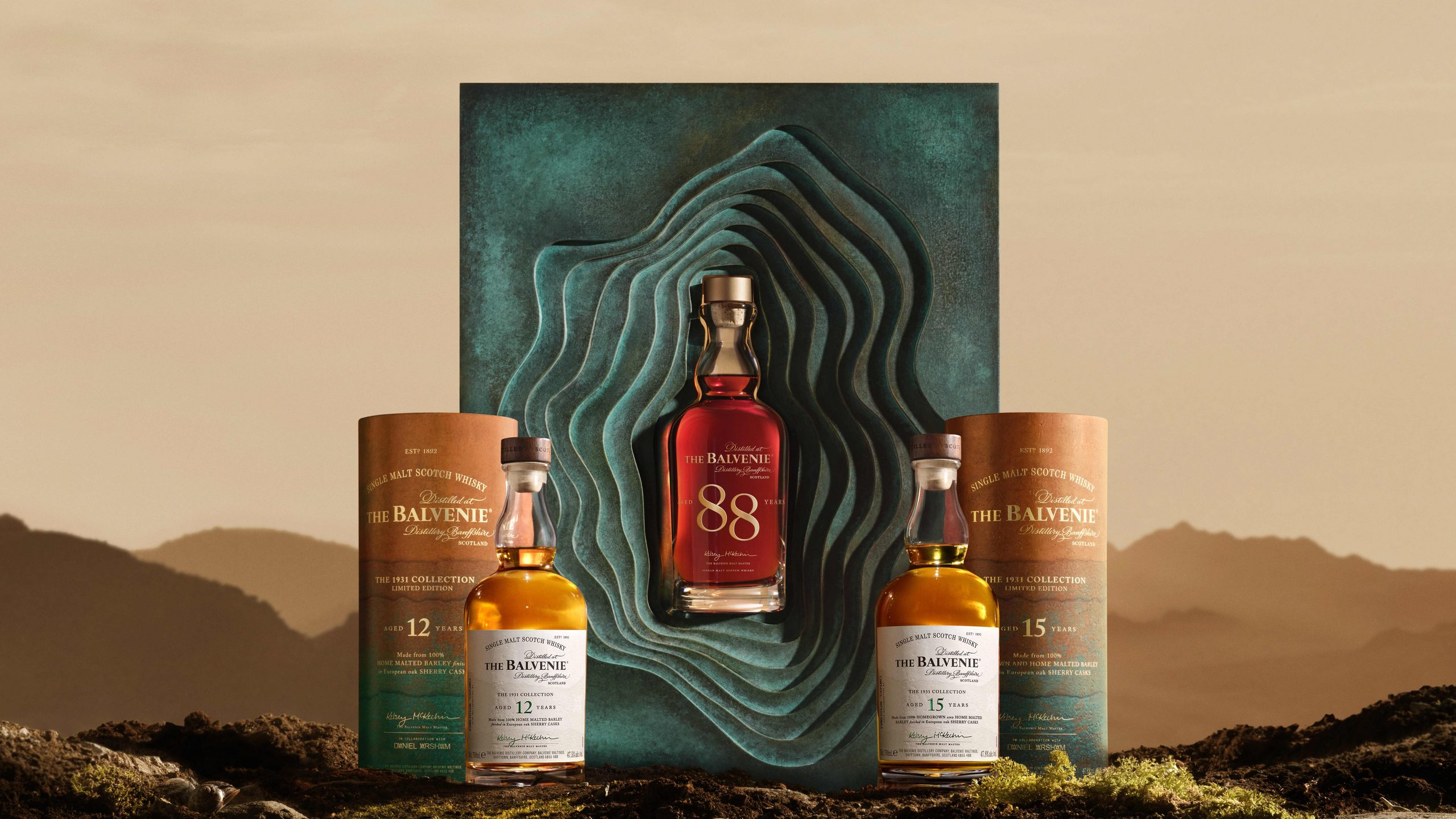
While everything from news cycles to trends appear to move at breakneck pace in the present age, The Balvenie offers a timely reminder that the most lasting progress sometimes comes through a patient approach. The Speyside distillery’s latest 1931 collection, comprising the 88 Year Old — the distillery’s oldest whisky, and the highlight of the collection — alongside the 15 and 12 Year Old expressions, embody how a time-honoured approach forms a solid foundation for continued progress.
Read more: 8 Whiskies That Turn Heritage Into Modern Luxury

In 1931, the whisky industry was struggling amidst the Great Depression, exacerbated by Prohibition in the US as well as high domestic excise taxes. While historic distilleries were halting production, The Balvenie instead doubled down and kept investing in itself — opening a newly-built malting floor where its own team would prepare the barley that went into every bottle — laying the foundation for the Dufftown distillery’s honeyed house style. Nearly a century later, it is the basis of inspiration for the 1931 Collection, with the 88 Year Old coming from the now-legendary Cask 239 that was filled that year.
While the 88 Year Old is undoubtedly the highlight of the collection, the 12 Year Old is its heart. Following the same path from malt to cask as its older counterpart, it is made entirely from barley that is malted on The Balvenie’s own floor, then matured: first in American oak and finished in ex-sherry European oak butts from Jerez, the same region that supplied the original Cask 239.
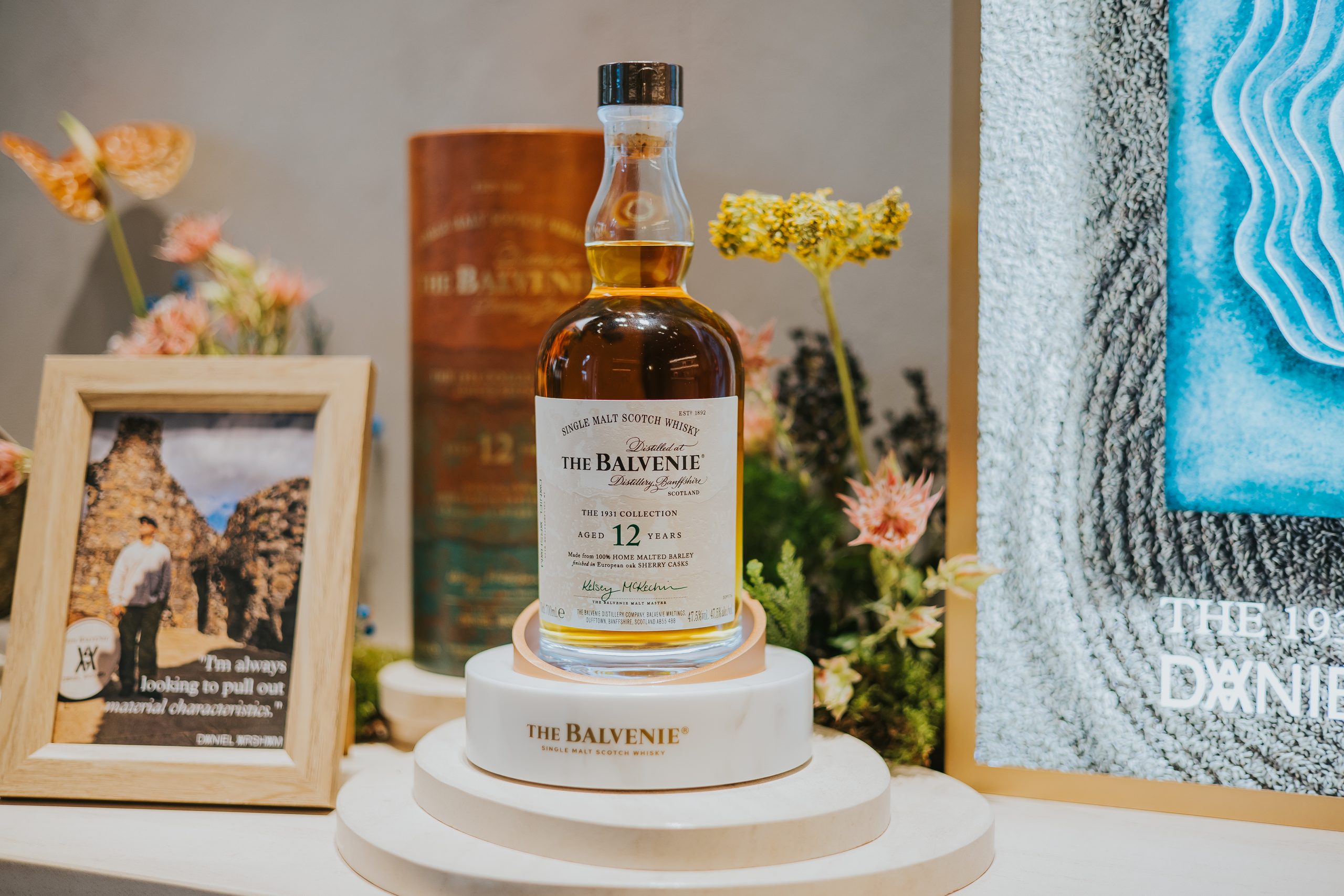
Bottled at 47.5% ABV, the nose brings notes of warm, malty biscuit, creamy toffee, delicate ginger and aromatic oak. On the palate, the classic Balvenie profile of mellow, honeyed barley-sugar sweetness segues into raisin and a hint of spice, before fading into a rich, velvety finish.
If the 12 Year Old is a celebration of The Balvenie’s historic malting floor, the 15 Year Old is a testament to the whole journey, from field to glass. It is made entirely from barley the distillery both grows and malts itself — a rare process in Scotch whisky today.
After being harvested from fields farmed by the Wiseman family — who have managed The Balvenie’s barley fields across five generations. The barley is then floor malted: soaked, left to sprout and then dried by hand — a time-honoured process that few distilleries practice today. Like the 12 Year Old, the distilled new-make spirit is then matured in American oak before finishing in Jerez sherry butts. Notes of sweet cereal meet toasted oak and spiced citrus on the nose, while the palate moves through rich oak, vanilla and raisin to a nutty, gently sweet finish. Bottled at 47.8% ABV, the 15 Year Old is only exclusive to travel retail.
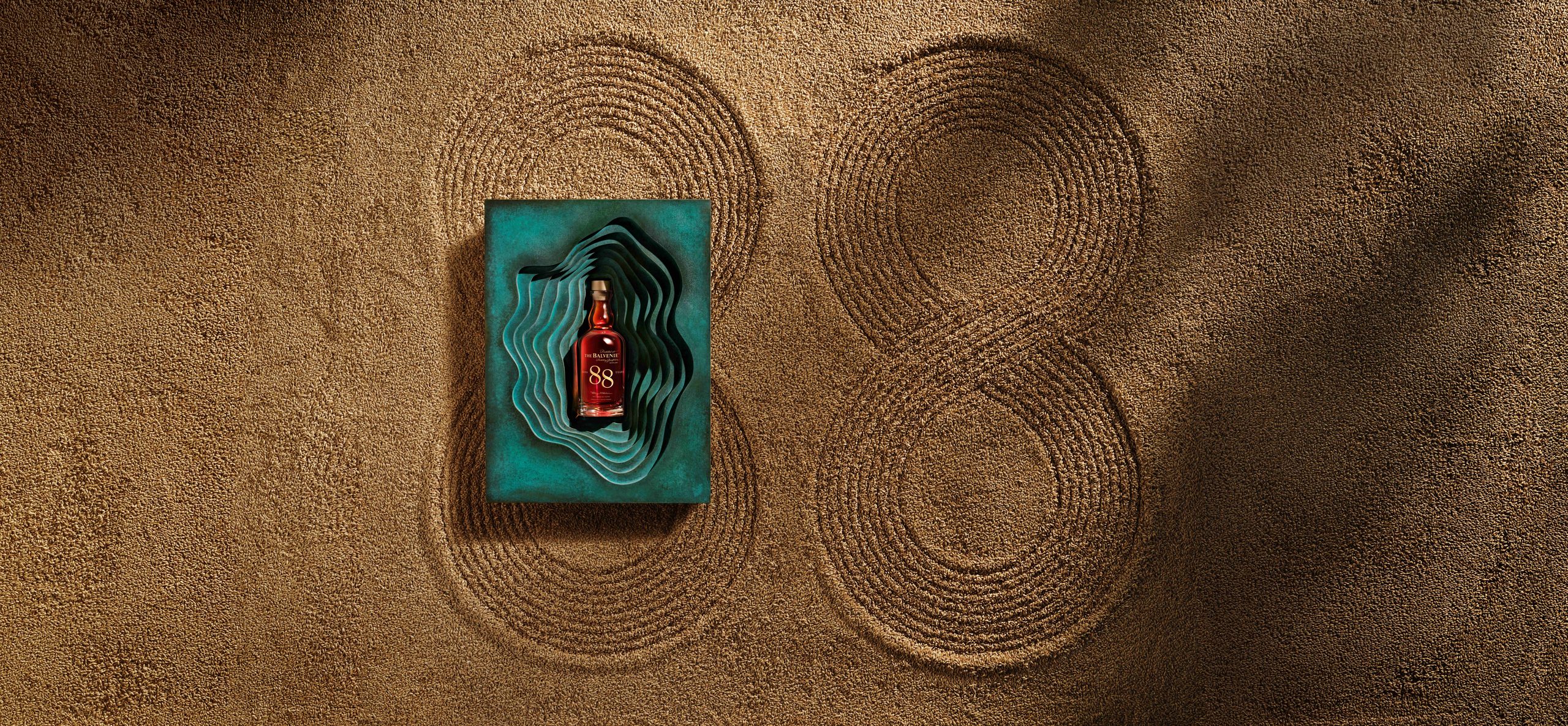
As part of the collection’s launch, The Balvenie worked with New York artist Daniel Arsham, creating a bronze and oak sculpture for the 88 Year Old in his signature “eroded” design language, appearing as if dug up from the future. For the 12 and 15 Year Olds’ packaging, Arsham continues that idea. Deriving inspiration from the distillery’s copper stills, it is finished in a copper tone shading into a green hue — echoing the verdigris patina of the 88 Year Old’s sculpture. Within, a textured copper-coloured lining reflects the materials of the distillery itself.
To mark the collection’s launch in Singapore, The Balvenie has partnered with dessert-based culinary concept Loulouca on a limited-time whisky experience running until 31 December 2026. Patrons can enjoy The Balvenie DoubleWood 12, The Balvenie Sweet Toast of American Oak Aged 12 Years, and The Balvenie 1931 Collection 12 Year Old Limited Edition by the dram at $16, $18 and $24 respectively, or explore the collection through a bespoke tasting flight featuring all three expressions at $30. For the full experience, pair the flight with Loulouca’s Shizuoka Melon dessert, where its piquant layers of matcha, Vanuatu vanilla mousse, lime, mint jelly and watercress offer a fresh juxtaposition to the whiskies’ rich notes.
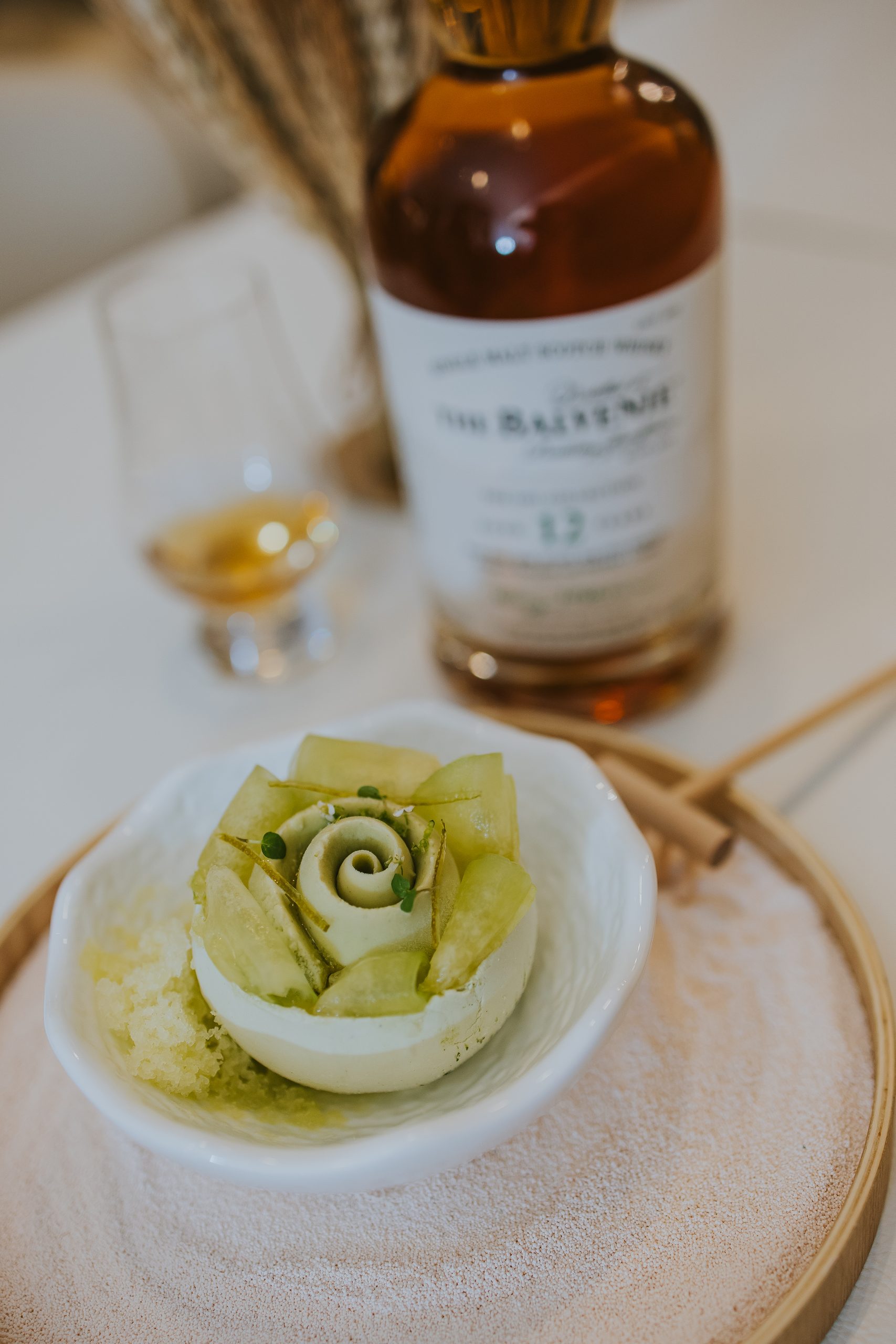
Reserve a table at Loulouca here.
Across the better part of a century, The Balvenie’s progress has come from patience and care — hand-turned barley, carefully judged casks, and traditional crafts handed down through generations. In a world where speed is so often crucial to development and growth, the 1931 Collection makes a quietly-confident case that the way forward sometimes means taking your time.
Images courtesy of The Balvenie.
For more on the latest in alcohol and luxury spirits stories, click here.
The post Liquid Patience: The Balvenie 1931 Collection appeared first on LUXUO.








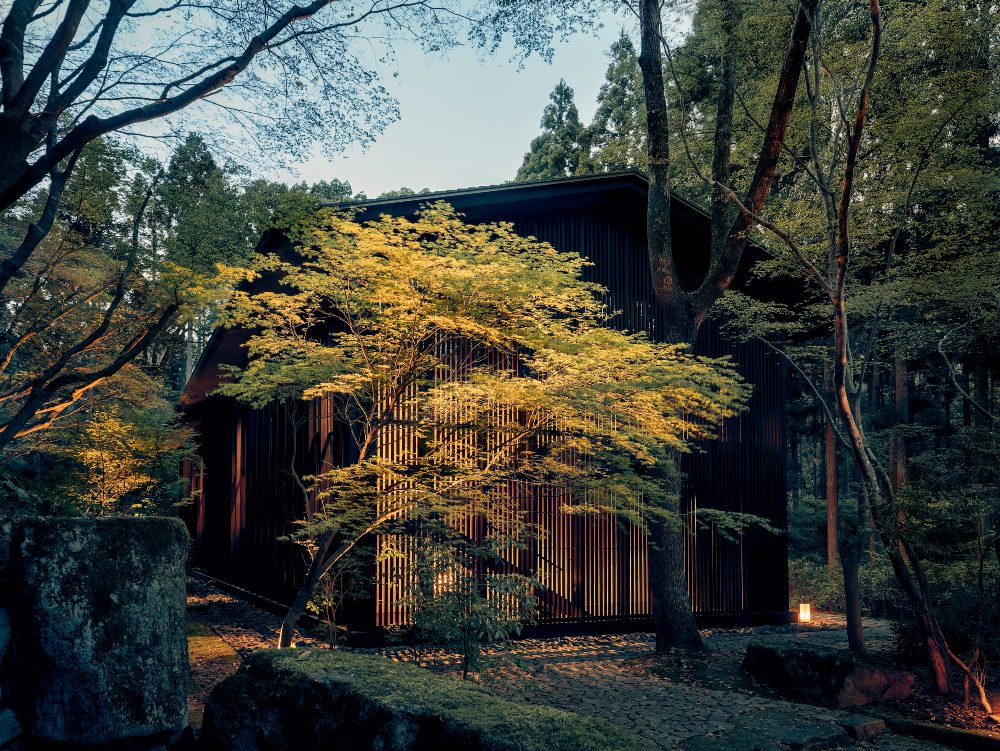
There is a moment, about thirty minutes after you leave Kyoto Station, when the city simply lets go of you. The streets thin, the roofs lower, the hills lean in, and somewhere past a bend you could easily miss, a gate opens onto a garden that has been quietly minding its own business for four hundred years. This is Aman Kyoto, and it does not announce itself. It waits, like the best people do.
I should confess something. I lived in Tokyo for a year, so I consider myself fluent in Japanese quiet: the polite, pressed, impeccably folded kind. This hillside hideaway speaks a different dialect altogether. This is the quiet of a place that has been left alone, and it hit me somewhere between the gate and the first moss-covered step. I arrived with a to-do list. It lasted until the moss.
The story begins long before the hotel. The land was once the garden of a textile museum, part of the same northern hills where an artistic community gave rise to the Rinpa school of painting centuries ago. When the brand came to build, the late Kerry Hill, the architect behind Aman Tokyo and Amanemu, did something very few architects have the humility to do: he mostly stepped out of the way. The retreat, which opened in November 2019, was among his last projects.
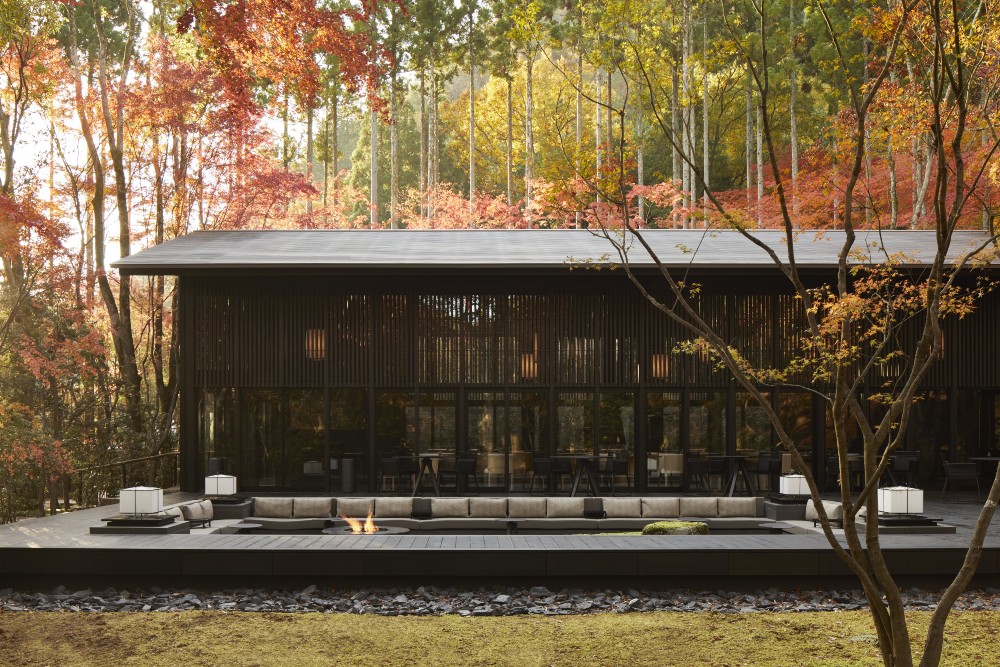
His black timber pavilions, topped with zinc roofs, sit lightly on the garden’s old terraced platforms, so the architecture feels discovered rather than built. Paths of stone blanketed in moss thread between them. A small stream murmurs along the edge. At the heart of it all lies a formal lawn, named the Kerry Hill Garden in his honor, where sculptural boulders rest as if placed there by a patient giant with excellent taste.
Inside, there is no ornament shouting for attention. The palette is muted, the lines are low and calm, and the furniture is custom-made and quietly extraordinary. The 26 rooms take their cue from the old Japanese inn, with glass that lets the forest walk right in. Pajamas are folded on the bed. Moss-green umbrellas wait by the door, so you can wander out into the rain looking like part of the landscape. (They are, I should note, the most photogenic things I have ever been lent and expected to return.)
The garden is a clock, and it tells the time in color. In spring the green is so new it looks wet. By summer it deepens into something dense and humming, the forest turned all the way up. And in autumn, the maples do what Kyoto’s maples have always done: they go crimson, slowly and then all at once, until the moss glows against a wall of red.
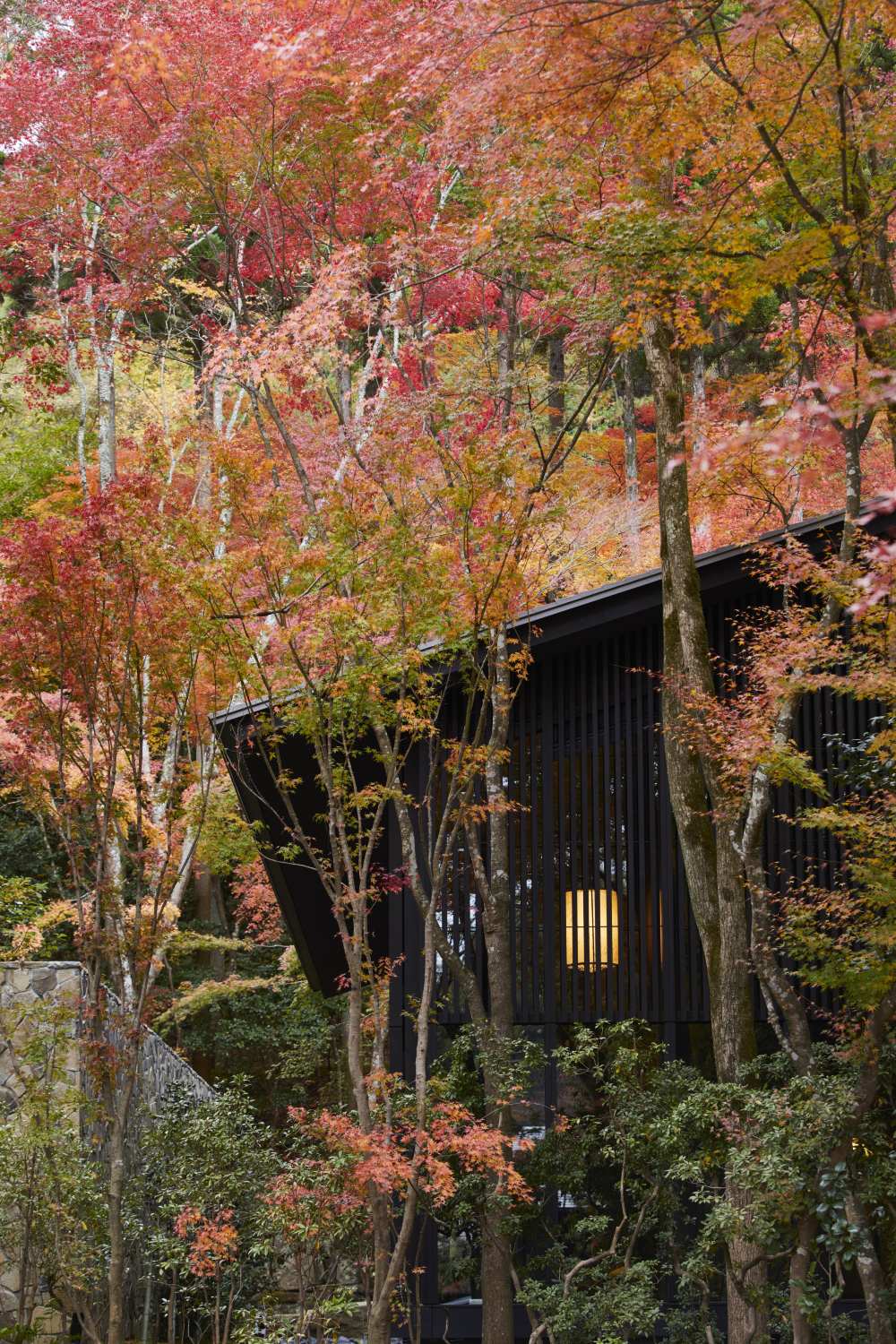
I came in late September, at the hinge of the year, when the green is still holding on but you can feel it thinking about crimson. A single leaf at the edge of the path had already made up its mind. It felt like being let in on a secret.
Beneath the grounds flows natural spring water, and the resort’s spa has made the most of it with traditional onsen bathing, indoors and out. I lowered myself into the water as the afternoon light went soft, steam lifting into the trees, and felt a year of airports leave my shoulders. Treatments draw on local ingredients, from Kyoto green tea to camellia oil, and the pace is deliciously unhurried.
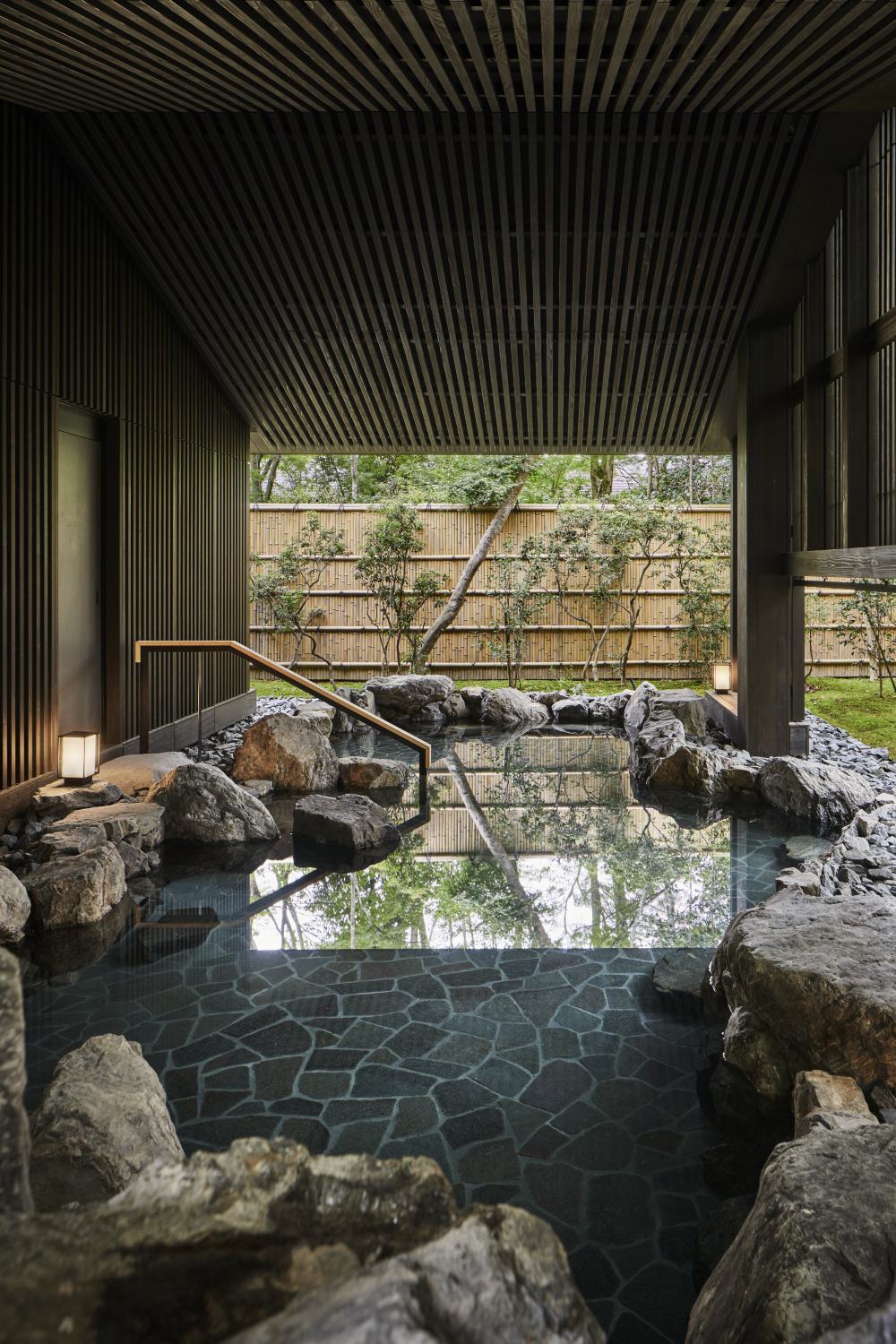
Then came the rain. At night it arrived on the roof and the leaves, a steady, tender percussion that no playlist on earth has managed to replicate. I lay in the dark with the garden breathing outside the glass and, for the first time in weeks, did absolutely nothing. At sunset, the lanterns come on along the paths, and the whole estate turns amber and hushed, as if the day has been gently put to bed.
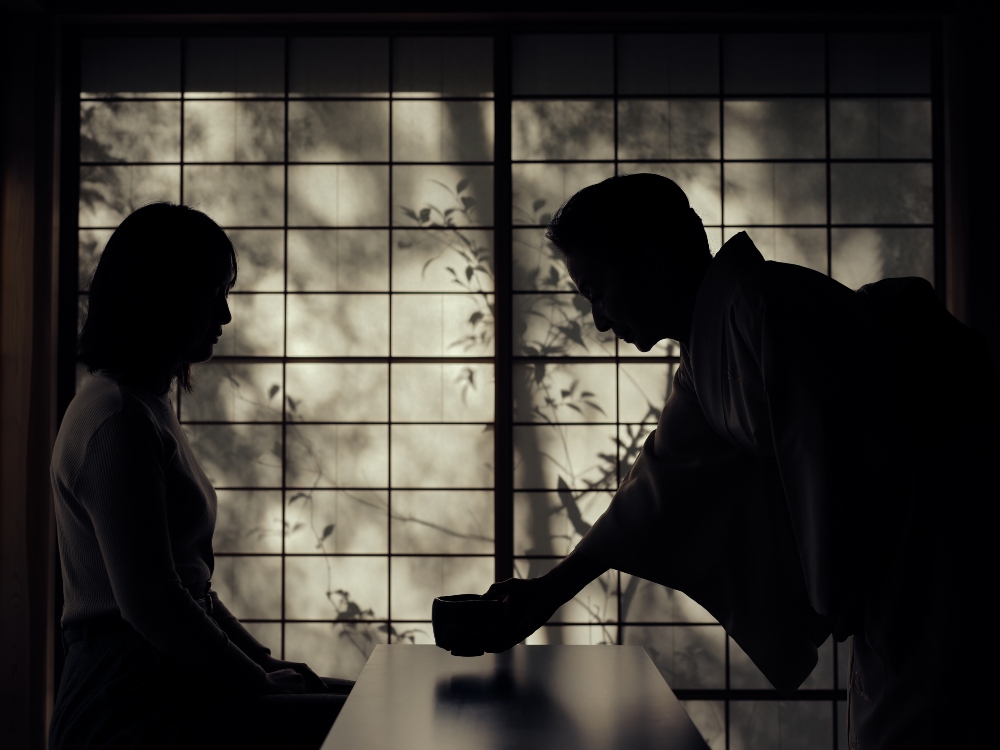
There is tea, and then there is tea in the forest. Tucked into the garden is a small tea house called Senkutsu, and a private ceremony there is, to my mind, non-negotiable. Dressed in a kimono, I knelt while the green tea was whisked and presented with a calm that made my own pulse slow to match. Every gesture was precise and unhurried. Nothing was for show. It is the closest I have come to understanding that in Japan, tea is less a drink than a way of paying attention.
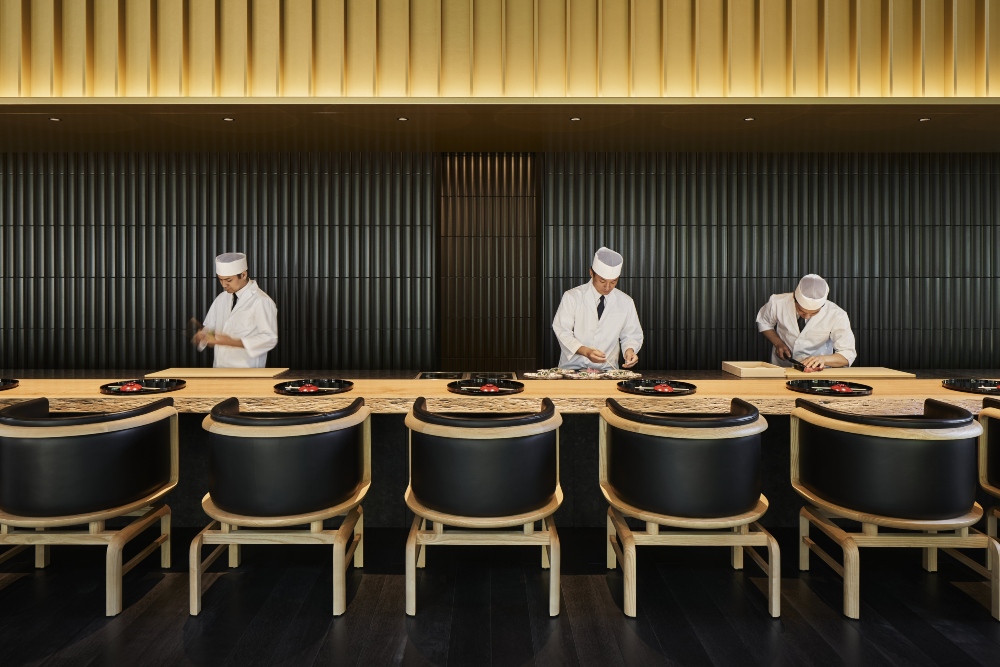
The ritual returned after dinner at Taka-an, the Japanese restaurant, named in homage to the artist Honami Koetsu. I sat at the counter for an omakase sushi dinner, watching the chefs work with the focus of surgeons and the grace of dancers, each piece handed over at the exact moment it should be eaten. Tea afterward felt like a full stop to a perfectly written sentence.
And then, because I am a person with weaknesses, there was the muskmelon shaved ice. I will say it plainly: I came for the architecture and stayed for the shaved ice. Fragrant, cold, and absurdly delicate, it dissolved on the tongue like a summer you didn’t want to end.
I have eaten breakfast at some of Tokyo’s best hotels. I say this with authority and a mild sense of betrayal: the Japanese breakfast here was my absolute favorite of my entire Japan trip. Perhaps it was the setting, the garden washed in early light, the small bowls arriving one by one. Perhaps it was that I had slept like a stone. Either way, I would fly back for it.
Just over half a mile from the gates stands Kinkaku-ji, the Golden Pavilion, glittering on its pond like a rumor of wealth. It is breathtaking, and it is also, let us say, popular. The beauty of staying so close is that you can visit the gold and then retreat to the green, which is quite a lot more restful.
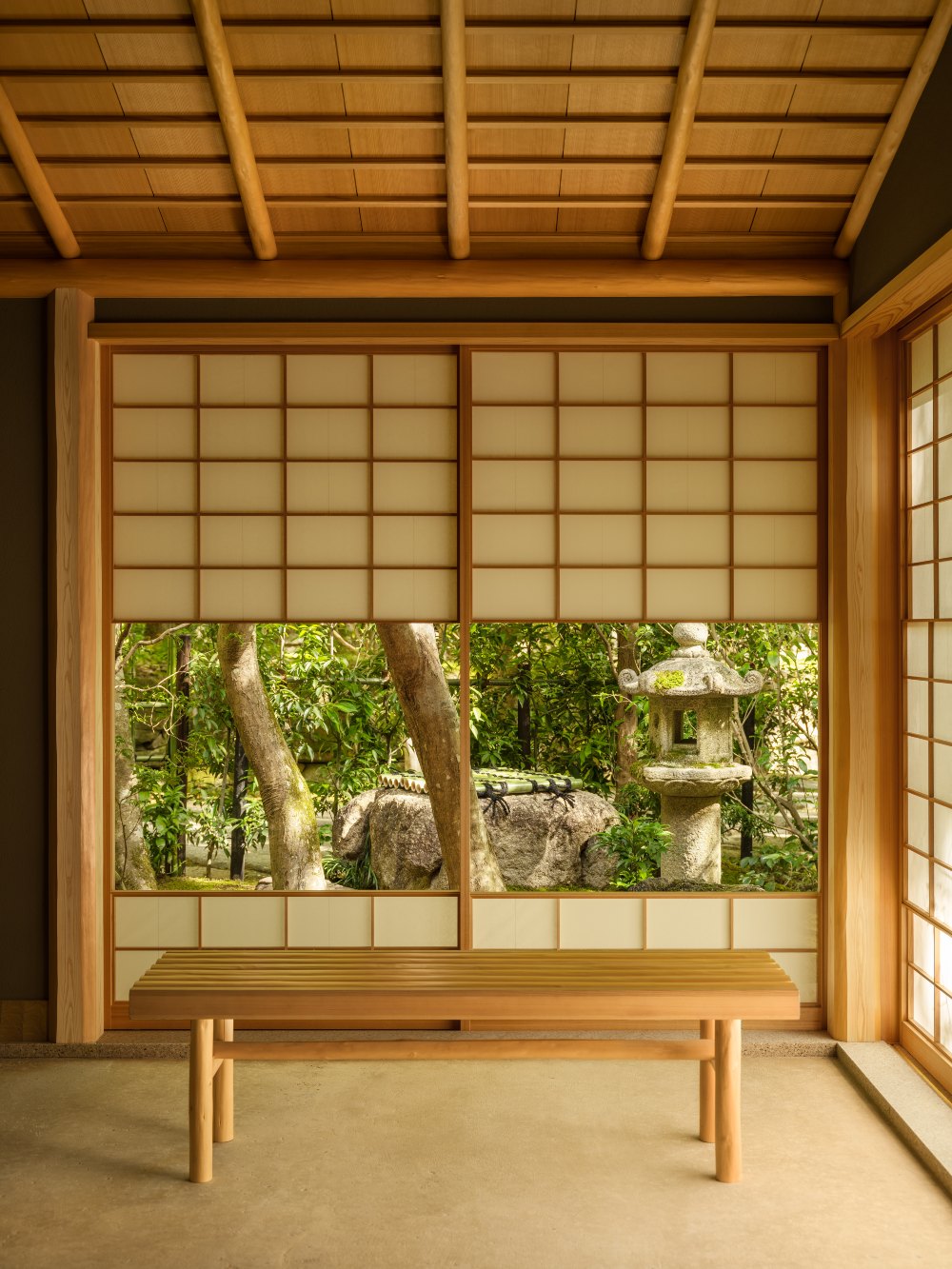
Departure comes too soon, and gently, which somehow makes it worse. The car pulls away, the moss recedes, and the city rushes back in with its noise and its neon. But a little of the forest stays with you. Aman Kyoto is not a hotel you stay in so much as a feeling you carry out: the sound of rain, the weight of a tea bowl, a quiet that has finally learned your name.
Images courtesy of Aman.
For more on the latest in lifestyle, culture and travel reads, click here.
The post Aman Kyoto: Where the Forest Keeps a Secret appeared first on LUXUO.
Exceptional gemstones are driving fresh creative ambition in high jewellery, with leading maisons transforming rare natural materials into increasingly expressive designs. In 2026, exceptional sapphires and emeralds have inspired creations that combine advanced craftsmanship, distinctive colour and historic design codes. Their significance extends beyond carat weight: the stories, origins and creative decisions surrounding these stones increasingly shape their appeal.
The Gemological Institute of America’s reporting from the 2026 Tucson gem shows identified interest in selected fancy-colour sapphires and precision cutting, while documenting differences in supply and demand across the trade. This specialist snapshot offers useful context, rather than evidence of a universal boom in gemstone prices.
Five creations demonstrate different forms of momentum. Graff foregrounds an exceptional Sri Lankan sapphire, Bvlgari explores unusual colour, Cartier and Van Cleef & Arpels reinterpret historic jewellery traditions, and Tiffany & Co. shows how a celebrated diamond can remain culturally relevant across generations.
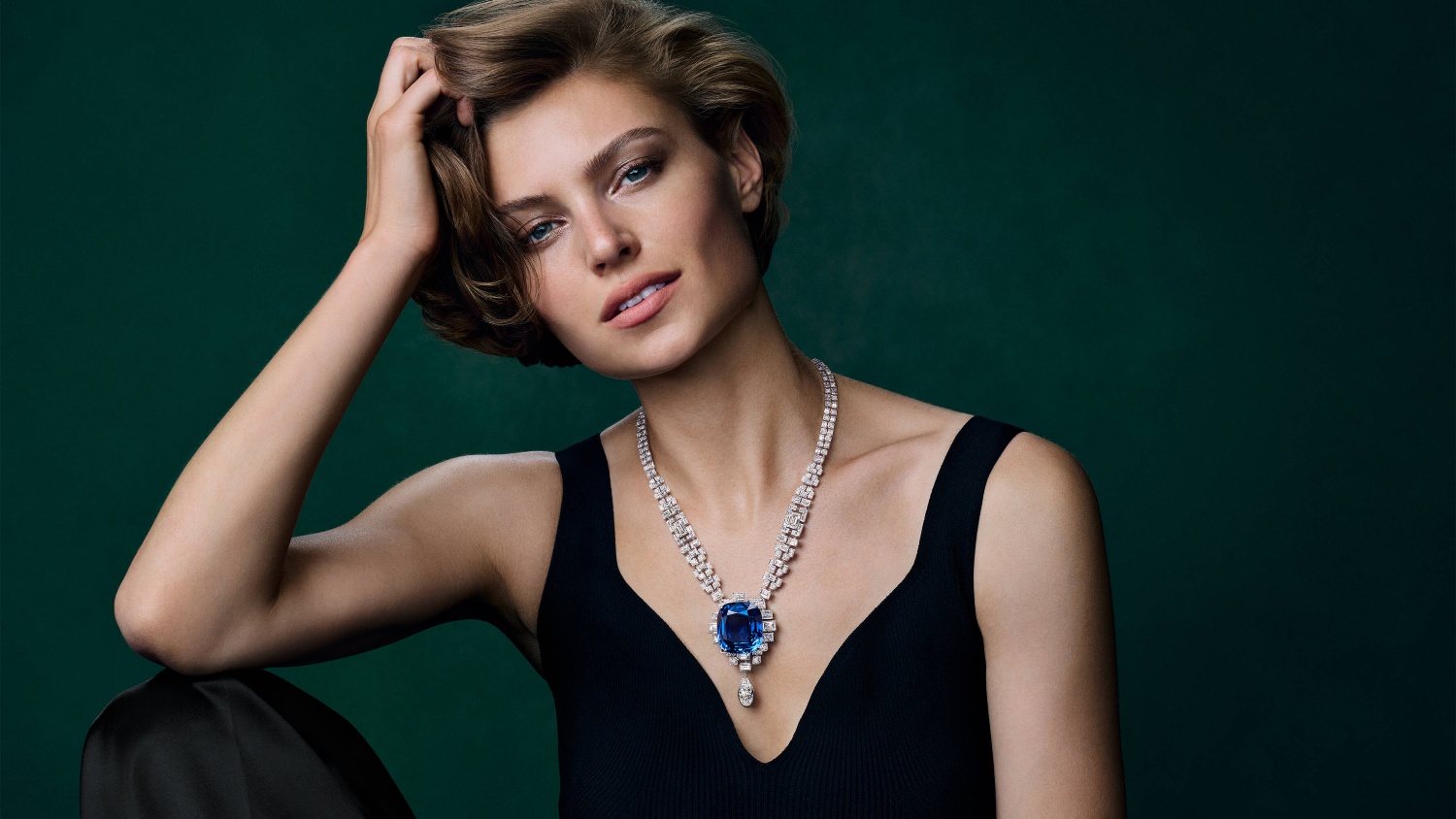
Graff’s September 2026 Art of Colour campaign highlighted a necklace featuring a 118-carat cushion-cut, unheated Sri Lankan sapphire. Its saturated blue colour anchors a composition of more than 54 carats of diamonds, demonstrating the British jeweller’s approach to designing around the natural character of a principal stone.
A three-carat pear-shaped diamond sits above a sunray arrangement of baguette diamonds, creating contrasts of light and scale without competing with the sapphire. The setting calls attention to the rarity of a gemstone of such size and quality that has not undergone heat treatment.
Rather than treating the stone as an interchangeable centrepiece, Graff allows its colour, proportions and presence to guide the design. This approach illustrates how exceptional natural material can create an opportunity for artistic and technical refinement. The necklace featured in the September campaign, although its precise first unveiling date has not been established; it should therefore be regarded as a 2026 campaign highlight rather than a confirmed new launch.
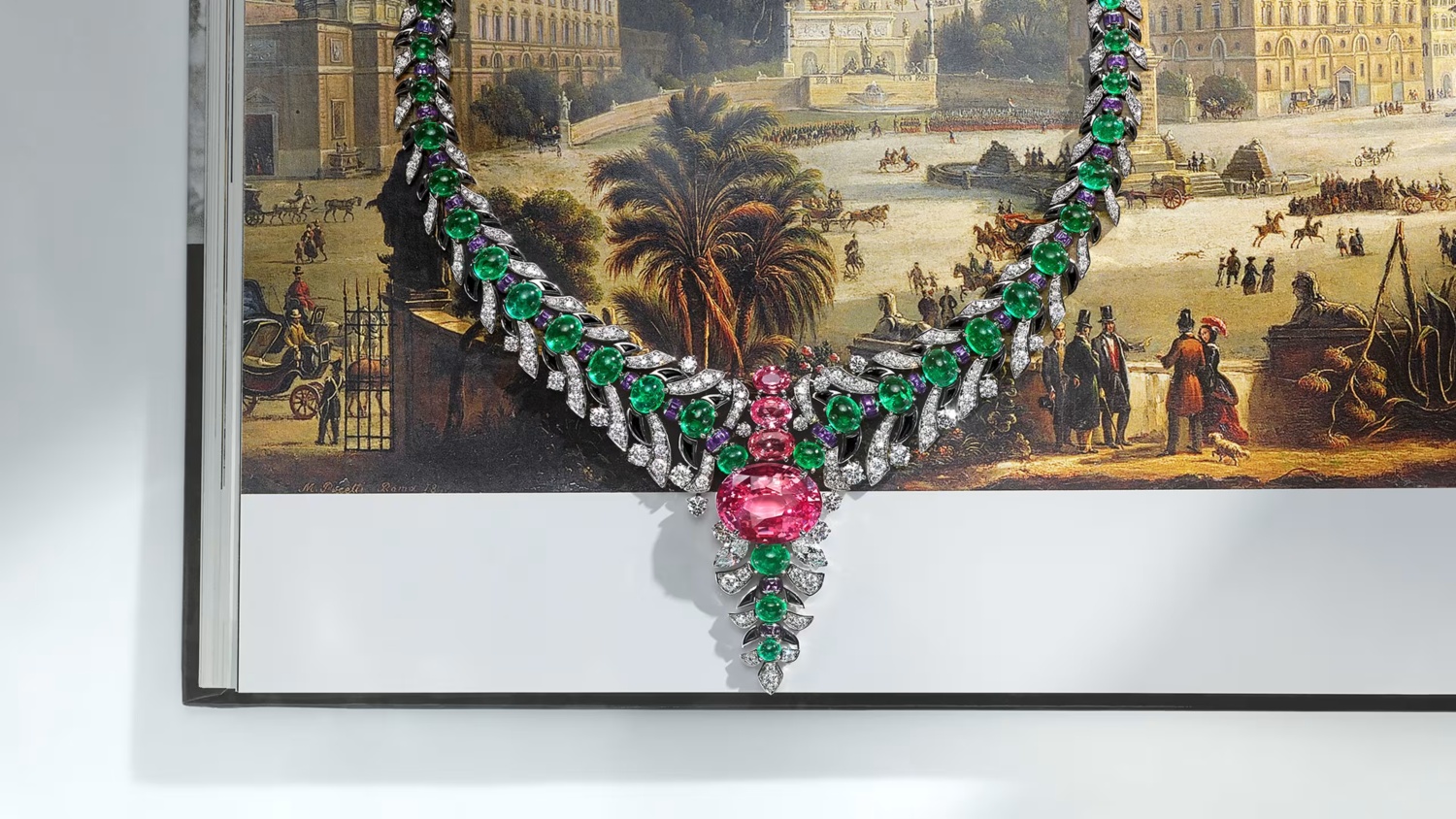
Bvlgari’s Eclettica collection, unveiled in March 2026, connects high jewellery with painting, architecture and sculpture. The Secret Garden necklace centres on a 26.65-carat Sri Lankan Padparadscha sapphire, prized for the delicate interplay of pink and orange that distinguishes this rare sapphire variety.
Inspired by Rome’s hidden courtyards at sunset, the design surrounds the central stone with emeralds, purple sapphires, diamonds and onyx. Contrasting colours provide depth and movement, while the composition captures the Roman house’s unmistakably expressive approach to gemstone combinations.
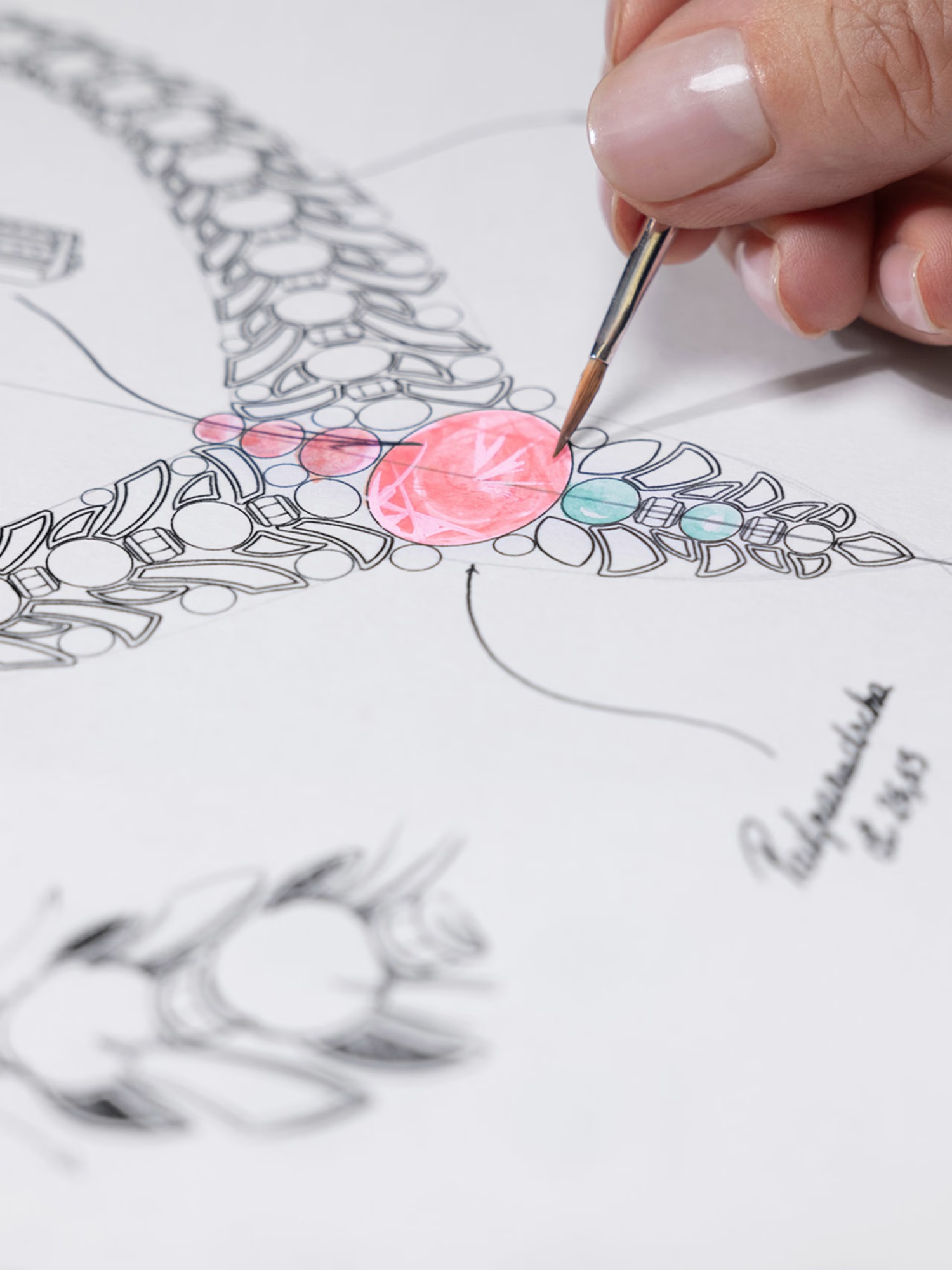
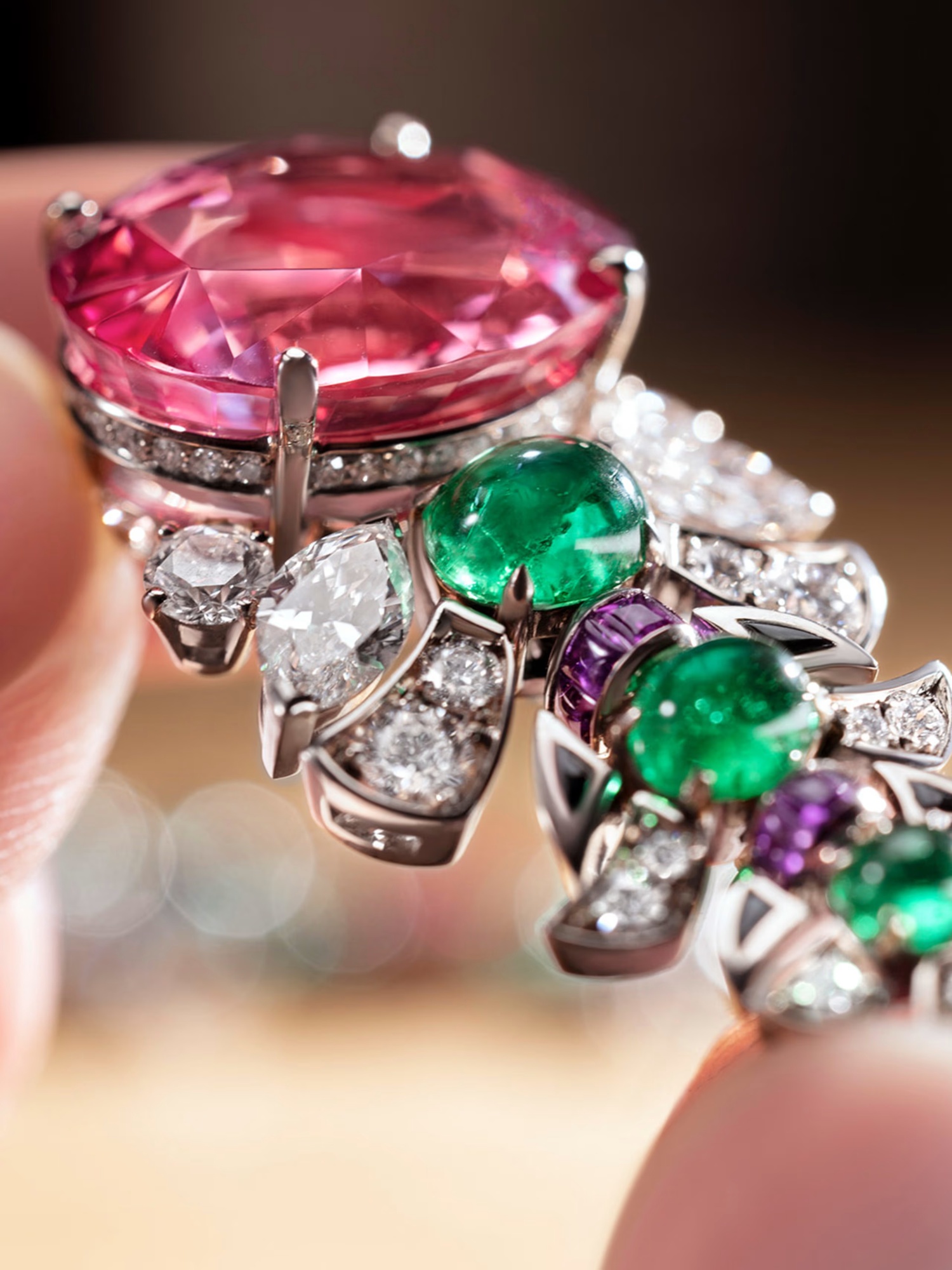
Bvlgari’s Secret Garden necklace centres on a rare 26.65-carat Padparadscha sapphire, surrounded by emeralds, sapphires, onyx and diamonds.
Under jewellery creative director Lucia Silvestri, the stone becomes more than a demonstration of rarity. Its nuanced colour informs the necklace’s artistic language, allowing the maison to build a complete design around a distinctive natural characteristic. The piece belongs to a collection of more than 160 jewellery and watch creations, reflecting Bvlgari’s continuing exploration of colour and unconventional materials.
For collectors, the appeal lies in the meeting of gemological rarity with a recognisable design identity. The result provides a contemporary counterpoint to historic pieces whose significance developed over decades.
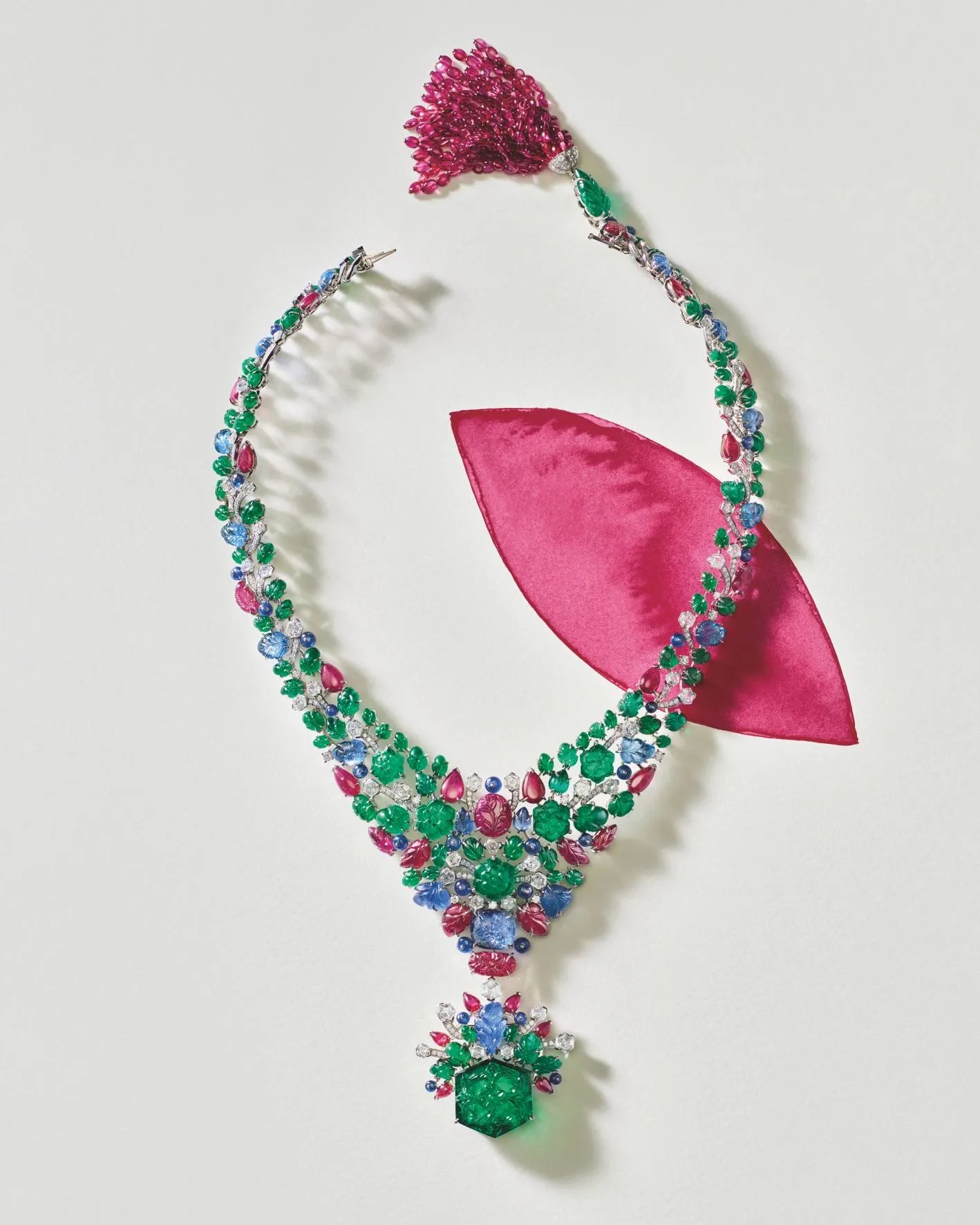
Cartier’s 2026 Le Chœur des Pierres collection explores the expressive possibilities of gemstones through more than 125 unique creations. Among them, the Tutti Kanya necklace features a 30.33-carat engraved Zambian emerald alongside carved rubies, sapphires and emeralds.
Its intricate composition draws on the maison’s Tutti Frutti design language, which emerged in the early twentieth century through colourful carved stones influenced by Indian jewellery traditions. The new creation revisits that vocabulary through contemporary workmanship rather than simply reproducing an archival design.
Floral motifs formed from carved gemstones give the necklace texture and movement. A detachable ruby tassel and a central motif that can also be worn as a brooch introduce versatility, making transformability an integral part of the design. These details place technical construction alongside aesthetic ambition.
The collection reportedly required approximately 85,000 hours of work across Cartier’s designers and artisans. Tutti Kanya shows how the momentum of high jewellery can come from revisiting an established aesthetic and discovering new ways to interpret it, with important coloured stones guiding the process.
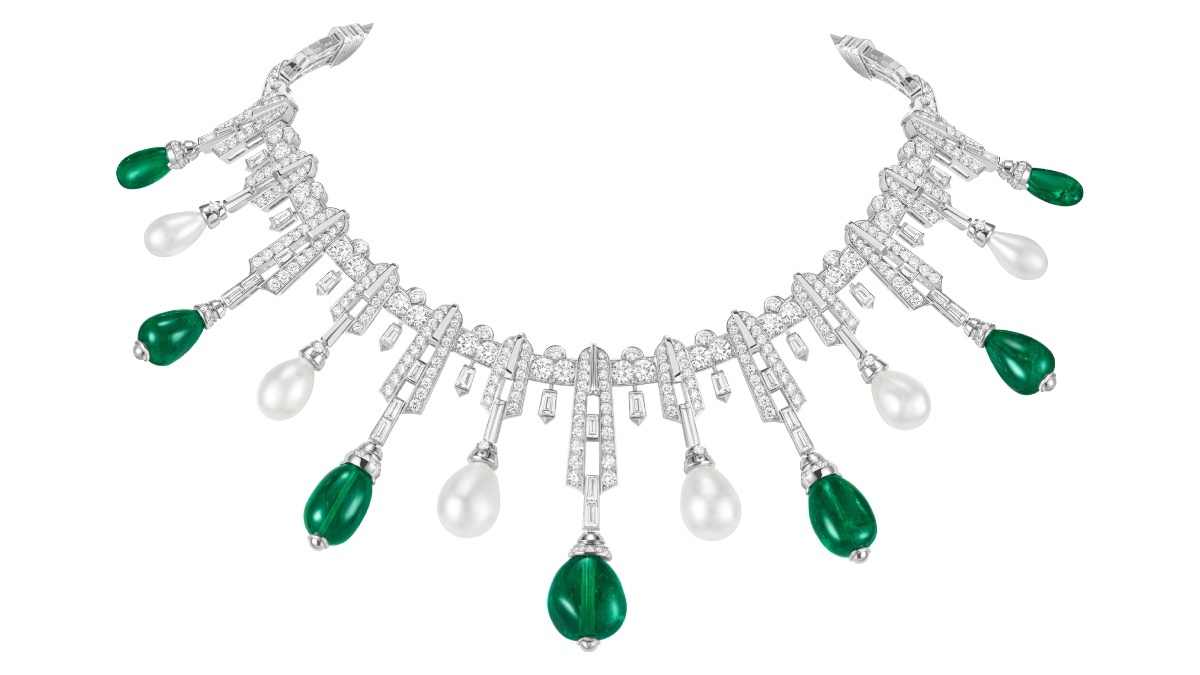
Van Cleef & Arpels looked to ancient Egyptian culture for its Fascinating Egypt high jewellery collection, unveiled in June 2026. The Princesse du Nil necklace, one of its central creations, takes inspiration from a historic emerald-and-diamond collaret associated with Princess Faiza of Egypt.
The contemporary interpretation features ten Colombian emerald drops totalling 107.37 carats, complemented by seven natural white pearls weighing approximately 85.13 carats. White gold, platinum and yellow gold bring the stones together in a composition that reflects the maison’s long engagement with history and ornament.
Developed as part of a collection of 180 creations over four years, the necklace transforms an archival reference into a present-day expression of high jewellery. Its importance lies in the relationship between research, gemstone selection and the decisions required to reinterpret a historic silhouette.
Unlike a simple recreation, the piece draws on an earlier design while allowing extraordinary emeralds and pearls to shape its current form. It demonstrates how jewellery heritage can remain a source of contemporary creative momentum, connecting cultural memory with the skill of present-day artisans.
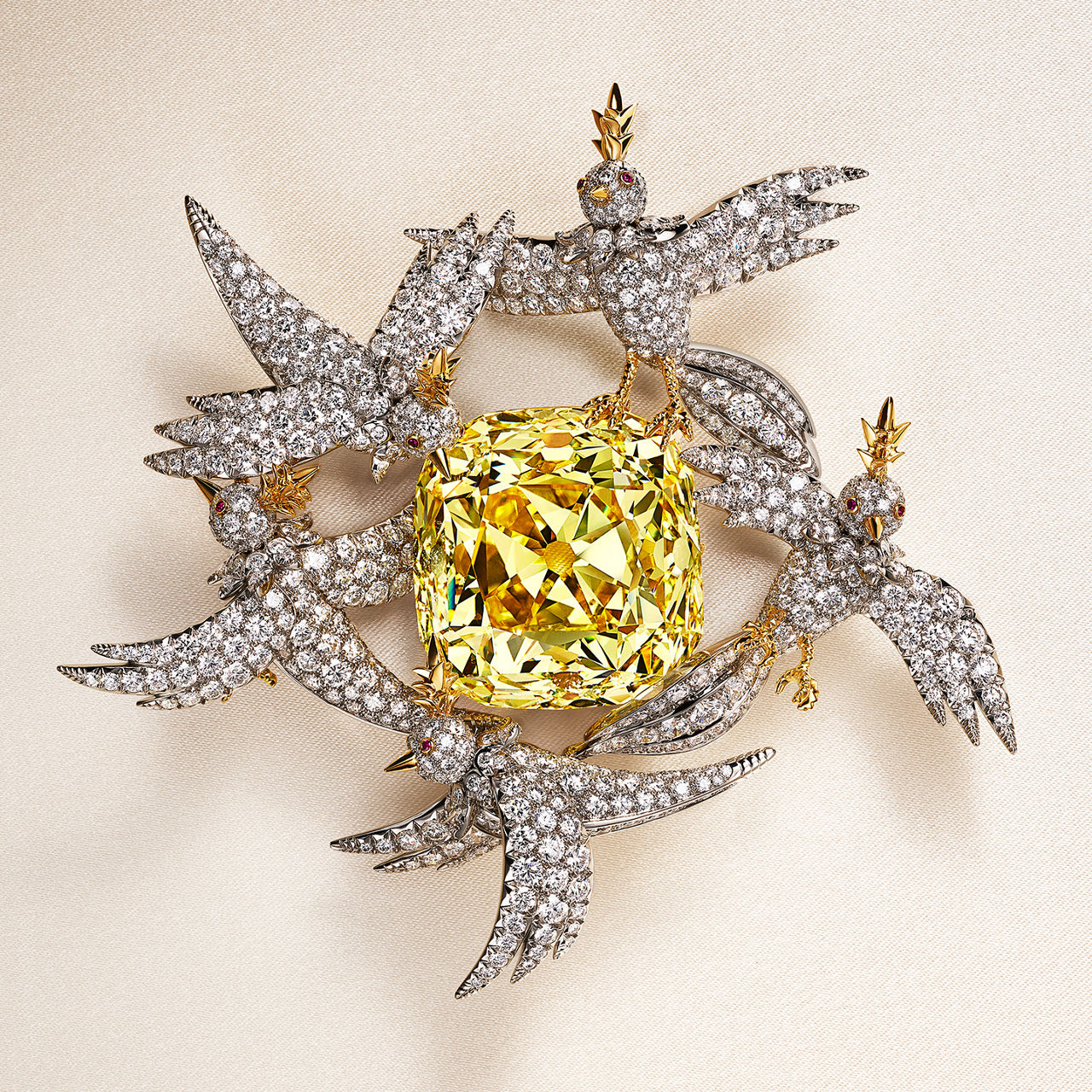
Contemporary launches offer one perspective on innovation; the Tiffany Yellow Diamond shows how an existing gemstone can acquire new cultural meaning. Discovered in South Africa in 1877 and acquired by Charles Lewis Tiffany the following year, the 287.42-carat rough was cut into a 128.54-carat cushion-shaped brilliant.
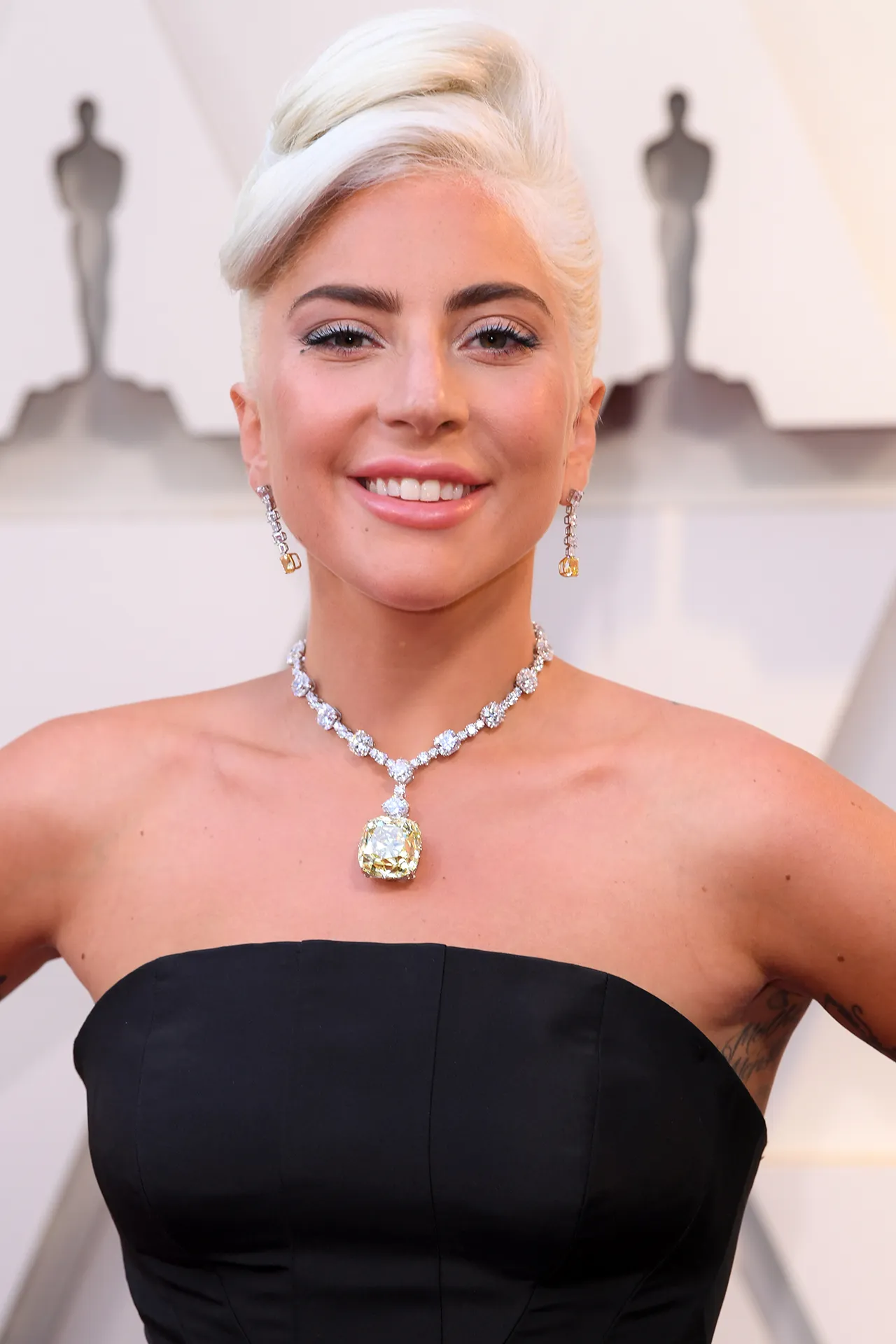
The diamond’s appearances have contributed to its enduring recognition. Audrey Hepburn wore it for Breakfast at Tiffany’s promotional photographs, Lady Gaga at the 2019 Academy Awards and Beyoncé in the maison’s 2021 About Love campaign.
In 2023, Tiffany unveiled a Bird on a Rock-inspired setting to mark the reopening of its Fifth Avenue flagship, The Landmark. Requiring nearly 2,000 hours of craftsmanship, it allows the diamond to be worn as a pendant or brooch.
The gemstone is not a 2026 launch, but its inclusion provides historical perspective. Successive settings and appearances have kept a nineteenth-century discovery connected to contemporary culture, illustrating a different form of momentum: the renewal of an established legacy.
These five creations reveal that high jewellery’s progress takes several forms. Rare stones can inspire entirely new designs, while historic motifs and celebrated treasures gain fresh significance through technical ingenuity and reinterpretation.
For collectors, provenance, craftsmanship and cultural context can be as compelling as colour and carat weight. Their importance also demands discernment: each gemstone’s quality and history must be assessed on its own merits, beyond the prominence of the maison presenting it.
High jewellery’s momentum ultimately rests on more than the discovery of remarkable stones. It lies in the ability to transform them into creations whose stories continue to evolve long after their unveiling.Exceptional gemstones are attracting renewed attention within the world of high jewellery, as collectors place growing importance on rarity, provenance and historical significance. According to Christie’s – one of the world’s leading auction houses founded in London, demand for coloured gemstones surged in 2026, particularly for emeralds, rubies and sapphires, with Asia and the Middle East expected to drive further interest in 2026. Alongside this growing demand, historic creations and exceptional stones with distinguished provenance continue to command attention among collectors.
For the world’s most prestigious jewellery houses, this growing interest reinforces the significance of gemstones that have shaped their identities across generations. Their remarkable characteristics, craftsmanship and distinguished provenance have established milestones that continue to influence each maison’s legacy. Through cultural reinterpretations, historic acquisitions and renewed collector attention, these creations continue to acquire further significance.
For more on the latest in luxury jewellery reads, click here.
The post The Extraordinary Gemstones Driving High Jewellery Forward appeared first on LUXUO.

It is hard to overstate just how seismic an impact the Monaco Evergraph created at its launch during Watches and Wonders Geneva this year. Housed in the well-loved and instantly recognisable square Monaco case, the watch might have passed for another nice new Monaco, but its movement is anything but conventional. One could think of it as retaining a classic car’s chassis, though after making some improvements and modifications, while entirely replacing the internal combustion engine with a hydrogen fuel cell – a wholly different method of energy transformation and power generation that is far more fuel-efficient and responsive, free of emissions and pollutants, and almost silent.
Developed by TAG Heuer Lab, in collaboration with Vaucher, the Calibre TH80-00 automatic movement is that groundbreaking engine swap. Instead of incrementally refining existing chronograph designs, the team took the audacious decision to build a new chronograph from the ground up. The watchmakers overhauled the conventional concept of chronograph construction by foregoing levers and springs in favour of two flexible bistable components, to improve functionality and the tactility of actuating start, stop and reset with fast, crisp transitions and no wear or deviation in performance over time and after repeated use.
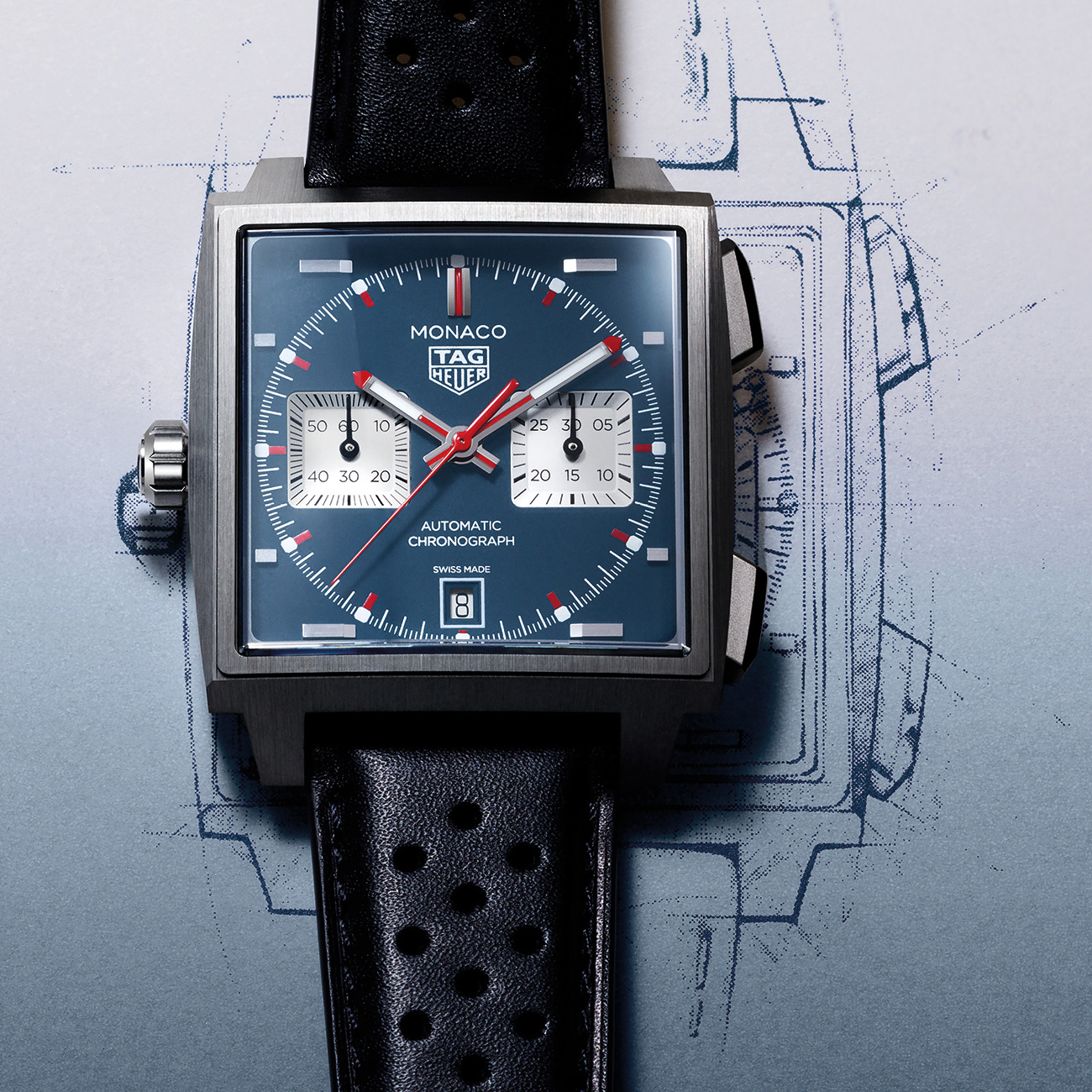
The Calibre TH80-00 is not the only upgrade in the Monaco collection this year. Unveiled concurrently, the new Calibre TH20- 11 automatic in-house movement is derived from the Calibre TH20- 00 automatic chronograph movement after years of development to rework the winding stem and crown to the left, and named in tribute to the Calibre 11 of 1969, with the mechanical throughline being the left-handed winding. However, that progenitor was a composition of a Buren base movement with a Dubois-Depraz chronograph module, whereas the Calibre TH20-11 features a fully integrated construction, with a column-wheel-based mechanism. In a visual callback to the edition of the Monaco made famous by Steve McQueen, the Calibre TH20-11 is housed in a refined titanium Monaco case featuring the same navy, white and red colourway, and also available in variations with a green sunray brushed dial or a black opaline dial.

Firmly in the driver’s seat for these momentous releases is TAG Heuer’s Chief Product Officer Maria Laffont, whose tenure at the La Chaux-de-Fonds brand has seen consecutive wins since she joined in March 2021 as Vice President Design & Product: the Carrera Chronograph “Glassbox” 39mm unveiled for the collection’s 60th anniversary in 2023, the Carrera Date Plasma Diamant d’Avant-Garde of 2024 and its coloured lab-grown diamonds, the 2025 introduction of the TH-Carbonspring oscillator (in the Monaco Flyback Chronograph TH-Carbonspring and the Carrera Chronograph Tourbillon Extreme Sport TH-Carbonspring limited editions), plus collaborative editions with Porsche and with Team Ikuzawa and Bamford Watch Department.
We spoke to Laffont during Watches and Wonders this year about the latest Monaco chronograph innovations, as well as setting the course for the seamless fusion of technical and material innovation, adherence to brand heritage, thoughtful functionality, and impeccable aesthetics.
This is a very good start, for sure. The chronograph is our defining complication, because TAG Heuer is about performance, sports and athletes. It is the timekeeper of high-stakes moments, these unique moments when a driver will break his record, these special and almost suspended moments when each and every second counts. That’s why timekeeping is absolutely crucial for us, and timekeeping is synonymous with chronographs. Today, we have different options for chronographs, starting from quartz chronographs, which we will continue to develop, and the automatic chronograph, and now the new Evergraph. And then we have the king of the chronograph, the split-second. We already have these in our range, and we are already working on other stories, because this is our identity.
It’s a defining moment, because this Evergraph is the reinvention of the chronograph mechanism itself, and this is for us a huge milestone, not only for the Monaco collection, but for the brand, and I dare to say, for the industry. We all know the traditional mechanism with the vertical (and horizontal) clutches, and today we have a totally new way to build a chronograph. We’re doing that because we are driven by innovation, and what we wanted to achieve is to improve the chronograph in terms of performance, durability and reliability. For that, we are very lucky because we have a TAG Heuer Lab in our manufacture in La Chaux-de-Fonds, and in this TH-Lab, we have great engineers who are in constant dialogue with the creative teams and the designers. This brings to life crazy concepts such as this (bistable compliant) mechanism. We invented this flexible component, which replaces many components that are stiff, so it allows the mechanism to have less friction and be durable. Chronographs are so important to us, but in the past the technologies to produce this kind of very special component didn’t exist. That’s why it’s important to innovate.
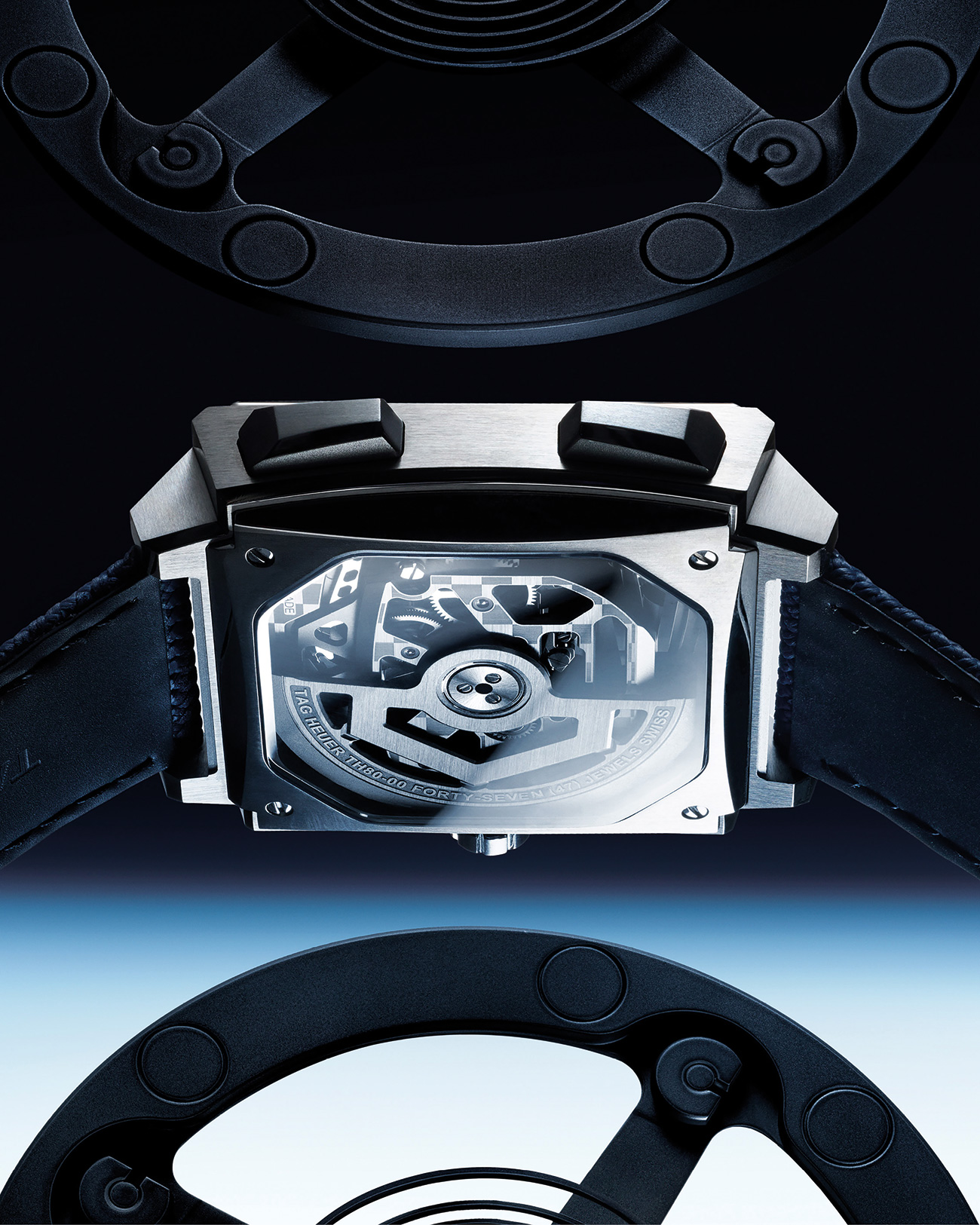
We were convinced that there was a way to improve and, when we are crafting and designing timepieces, we always have athletes in mind. We’re all about the performance, it’s absolutely key, and that’s why we’re always pushing the limits by keeping this in mind. We were convinced that there is a way to improve this chronograph mechanism. So it’s not because the existing one is bad; it’s more because we’re driven by this belief that we can go even further and find a new way. It’s more of a mindset.
It was through team brainstorming. “Graph” recalls chronographs, and it’s also our internal language – we have the Mikrograph – and a brand signature. “Ever” conveys the fact that it’s durable and reliable. But we had many different options, and as is often the case at TAG Heuer, we arrived at the solution through teamwork. In the end, it’s true that someone has to decide, and I have that great responsibility, but it’s always done through a team – team debate, teamwork, team spirit – this is the best way to succeed.
For me, it’s just adding a new category, so it will not replace others, because we need others also – the quartz chronograph, the automatic chronograph, the [manual-winding] chronograph, and now you have the Evergraph; it will not change the rest of the assortment. And being a square movement, the TH80-00 needs a square case, so for the moment it stays in the Monaco collection. In the future, let’s see.
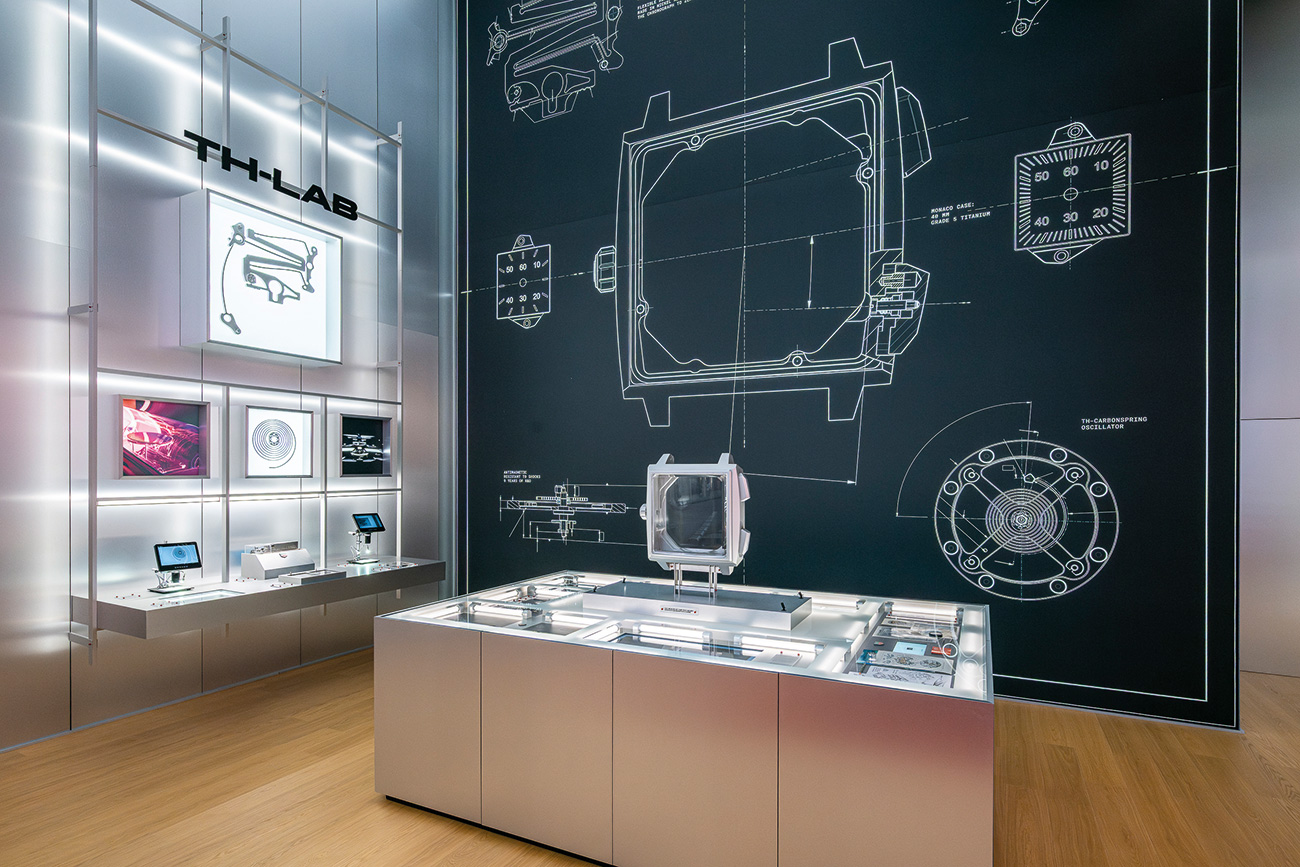
We have a specific price for this specific chronograph, and there is no impact on others’ price positioning. But what is true is that the demonstration of this savoir-faire, this innovation, has a halo effect, because, for sure, an avant-garde demonstration shows how far we can go and how we can create and innovate. So I think it reaffirmed that we are avant-garde. This is more about our identity, I would say it reinforces our brand equity, but it has no direct impact on the price positioning.
First, the Monaco is our icon, and we are driven by performance and the fact that it has to be very easy to wear because it’s meant for athletes. But it’s true that with a square, bold watch, we had some constraints in terms of comfort on the wrist. It was a bit heavy, so sometimes it can shift, and it was not for every wrist, because it’s quite big. We are the watchmaker of performance, so we needed to have for our icon something that is really ergonomic. Obviously, we kept the essential codes of the icon, such as the square shape; we even reinforced the square shape through the bezel, which used to be a bit rounded and now it’s square, so it follows the sapphire glass’s edges, and the top case is sloped and more integrated. And the caseback used to be flatter and not as easy to wear, but now it’s sloped and bevelled, so it’s perfect and smooth on the wrist. As for the weight, now the case is titanium, which is robust and light.
On the dial, we also kept the essential codes, because these are so recognisable, such as the sub counters and the iconic blue as worn by Steve McQueen in Le Mans, these are legendary and collectors love them. The horizontal indices now have a curve at the end, but it used to be the reverse, and now we decided to have it like a pointer closer to the [white dots on the minute track], to be more functional because it captures the light. And [those white dots are] square now, but before, they were rounder. These are all very subtle details, and if you don’t know, maybe you will not notice them.
“We are always passionate about our projects, and I have the great chance to be surrounded by passionate people”
It’s really this dialogue that we just discussed, which is good because there’s back and forth: The designer may push for something, and the technician may invent something new. It’s a winning recipe. And emotion is key because we are in watchmaking, so we are creators of emotions. It’s about intuition too. It’s something that you don’t have a recipe for. We are always passionate about our projects, and I have the great chance to be surrounded by passionate people. And if we create emotion, from the very beginning we know if it will work, because…I’m convinced by the team spirit. Watchmaking is like an orchestra, because you have all the different components, and for each one you have an expert behind it, plus the designers and more. That’s why this team is so important, because the watch is the creation of a team.
(laughs) Maybe I’m too humble to say that, but yeah, kind of, we could say that.
This story was first seen as part of the WOW #86 Autumn 2026 issue.
For more on the latest in luxury watch reads, click here.
The post Inside TAG Heuer’s Next Chapter with Maria Laffont appeared first on LUXUO.


Building wealth has always been about making thoughtful financial decisions, recognising opportunities and giving investments enough time to grow. For generations, people have relied on property, stocks, bonds and businesses to improve their financial standing. Those options remain important, but technology has introduced other ways to participate in the financial world.
Digital assets are becoming part of that conversation. Cryptocurrencies, tokenised investments and other blockchain-based assets have attracted attention from people interested in expanding their investment choices and exploring opportunities beyond traditional markets.
For anyone hoping to enjoy greater financial independence and a more luxurious lifestyle in the future, understanding digital assets could be worthwhile. However, their potential comes with substantial uncertainty, making careful research and realistic expectations just as important as identifying promising opportunities.
Digital assets are items of value or rights that exist in electronic form. The term covers several categories, although cryptocurrencies and blockchain-based tokens receive much of the attention in financial markets.
Bitcoin and Ethereum are familiar examples of blockchain networks and their associated cryptocurrencies. Other digital assets may represent ownership interests, access to services or claims connected to physical investments.
What makes certain digital assets different from conventional investments is the technology supporting them. Blockchain networks maintain records of transactions across distributed computer systems, allowing participants to verify transfers according to the network’s rules.
This technology can reduce reliance on some traditional intermediaries, although trading platforms, custodians and other service providers still play important roles.
As financial services continue to develop, digital assets are becoming relevant to discussions about investment access, ownership and the future of financial transactions. Understanding how they function can help individuals distinguish genuine opportunities from speculative trends.

One reason digital assets have attracted investors is their potential for substantial price appreciation. Early participants in successful cryptocurrency projects have sometimes experienced significant gains, drawing attention to an investment category that barely existed two decades ago.
However, exceptional historical returns do not establish what future investors should expect. Prices can fluctuate dramatically, and some digital assets lose most or all of their value.
Their broader appeal lies in the possibility of accessing emerging financial technologies and markets that operate differently from conventional investment systems.
For example, tokenisation allows certain ownership rights or financial claims to be represented digitally. Depending on the asset and legal structure, this may eventually make some investments easier to transfer or divide into smaller units.
Digital assets can also create exposure to businesses and networks developing new financial infrastructure. Investors who understand the underlying technology may be better equipped to assess which projects offer practical value rather than relying on market excitement.
Successful wealth building still requires patience. A promising investment becomes meaningful only when its potential reward reasonably justifies the risks involved.
A wealthy future rarely depends on a single financial decision. More often, it develops through consistent saving, responsible spending and investments spread across different types of assets.
Diversification helps reduce dependence on the performance of one investment. Someone whose entire portfolio consists of one cryptocurrency, for instance, could face serious financial consequences if that asset experiences a prolonged decline.
Digital assets may serve as a small, speculative component of a broader portfolio alongside stocks, bonds, property and cash reserves. Whether that makes sense depends on an individual’s financial circumstances and willingness to accept losses.
Importantly, cryptocurrencies do not always behave independently of traditional markets. During periods of financial uncertainty, they may decline alongside other risk-sensitive investments, limiting their usefulness as a diversification tool.
A balanced investment strategy should therefore consider liquidity needs, financial obligations and the amount of money available for higher-risk opportunities.
For people pursuing long-term financial independence, protecting accumulated wealth matters just as much as finding opportunities to increase it.

Entering the cryptocurrency market no longer necessarily requires advanced technical knowledge. Digital asset exchanges and investment platforms have made it easier for individuals to research cryptocurrencies, compare trading options and manage transactions.
Before deciding to buy cryptocurrency, investors should understand the asset they are considering, the fees involved and how their holdings will be protected.
Some cryptocurrencies have established networks with extensive transaction histories, while others are newer projects with limited adoption and uncertain prospects. Evaluating their purpose, supply structure, market activity and potential weaknesses can provide a clearer picture of the risks.
Choosing where to hold digital assets also deserves attention. Some investors use third-party custodians, while others manage their own cryptocurrency wallets and private keys.
These considerations matter because cryptocurrency transactions can be difficult or impossible to reverse. Losing access credentials, transferring funds to an incorrect address or falling victim to fraud can result in permanent financial losses.
Beginning with an amount that would not disrupt essential financial plans is generally more sensible than committing substantial savings to an unfamiliar market.
Luxury means different things to different people. For some, it involves owning an impressive home, traveling internationally or purchasing premium experiences. For others, the greatest luxury is having control over their time without constantly worrying about financial obligations.
Digital assets may contribute to these ambitions when they form part of a successful, well-managed investment strategy. However, their ownership does not automatically translate into greater financial security.
Consider someone whose long-term objective is to purchase a vacation property. Rather than relying on cryptocurrency appreciation to fund the purchase, that individual might maintain a diversified investment portfolio while allocating a limited amount to digital assets.
If those holdings increase in value, realized gains could contribute toward the property purchase or another financial goal. If they perform poorly, the broader financial plan would ideally remain intact.
This approach connects speculative investments to practical objectives without making an individual’s desired lifestyle entirely dependent on unpredictable market movements.
It also encourages a more useful definition of wealth: having sufficient resources and financial flexibility to make meaningful choices.
The possibility of substantial investment gains should never overshadow the potential for serious losses. Digital assets face risks that differ from, or are more pronounced than, those associated with many conventional investments.
Price volatility is an obvious concern. Cryptocurrency values can change significantly within short periods, making them unsuitable for money needed to cover near-term expenses.
Security presents another challenge. Fraudulent investment schemes, phishing attacks and compromised trading platforms can expose investors to financial harm.
Regulatory and tax considerations also matter. Depending on the jurisdiction and the nature of a transaction, selling, exchanging or spending digital assets may create reporting obligations or taxable gains.
Careful investors maintain accurate transaction records, evaluate the reliability of service providers and avoid making financial decisions based exclusively on social media commentary.
They also recognise that digital assets are not a replacement for emergency savings, appropriate insurance or other foundations of financial stability.
The most effective wealth-building strategies begin with clear personal objectives. Someone planning early retirement may approach digital assets differently from an investor hoping to fund a business or build savings for future generations.
Establishing those priorities makes it easier to determine how much investment risk is appropriate.
Regular portfolio reviews can also help investors assess whether their holdings still match their financial goals. As circumstances change, an investment allocation that once seemed reasonable may require adjustment.
Knowledge remains equally valuable. Understanding financial markets, following technological developments and recognising the limitations of different investments can improve decision-making over time.
Digital assets may continue to change how people invest, transfer value and access financial services. Yet lasting financial success will still depend on many familiar principles, including discipline, diversification and careful planning.
Digital assets offer an intriguing addition to the modern financial landscape, particularly for people interested in emerging technology and alternative investment opportunities. Their potential to create wealth is real, but so is the possibility of substantial financial loss.
A wealthier, more luxurious future is ultimately built through financial decisions that support long-term security rather than short-term excitement. By approaching digital assets with realistic expectations, conducting proper research and maintaining a balanced investment strategy, individuals can explore their possibilities without losing sight of the financial goals that matter most.
The greatest opportunity may not be simply owning digital assets, but understanding how they fit into a thoughtful plan for lasting prosperity and greater freedom.
For more on the latest in business reads, click here.
The post How Digital Assets Could Be the Key to a Wealthier, More Luxurious Future appeared first on LUXUO.