
from Men's Gear








Culture has never been easier to explain. A painting can be identified through a phone camera, a film ending decoded within minutes and the history of an unfamiliar object retrieved before a visitor has left the gallery. Yet some of the most enduring cultural experiences resist that speed. They leave something unresolved.
Mystery matters because it interrupts the instinct to arrive at an answer immediately. Gothic fiction, Surrealist painting, psychological horror and immersive art use different methods, but each preserves a gap between encounter and understanding.
That gap is increasingly valuable. It gives audiences time to look, question and interpret before explanation arrives — allowing culture to unfold rather than simply be decoded.

The Gothic understood early that mystery begins by destabilising the familiar. Architecture created awe through height, shadow and coloured light. Pointed arches, soaring vaults and stained-glass windows transformed stone into something that could appear almost weightless, giving churches and cathedrals a sense of scale beyond ordinary experience. Gothic literature carried the same principle into human behaviour.

Mary Shelley’s Frankenstein, first published in 1818, remains compelling because its unease extends far beyond the creature itself. Victor Frankenstein succeeds in creating life, yet the novel leaves deeper questions unresolved: where responsibility begins, what happens when ambition exceeds judgement and whether the greater threat lies in the creation or the person who abandons it.
Edgar Allan Poe approached uncertainty psychologically. In The Tell-Tale Heart, tension emerges from guilt, obsession and an increasingly unreliable perception of reality.
Across architecture and literature, the Gothic turns familiarity against itself. A building, a body or an ordinary human ambition becomes unsettling once certainty begins to slip. Mystery starts precisely at that point: when something recognisable can no longer be completely understood.

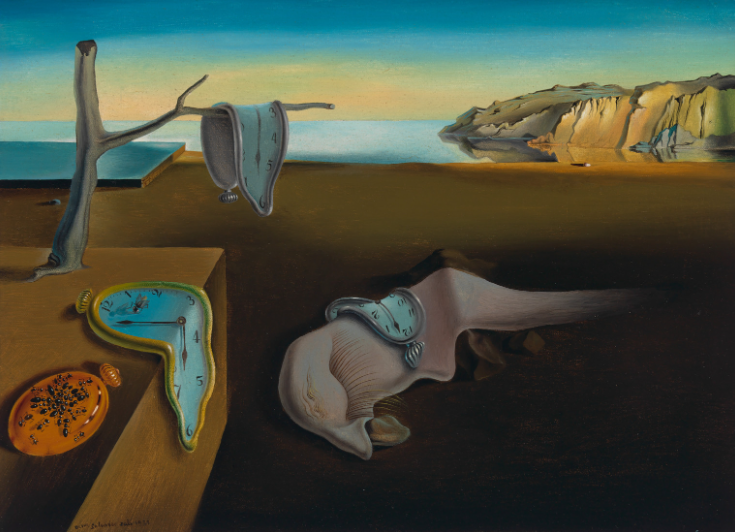
Left to right: Salome painting by Michelangelo Merisi da Caravaggio (About 1609-10) showcased at National Gallery, London and The Persistence of Time by Salvador Dalí at the The Museum of Modern Art, New York. Images courtesy of National Gallery, London and The Museum of Modern Art.
Where the Gothic makes familiar worlds uncertain, visual art can create mystery more selectively — by controlling exactly what the eye is allowed to see. Caravaggio achieved this literally through light. His use of chiaroscuro isolates gestures, faces and bodies while allowing surrounding space to disappear into darkness. In works such as Salome Receives the Head of John the Baptist, the eye is directed towards particular figures and actions while much of the scene remains obscured.
The viewer receives enough information to grasp the drama, while darkness intensifies its psychological force. Salvador Dalí destabilises perception differently. In The Persistence of Memory from 1931, watches remain instantly identifiable even as they become soft, distorted and physically impossible. An object associated with measuring certainty — time — suddenly becomes unreliable.
The mystery comes from recognition colliding with contradiction. Both approaches demonstrate an important principle: mystery often works best when audiences receive enough information to enter a work while retaining enough uncertainty to keep looking.
Once mystery moves from a single image into a narrative, timing becomes as important as visibility. Film can decide not only what audiences see, but when they are allowed to understand it.
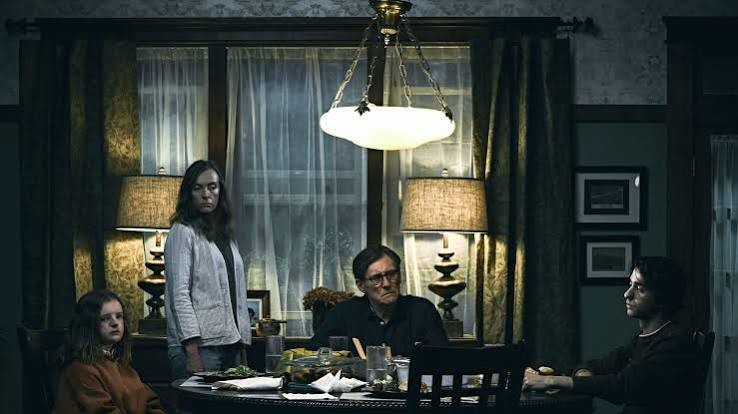
A24’s Hereditary (2018) demonstrates how contemporary horror can combine family trauma, unsettling imagery and supernatural uncertainty. Its effect comes from the gradual accumulation of details whose significance becomes clearer as the film progresses.
Crime narratives formalise the same process through clues, forcing audiences to revise earlier assumptions whenever new information appears. The pleasure lies as much in interpretation as resolution.
Mystery therefore makes audiences active participants. They notice patterns, test theories and reconsider earlier scenes as new information changes the meaning of what came before. The story becomes something mentally assembled rather than merely observed.
Immersive art takes that participation one step further. Instead of controlling when an answer arrives, it can remove the idea of a single route towards an answer altogether. At teamLab Borderless in Tokyo, digital artworks move across walls, floors and spaces rather than remaining contained within conventional frames. Some environments respond to visitors or migrate between rooms, making movement through the museum part of the work itself.
Visitors choose their own routes through the experience. One person may encounter an artwork differently from another simply because of where they walk, what appears around them or how long they remain in a particular space.
Mystery becomes experiential rather than something to solve. The value lies in exploration itself. Meaning can emerge through movement, repetition and discovery, with each encounter revealing a slightly different relationship between the work and the person experiencing it.

These very different forms share one quality: they preserve a gap between encounter and explanation. Contemporary culture is increasingly designed to close that gap. The challenge today is the speed with which interpretation arrives.
Search engines, social platforms, explainers and fan communities can resolve cultural references almost immediately. A film’s ambiguous ending can be reduced to a definitive interpretation before viewers have finished discussing it. Museum labels, online archives and digital collections can provide detailed context before an audience has spent much time looking at an object itself.
Access to knowledge remains essential. Historical context can correct false assumptions, establish provenance and preserve the cultural significance of symbols and objects.
Provenance research itself illustrates the limits of explanation. It may establish who owned an object, where it travelled or when it changed hands, yet every discovery can open further questions about intention, relationships and meaning. Knowledge narrows one uncertainty while revealing another.
The problem begins when explanation arrives before observation. Looking at an artwork only after being told what to see can turn discovery into confirmation. Searching for the meaning of a film immediately after the credits can close possibilities that conversation might otherwise have opened.
Mystery preserves another possibility: that understanding might unfold rather than arrive. Personal experience becomes part of that process. Two people can encounter the same painting, film or installation and notice entirely different details because they bring different memories, beliefs and expectations with them. Those responses can sit alongside historical fact and deepen the experience. Cultural engagement can continue long after factual information has been established.

The appeal of mystery lies in the interval between encountering something and deciding what it means. An ambiguous work asks for attention, patience and a willingness to let interpretation develop over time.
The strongest cultural works reveal enough to draw audiences in while leaving enough unresolved to reward another encounter. A painting can feel different when revisited years later. A film can acquire new meaning once its apparent solution is questioned. An installation can change according to the route taken through it.
In a culture built around instant retrieval, that delay has become increasingly rare. Information can provide context, but curiosity needs time to work before explanation closes the space around it. Mystery’s enduring pleasure lies there: in giving audiences something increasingly scarce — the freedom to wonder before being told what to think.
For more on the latest in culture and events, click here.
The post The Cultural Power of Knowing Less appeared first on LUXUO.





Commercial locker rooms face moisture, impact, repeated cleaning, and constant traffic. Conventional materials can swell, scratch, dent, or require frequent repairs under those conditions. Phenolic lockers address these pressures with a dense, non-porous construction that supports long service in demanding facilities. Their value depends on more than material strength, however. Configuration, hardware, cleaning practices, and installation standards all affect performance, so each factor deserves close attention before specifying a locker system.

A busy locker room needs storage that stays stable through repeated use, damp air, and routine sanitation. Facility managers evaluating durable phenolic locker systems can compare material density, moisture resistance, impact performance, and cleaning needs before choosing a configuration. That process connects the locker specification to the building’s traffic level, user habits, and maintenance plan rather than relying on appearance alone.
Phenolic lockers use compressed layers bonded with phenolic resin under high pressure. The resulting material is dense, impact-resistant, and non-porous, which helps it withstand scratches, dents, moisture, and heavy daily wear.
This construction suits spaces where users open, close, touch, and clean lockers throughout the day. Airports, universities, recreation centers, and other public-facing facilities need storage that keeps functioning under constant use.
Humidity creates problems for materials that absorb water or lose stability after repeated exposure. Phenolic lockers resist moisture, making them suitable for locker rooms near showers, pools, fitness areas, and other damp spaces.
Frequent cleaning also stresses locker surfaces. The specified care method uses mild liquid soap followed by a dry wipe. Avoid abrasive cleaners, scouring pads, and harsh chemicals, as they can damage the finish.
A simple cleaning routine reduces maintenance complications. Facility staff should use soft cleaning materials and remove standing moisture after washing, especially around edges, vents, hinges, and other hardware.

Phenolic lockers have a high durability rating and strong moisture resistance. Those ratings match facilities where lockers receive repeated contact, frequent cleaning, and sustained public use.
Impact resistance matters in crowded locker rooms because doors, handles, and frames experience regular contact. A dense phenolic panel helps the locker withstand normal knocks, scratches, and dents without the maintenance burden of weaker materials.
The material also supports long-term planning. Phenolic lockers include a 25-year warranty, while the installation warranty typically lasts one year. Project teams should review the warranty terms alongside the intended use and cleaning program.
A single-tier locker provides full-height storage for larger belongings or hanging garments. This format suits users who need room for coats, uniforms, bags, or other full-size items.
Multi-tier lockers place two or three compartments within the height of one full-height unit. This arrangement increases capacity within the same floor area, helping facilities manage limited locker room space.
Z-tier lockers combine hanging space with higher capacity. Their angled design allows users to hang a robe or suit jacket while preserving more compartments than a single-tier layout.
The right configuration depends on user behavior, available wall length, ceiling height, and the size of stored items. A locker plan should account for those conditions before fabrication and installation begin.
A locker system depends on more than panels and doors. Institutional-grade anchors, fasteners, framing, and hardware support a code-compliant installation when specified and fitted correctly.
Optional ADA-compliant hardware addresses accessibility requirements for qualifying projects. Project teams should identify those needs during planning rather than after finalizing the locker layout.
Manufacturer specifications also matter during installation. Correct framing, secure anchoring, and accurate alignment help doors operate properly and protect the system’s expected service life.

Phenolic lockers are available in solid colors, including almond, black, blue, green, gray, white, and red. Wood-grain options include natural oak, walnut, cherry walnut, and dark walnut.
Finish selection affects a locker room’s visual character, but it should follow the facility’s cleaning requirements and traffic conditions. Screen settings can change how colors appear, so physical samples provide a more reliable basis for approval.
Phenolic lockers suit facilities that need moisture resistance, impact protection, and dependable storage under heavy daily use. Their dense construction supports demanding locker rooms, while clear care instructions help protect the finish over time. Configuration choices determine capacity, hanging space, and accessibility, so the layout should match actual user needs. Before approval, project teams should review the locker room plan, selected tier arrangement, hardware requirements, cleaning routine, and warranty terms together.
For more on interior stories, click here.
The post How Phenolic Locker Systems Stand Up to the Toughest Environments appeared first on LUXUO.
If you have ever looked at your watch in the dark, perhaps in a room lit for discretion, and wished you could make out the date, well, A. Lange & Söhne has the watch for you. For many watches, as long there is some kind of luminescent material, or lume, you can tell the time just fine. But calendar indications? That is a story that this magazine thinks has been neglected for too long – and we never really expected the Glashütte watchmaker to write the first chapter. First, a note about what the A. Lange & Söhne’s “Lumen” series is.
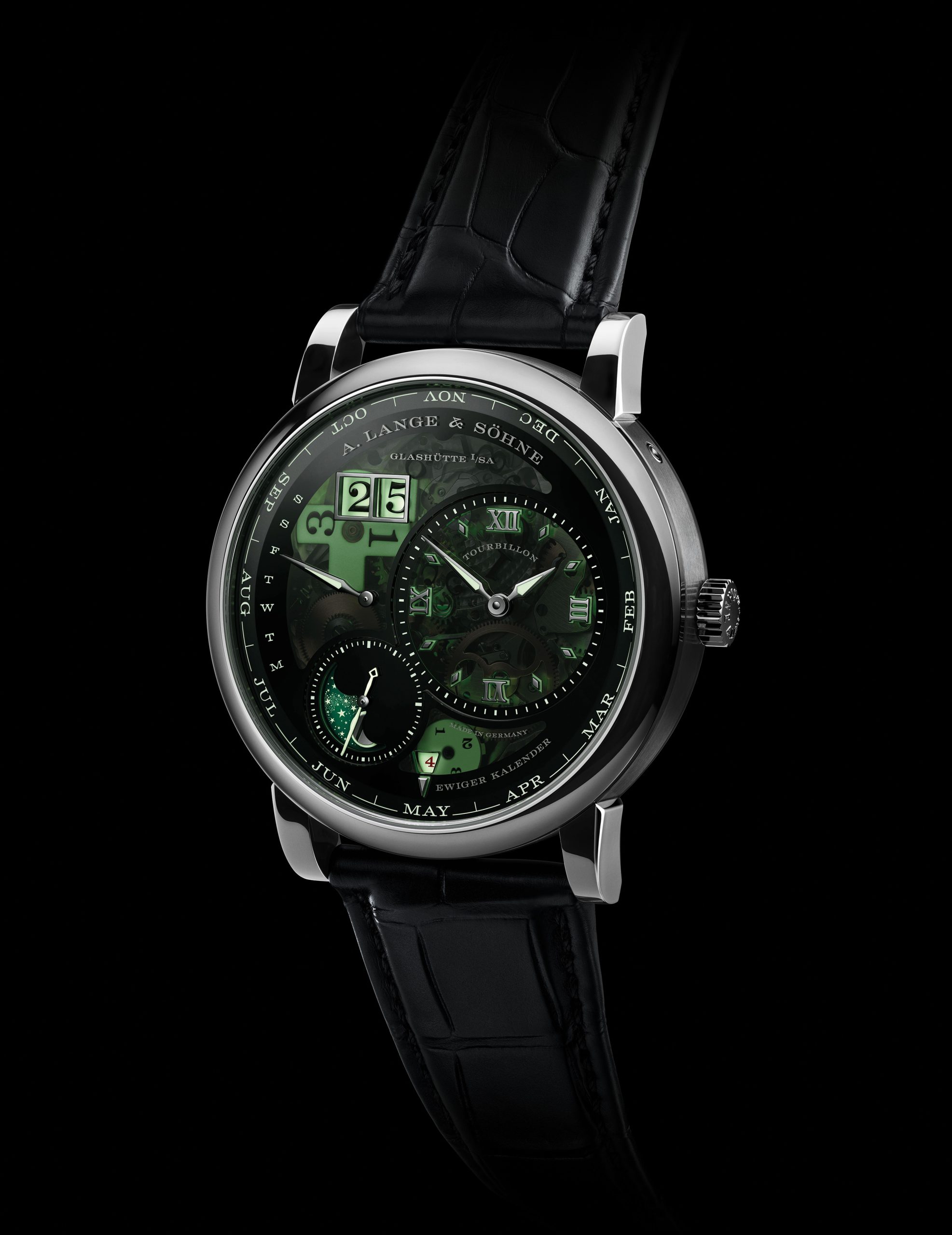
According to the watchmaker, a “Lumen” watch proffers the manufacture’s most captivating visual paradox: the collision of classical Saxon design language with contemporary photoluminescence from the world of sports watches. With the Lange 1 Tourbillon Perpetual Calendar “Lumen”, launched at Watches and Wonders 2026, A. Lange & Söhne brings this highcontrast philosophy to one of its most sophisticated complications. The A. Lange & Söhne perpetual calendar is certainly one of the most visually exciting expressions of the high complication, even if it is not for everyone.
Transforming such the intricately assembled layout into a nocturnal spectacle required, of all things, deliberate restraint. Speaking with us earlier this year, A. Lange & Söhne CEO Wilhelm Schmid emphasised that the manufacture only revisits the Lumen concept every two to three years, and only where it makes horological sense. “The Lange 1 is a very elegant watch, whereas the ‘Lumen’ execution is rather contemporary and sporty,” Schmid explained. “If you merge the two, you have to avoid going in the wrong direction.”

Schmid revealed that illuminating the off-centre time sub-dial posed a major hurdle: Directly coating the Roman numerals with luminous compound made them look disproportionately thick by day. Lange’s solution was applying the luminous material beneath the semi-transparent, UV-permeable sapphire crystal dial. This allows the numerals to emerge as sharp and crisp silhouettes against a glowing background at night, without disturbing daytime legibility.
As you may well know, the watch features instantaneously jumping calendar displays, including the peripheral month ring, the outsize date, retrograde day-of-week indicator, and leap-year window at 6 o’clock. If you know the Lange perpetual calendar, all that is not news. This “Lumen” version also debuts Lange’s first luminous moon-phase with an integrated 24-hour day/night indicator: The celestial disc rotates once every 24 hours, transitioning from a clear daytime sky to a star-studded nocturnal expanse behind the lunar disc (accurate to one day in 122.6 years).

As for the tourbillon, it remains on the watchmaker’s side, where some would argue it belongs. Those same purists might also take issue here with the word “tourbillon” appearing on the dial, and we concede that they might have a point about that. For more on this and all things tourbillon-related, see our features section this issue.
The newly developed 685-part automatic Calibre L225.1 fulfils Lange’s brief to always bring a new and improved movement to the table. The steel balance and intermediate-wheel cocks are hand-engraved with shooting stars and finished in black polish, anchored by another Lange special: a diamond endstone in a screwed gold chaton.
This story was first seen as part of the WOW #86 Autumn 2026 issue.
For more on the latest in luxury watch reads, click here.
The post A. Lange & Söhne Illuminates the Art of Complication appeared first on LUXUO.
















Quiet luxury has become associated with understated fashion, timeless design and exceptional craftsmanship. Instead of relying on recognisable logos or extravagant displays of wealth, the philosophy emphasises quality, discretion and thoughtful choices. Yet the same principles extend beyond wardrobes and interiors into how people manage their personal finances.
Financial organisation is an increasingly relevant expression of quiet luxury because it creates something that expensive possessions cannot guarantee: greater control over time, spending and long-term decisions. Knowing exactly what you own, what you spend and what you can comfortably afford makes it easier to enjoy a refined lifestyle without unnecessary financial complications.
The appeal lies in simplicity. Just as a carefully curated wardrobe eliminates unnecessary purchases, an organised financial life reduces distractions and lets your spending reflect your priorities.
Financial freedom is not determined by income alone. Someone earning a substantial salary can still experience financial pressure when expensive commitments consume most of their monthly earnings.
Luxury purchases often involve costs beyond their initial price. A premium vehicle requires insurance, maintenance and registration, while a vacation property introduces ongoing expenses such as property taxes, repairs, and management fees. These commitments deserve consideration alongside the enjoyment they provide.
An organised approach to personal finances makes these costs visible before they become burdensome. It also creates room for spontaneous opportunities, whether that means extending a vacation, purchasing a carefully selected timepiece or investing in an experience that holds personal significance.
The distinction is between having the means to make an expensive purchase and maintaining the flexibility to enjoy it without compromising other priorities.
Financial organisation becomes more challenging when money is distributed across multiple accounts, investments, credit cards and recurring payments. Even households with substantial resources can lose track of smaller financial commitments when information remains scattered across different platforms.
Personal finance applications help consolidate this information into a more manageable picture. Automated transaction categorisation, spending summaries and upcoming bill notifications reduce the amount of manual work involved in understanding everyday expenses.
Choosing an appropriate platform depends on which features matter most. For example, comparisons such as SoFi Coach vs. Copilot Money highlight different approaches to financial management, including AI-assisted financial guidance, automated spending categorisation and account tracking. Understanding these distinctions helps individuals choose tools that match their preferences rather than accumulating apps with overlapping functions.
Technology is most valuable when it simplifies decisions. A clear overview of household spending is more practical than a collection of detailed financial dashboards nobody regularly reviews.

Maintaining a luxury lifestyle involves recurring expenses that receive far less attention than major purchases. Premium memberships, multiple streaming platforms, personal services and property-related subscriptions can accumulate over time without delivering equivalent value.
Consider a household paying for three premium fitness memberships, several digital subscriptions and services attached to a second residence. Each expense seems manageable on its own, but together they represent money that could support more meaningful purchases or experiences.
Reviewing these commitments every three months gives you a chance to identify services that no longer fit your current habits. The goal isn’t to eliminate conveniences just to cut costs, but to distinguish between those that genuinely improve daily life and those maintained out of habit.
This approach reflects the broader philosophy of quiet luxury. Thoughtful consumption prioritizes lasting satisfaction over the number of products or services someone can afford.
The same principle applies to collecting. Whether purchasing fine watches, contemporary art or designer accessories, understanding acquisition costs, insurance requirements and ongoing maintenance helps collectors make deliberate decisions rather than impulsive additions.
Time is one of the few resources that cannot be replenished, regardless of financial circumstances. Repeatedly searching for financial documents, checking payment deadlines or resolving overlooked bills consumes time that could be spent on more rewarding activities.
Simple systems can remove much of this administrative work. Automatic payments handle predictable obligations, digital document storage keeps important records accessible, and scheduled financial reviews prevent routine decisions from demanding constant attention.
A practical monthly routine can focus on four essential activities:
For households with complex financial arrangements, accountants, financial planners and other qualified professionals can provide additional support. However, delegating responsibilities should not mean losing awareness of important decisions.
The purpose of organisation is to make financial management less intrusive, leaving more attention available for family, travel, professional interests and personal experiences.
The strongest connection between financial organisation and quiet luxury is their shared emphasis on discretion, quality and intentional living. Both favour thoughtful decisions over unnecessary accumulation and recognise that lasting satisfaction rarely comes from spending more without purpose.
Organised finances provide a clearer understanding of what is affordable, which commitments deserve attention and where resources can create the greatest personal value. They also reduce the administrative distractions that unnecessarily complicate an otherwise comfortable lifestyle.
Ultimately, quiet luxury is not defined only by what people choose to own. It is also reflected in the freedom to make considered decisions, enjoy meaningful experiences and maintain control over the financial responsibilities that support their way of life.
For more on the latest in business reads, click here.
The post Why Financial Organisation Is the New Quiet Luxury appeared first on LUXUO.


Clinical judgement shapes the quality of aesthetic care, from understanding a patient’s concern to deciding whether treatment is appropriate. Estimates from the International Society of Aesthetic Plastic Surgery indicate that plastic surgeons performed nearly 178,000 non-surgical aesthetic procedures across six Southeast Asian markets in 2025, including 11,753 in Singapore. These figures exclude treatments administered by other medical practitioners. For patients navigating their options, knowing how to assess the expertise behind a recommendation is an essential part of making an informed choice.
An elderly patient came to Dr Chester Lan, an aesthetic and medical practitioner at Freia Medical and Freia Aesthetics, asking for fillers before a wedding. She wanted to restore fullness to her face, but the consultation revealed something more important: she had unintentionally lost a significant amount of weight. He referred her for medical assessment. Following investigations and nutritional guidance, she gradually regained weight and some facial fullness. She never underwent filler treatment with him.

His experience illustrates the value of looking beyond the requested procedure. Alongside Dr Lan, Dr Rachel Ho of The Skin Longevity Clinic and Dr Kevin Chua and Dr Iroshini Chua of Dr Kevin Chua Medical & Aesthetics explain how careful assessment, evidence and restraint help patients recognise quality—and understand what is worth paying for.
Dr Ho defines quality in aesthetic medicine as quality of healthcare. A consultation should establish the patient’s concerns, expectations and boundaries, then explain how their anatomy and medical circumstances affect the options.
The Chuas also examine medication, existing skincare and relevant habits. Dr Iroshini recalls a patient seeking aesthetic treatment who mentioned feeling unwell and gaining weight. She pursued medical investigations; the patient was subsequently diagnosed with thyroid cancer. Her account reinforces the importance of hearing more than the cosmetic request
For Dr Lan, understanding a concern requires sensitivity. A patient who feels they look tired may be troubled by pigmentation, dullness or changes around the eyes. Helping them articulate that concern should not become an exercise in identifying additional imperfections.
“I don’t think we should be creating new insecurities for patients,” he says.
Professional roles also matter. Dermatologists specialise in skin disease and may provide aesthetic procedures, while doctors practising aesthetic medicine come from different medical backgrounds. In Singapore, doctors practising as specialists must obtain specialist accreditation and register with the Singapore Medical Council, while those performing aesthetic procedures must meet the relevant competency requirements.
Dr Kevin suggests a GP or family physician as an initial point of assessment when patients are unsure. The doctors identify suspicious growths, unexplained skin changes and complex conditions as reasons to consider specialist assessment. Recognising when to refer is itself a measure of judgement.
A request to look “refreshed” leaves considerable room for interpretation. One patient may be concerned about pigmentation, another about looking tired, and each may have a different threshold for how much change feels comfortable. Before choosing a procedure, doctor and patient need a shared understanding of the result they are working towards.
Dr Ho begins by asking what “natural” or “refreshed” means to the individual. Her patients commonly seek improvement while retaining their identity and facial movement.
For Dr Kevin, understanding a patient’s preferences includes explaining what they may experience during recovery. He recalls someone who was unsettled by a temporary change in facial appearance after treatment, illustrating why the interim journey deserves discussion alongside the intended result.
Personalisation also continues during a procedure. He describes adjusting laser settings and observing the skin’s response rather than treating a machine’s settings as a universal formula.
“It’s not a single setting that treats them all,” he says.
For patients comparing recommendations, Dr Lan offers a useful distinction: two doctors may propose different approaches to the same concern. Each should explain the expected benefit, recovery, risks, maintenance and cost. The reasoning helps patients judge which approach fits their priorities.
Some of the clearest examples of personalisation end with a decision to leave something alone. Dr Kevin recalls a patient focused on a tiny concern visible only under close magnification. In his assessment, treating it would create a wound and a recovery period disproportionate to the potential benefit.
The same reasoning informs his response to requests for botulinum toxin injections without an apparent need, or fillers when he believes additional volume would compromise facial balance. The ability to perform a procedure does not settle whether it serves the patient.

Dr Iroshini takes a similarly firm position on requests driven by trends. “Do what the patient needs,” she says. “If the patient says it’s a trend and I want to do it, don’t.”
Restraint can also mean postponement. Dr Ho delayed a patient’s planned laser and chemical peel after the patient returned from holiday with sunburn. She considers uncertainty, unrealistic expectations and the potential consequences of combining treatments when deciding whether to proceed.
For the patient, a thoughtful refusal should come with an explanation. Understanding why a procedure is unsuitable can be as valuable as understanding its possible benefits.
A new treatment may arrive with an appealing scientific explanation, yet the distance between a promising mechanism and a worthwhile result still needs examination. Patients considering an unfamiliar procedure should be able to understand whether its claims rest on laboratory findings, clinical research or observations from practice.
Dr Ho looks for reproducible outcomes supported by high-quality clinical research, particularly peer-reviewed randomised controlled trials. Laboratory findings, she cautions, may not translate into the same effects in people.
“Essentially, the claims or benefits of this treatment need to be supported by evidence and the results should be reproducible,” she says.
Skinboosters from brands including Rejuran and Re2O have become very popular in Asia.
Dr Lan reviews clinical studies, safety data and relevant regulatory status alongside practical evaluation and patient feedback. He has stopped offering products whose longer-term benefits failed to meet his expectations.
These sources of information serve different purposes. A doctor’s experience can inform treatment decisions and follow-up, while formal research addresses questions that individual observation cannot settle. Patients should be able to understand what evidence supports a recommendation and what remains uncertain.
Two clinics offering a treatment under the same name may appear easy to compare on price. The comparison becomes less straightforward once consultation time, practitioner experience, the products used and follow-up arrangements enter the equation. Understanding those differences gives patients a firmer basis for deciding whether an additional cost offers value.
Dr Ho points to research, product authenticity and supply-chain traceability, while Dr Kevin emphasises technique and experience, particularly in areas such as tattoo removal. Dr Lan includes consultation time, products used around a procedure and follow-up care. He cautions against assuming a higher price guarantees a better result, or comparing value solely through quantities of product and numbers of sessions.
An experienced doctor’s contribution may include recommending a smaller intervention. It should also include reconsidering an unsuccessful approach. Dr Lan recalls reassessing a patient’s pigmentation after numerous treatments elsewhere had delivered little improvement. Persistence requires a reason to continue, supported by a review of progress.
The consultation also extends to the products waiting on a patient’s bathroom shelf. Dr Iroshini describes reviewing skincare routines for overlapping ingredients, much as she checks the contents of supplements patients bring to the clinic. A crowded regimen can make it harder to understand what someone is applying and whether another product is necessary.

Her preference for simplicity also informed Alaaya Skin, which she co-founded with her daughter, Aiyana Chua. Developed with a Korean laboratory, its Brightening Moisturiser is intended as a lightweight formula for sensitive skin in tropical conditions. According to the brand, it underwent six formulation iterations over a year. Dr Iroshini describes the range as a response to their own difficulties finding suitable products, with an emphasis on texture, tolerability and a manageable daily routine.
The practical question extends to clinical maintenance: can a plan fit the person expected to follow it? Dr Kevin discusses what patients can realistically commit to in time and cost. Dr Lan presents estimated treatment schedules as subject to reassessment, while Dr Ho stresses explaining ongoing commitments before patients begin.

For Dr Iroshini, one memorable sign of progress is a change in how a patient approaches the camera: someone who initially resisted a photograph later welcomes one. That shift in confidence gives a personal dimension to the assessment of results.
Dr Ho similarly considers patients’ perceptions alongside photographic assessment. The question is whether the original concern has improved in a way the patient values, with expectations established clearly enough for both doctor and patient to assess progress.
Those outcomes begin with realistic expectations and a shared understanding of the goal. For the discerning patient, quality becomes visible through decisions explained clearly, progress assessed honestly and recommendations adapted when circumstances change. The most valuable expertise helps them choose with confidence, including when the best decision is to wait.
For more on the latest in wellness and beauty reads, click here.
The post Judgement Is The Most Valuable Skill in Aesthetic Medicine appeared first on LUXUO.
