Wednesday, April 3, 2024

Jumeirah Marsa Al Arab: Luxury of Dubai’s Skyline

Jumeirah Marsa Al Arab

The landscape is about to change, when it comes to the Jumeirah Marsa Al Arab that will alter Dubai’s skyline. This project wants to be one of the most prestigious locations in Dubai and it will increase lifestyle living and hospitality. In addition, Jumeirah Marsa Al Arab is not just another development; it symbolises taste, originality as well as unmatched splendor.

Dubai is a city that offers too much for everyone. The truth is 70 percent of all immigrants are content with their lives in the UAE as per a survey conducted. There is always something to do and see for you and your family. Anyway, if you want to think about Dubai as your secondary residence or wish to start your own business or develop an existing one, it’s not difficult at all. Whatever kind of house you may be looking for, whether it is a luxury waterfront villa or an apartment, Dubai has a large selection of accommodation options with flexible payment plans. 

Dubai is Not Only An Architectural Wonder

Jumeirah Marsa Al Arab

Consequently, it would take residents just an hour or so before they reach home. This made the region a link between producers, manufacturers, and consumers hence making it easier and more efficient for investors and business owners in terms of transport costs while moving goods between these three parties. Companies that wish to go international, find this city a good choice because its geography gives easy access to other places on earth.

As such, the structure stands out exceptionally among other futuristic high-rise buildings and resorts that are commonly associated with Dubai. The city of Dubai is all about luxury; a fact that has been captured perfectly by this project’s extravagance. It would thus serve as an emblematic representation of what truly represents the essence of Dubai that is a city continually running after luxurious things.

Unparalleled Luxury Living

Jumeirah Marsa Al Arab

These include top-quality villas and super deluxe apartments designed to fulfill the highest standards in terms of style as well as convenience. For instance, inhabitants will benefit from high-end accessories like private beaches, state-of-the-art gyms and their own personal concierge services among others, hence ideally suited for individuals that only understand luxury as a way of life.

Apart from the residential life, the Jumeirah Marsa Al Arab is going to bring about a new standard of hospitality. One of the things they are planning in this development includes a five-star hotel that will have restaurants with gourmet meals prepared by celebrity chefs and luxurious spa facilities among other things. Unlike hotels as it has been known before, this one was designed to enable visitors to explore various aspects of Dubai including culture, history, and future aspirations.

Investment Opportunities

Dubai skyline (image courtesy of Unsplash)

Investors have no better place than Jumeirah Marsa Al Arabe. When combined luxury innovation and location define Dubai’s property market boom. Therefore epic investments like Jumeirah Marsa Al Arab are expected to make huge returns in Dubai.

The addition of Jumeirah Marsa Al Arab is not just another skyline; it confirms its continuous adoration for opulence and novelty. There could be no better way for someone to experience luxury living or find profitable investment than through Jumeirah Marsa Al Arab. As the project approaches its final stages, it becomes more apparent that it will not only redefine luxury in Dubai but also help cement its status as one of the world’s top cities.

For more on the latest in luxury property reads, click here.

The post Jumeirah Marsa Al Arab: Luxury of Dubai’s Skyline appeared first on LUXUO.


from LUXUO

Tuesday, April 2, 2024

The Cat 133 Is A Smaller Version Of Tecnomar’s ‘This It It’

The This Is It still overshadows the Cat 133 when it comes to size, speed, and style, but it packs enough features to stand on its own.

from Men's Gear

Green is the New Black: Fashion’s Ongoing Greenwashing Farce

Recently social media’s most notorious fashion sleuth Diet Prada called out Italian-based fashion brand Loro Piana for their unethical practices after a recent Bloomberg exposé. The exposé highlighted that the brand used unpaid Peruvian labor in harvesting vicuña fiber for knitwear, which can retail for over USD 12,000. “They get about USD 280 for a sweater’s worth of material,” reads the Instagram post. This is barely enough to pay everyone needed for the harvest. “Hired outside laborers get about USD 20, but locals are expected to work for free, corralling 50 kg of wild animals over far stretches of land before essentially tackling them to avoid injuries during the shearing process.” Loro Piana’s greenwashing becomes apparent as the brand has set up the practice under the pretense of helping the local indigenous Peruvian Andes community but it is essentially making them work for free.

This is in contradiction to what is currently on Loro Piana’s website which as of writing, states in part “…in 1994, Loro Piana, head of a consortium, signed an agreement with the Peruvian government and the Andean communities, granting the exclusive rights to purchase, process and distribute the fiber obtained only from vicuñas sheared whilst alive according to CITES regulations along the whole supply chain.” The statement goes on to say that Loro Piana’s commitment was renewed in 2008, with the creation of the first private nature reserve in Peru, named after Franco Loro Piana. Bloomberg exposé speaks to a broader issue of how garment workers are underpaid if they are paid at all for their labour.

Then there is the double standard of Botter’s autumn/winter ’24 Dark Waters collection. The collection was in collaboration with Reebok and saw a dark post-apocalyptic style hoodie with the “Shell” logo, underneath which read “HELL”. One could argue this was Botter and Reebok’s way of critiquing large oil companies and their environmental impact. However, Reebok’s usage of polyester, spandex, nylon, and other synthetic materials are in fact, made from oil. Instagram user sustainablefashionfriend noted this stating that Reebok has a weak commitment to phasing out synthetic fibres which is a direct contradiction to what the piece was effectively trying to highlight.

Then there is the hellish landscape of greenwashing in fast fashion. Shein — one of the largest online-only fashion retailers — is notorious for its ultra-unsustainable fast fashion business model that has now morphed into an extreme “ultra-fast fashion” model. According to The Fashion Law, Shein is relying on AI-powered design algorithms. Instead of hiring trend forecasting companies like most fast fashion models, Shein effectively uses the aforementioned AI-powered algorithm to scout for items with the highest views on social media regardless of brand or price to recreate those items at the lowest prices. As the Business of Fashion reported, fast fashion brands are struggling to cope with Shein’s production pace and exceedingly low prices. Inditex (who owns Zara) has been forced to increase its prices to protect profit margins from inflation as part of a “shift towards upmarket customers”.

Fast fashion has gone from copying high fashion designs to their own high-street competitors resulting in a faster rate of production, higher quantity of production, lower quality of products, lower rate of usage from the consumer and ultimately a higher production of waste. According to Greenpeace.org, cheap clothes produced by (ultra) fast fashion brands end up on huge dump sites, burnt on open fires, along riverbeds and washed out into the sea once their short lives are over resulting in severe consequences for people and the planet.

However, the tide seems to be turning for fast fashion as at the end of March 2024, various British retailers including ASOS, Boohoo and Asda underwent a greenwashing clampdown by The Competition and Markets Authority (CMA) which is the principal competition regulator in the United Kingdom, tasked in part to prevent and reduce anti-competitive activities. CMA also prevents high-street brands from misrepresenting their sustainable claims which includes specific criteria for a range to be deemed a “green range”, and the prevention of using green imagery to represent a brand as greener than it actually is. Plus if users looked up “recycled” products in the brand’s search, only items made from predominantly recycled material can be included.

As consumers, greenwashing makes it increasingly harder to make educated choices in our sartorial purchases. That being said, changing consumer behaviour is an easy fix — education, transparency, ethical practices and holding brands accountable is but a few steps toward a sustainable future.

For more on the latest fashion reads, click here.

The post Green is the New Black: Fashion’s Ongoing Greenwashing Farce appeared first on LUXUO.


from LUXUO

Coalax Drops Revolutionary Lancer 300 Camera Backpack

Lancer 300 6

The Lancer 300 backpack has a exoskeleton-bearing structure and an IPX6-waterproof 300Wh power station, a 25W solar panel, and a 360˚ extendable tripod.

from Men's Gear

Skin Deep: A Dive Into the Beauty Industry’s Ethical Battle

All that glitters isn’t gold. Behind the facade of bronzers, blushes, and concealers, the beauty community continues to face problems of inclusivity, copyright infringements, and the authenticity of beauty influencers and their paid-for reviews. This begs the question, does the beauty industry prioritise profits over its patrons or are people simply a pawn in fueling this multi-billion dollar industry?

The Influencer Sell-Out

 Image courtesy of Getty Images

Today, the power of beauty influencers rivals that of celebrities with their endorsements becoming increasingly important in the success of a brand. However, there is an ongoing concern regarding influencers publishing sponsored content without disclosing that it is a paid advertisement. This calls into question the validity of beauty influencers and the authenticity of their reviews. Beauty influencers often have a younger demographic of followers which means they are impressionable to buying into something their favourite influencer recommends. A lack of transparency can erode trust among an influencer’s followers and undermine the credibility of their recommendations. As a result of seeing their favourite influencers on YouTube and TikTok, the British Association for Dermatologists issued a warning that the growing trend of children (as young as eight) using skincare products could leave them with irreversible skin problems with many exfoliating acids and active ingredients intended for adults could potentially provoke allergies or eczema.

Read More: Is Black Friday Causing a Beauty Blackhole?

Sunday Riley founder

Questions were raised surrounding Sunday Riley’s ethical practices in 2018 when a former employee went to Reddit to comment on the company’s operations. CNN reported that in October 2019, the Federal Trade Commission (FTC) launched an investigation into Sunday Riley after a former employee accused them of writing fake reviews. In their search, the FTC discovered that not only were the allegations true but that they involved founder and CEO Sunday Riley herself. According to the report, employees wrote positive fake reviews on beauty store Sephora’s website to boost sales between November 2015 and August 2017. Sunday Riley eventually settled the FTC charges with neither the company nor Sunday Riley, its namesake chief executive, admitting or denying any wrongdoing.

Lack of inclusivity

Babor x All Woman beauty campaign

For years (or rather, decades), the beauty community has faced criticism for its lack of diversity and inclusivity, particularly with regard to representation across race, ethnicity, gender, age, body size, and ability. Many influencers predominantly feature a narrow range of beauty standards, excluding marginalised groups and perpetuating conventional beauty stereotypes. Tokenism aside, everything from foundation shades to the people featured in campaigns highlights that the industry still has a long way to go in featuring diversity, particularly as 70 percent of black women feel underserved by the beauty industry according to a survey published on Forbes. According to a study by P&G, only 4 percent of beauty personal care products directly address the needs of those with physical disabilities. “This includes thought-through packing like including braille on products or easy-to-open lids,” read a statement from Cosmopolitan. Consumers are now driving change. Fed up with superficial nods to diversity, consumers crave genuine connections and want to see a diverse array of faces that capture the true representation of the public.

Trademark infringements

Plagiarism plagues the beauty community with large companies ripping off ideas of smaller indie brands who often cannotafford to take legal action. Case in point, in 2018 Huda Beauty’s Easy Bake Setting Powder (below) product campaign came under fire for what fans perceived to be a striking resemblance to Beauty Bakerie’s Flour Setting Powder advertising campaign (above).

Next, billionaire mogul Kylie Jenner’s own cosmetics line was not spared. Jenner has been accused of stealing their ideas and copying the visuals of various lesser-known artists including the work of Los Angeles-based makeup artist Vlada Haggerty.

According to Refinery29, Vlada expressed her dismay about the theft of her work, which Lip Kit By Kylie later added “inspo by @vladamua” within the caption before it was swiftly deleted. Vlada Haggerty then sued Kylie Jenner in 2016 for copyright infringement before Jenner’s legal team eventually settled the lawsuit in January 2017. “It breaks my heart to see how large brands take independent, unprotected artists’ work and use them to multiply their wealth,” wrote the photographer of the red-and-gold image, Julia Kuzmenko McKim.

Less-Than-Savoury Sustainability

Consumers increasingly expect influencers to align with their values and advocate for ethical and sustainable practices in the beauty industry. However that is not always the case. Unsafe working environments and a lack of transparency on questionable ethical practices, such as animal testing, environmental pollution, or exploitative labor conditions only bolster concerns about ethical practices within the beauty industry.

According to statistics from the UN Environment Programme, over 120 billion cosmetic packages are produced annually, with a staggering 79 percent ending up in landfills or as pollutants in our natural ecosystems. The complex nature of beauty packaging is at the heart of the issue, not just the sheer volume of waste but the small, mixed-material designs that are notoriously difficult to recycle. 

Today, as LVMH-owned beauty brand Sephora aims to ride the “lipstick effect” wave as it sees more growth amid the continuing economic downturn more fashion brands turn to beauty to amass profits. Only time will tell if this will help or hinder the growth of the beauty industry as it strives to achieve higher revenues.

For more on the latest in luxury beauty reads, click here.

The post Skin Deep: A Dive Into the Beauty Industry’s Ethical Battle appeared first on LUXUO.


from LUXUO

Monday, April 1, 2024

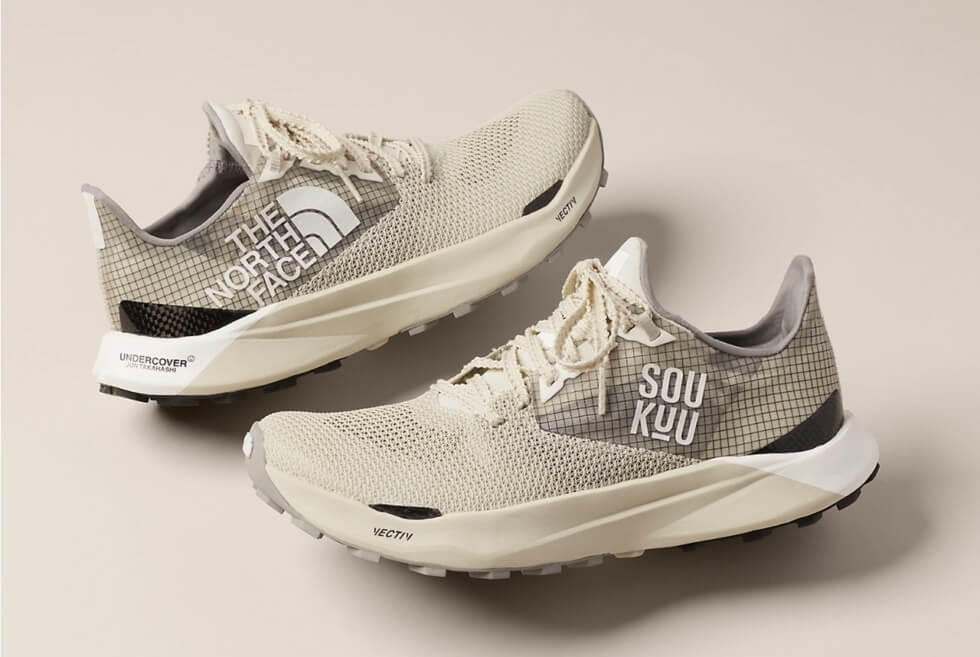
The North Face x Undercover Drop SOUKUU Season 2 Collection

The North Face x Undercover SOUKUU Season 2 Collection

The North Face x Undercover SOUKUU Season 2 Collection is a combination of trail running and hiking garments celebrated as a layering system, packaged in one holistic offering, resulting in a line that is extremely lightweight with minimal bulk. 

from Men's Gear

Kohler x SR_A Unveils Functional Sculpture Formation 01 Faucet

Formation 01

The Formation 01 faucet by Kohler x SR_A is made as a singular object using Neolast which gives it its  dramatic form and orange color then mounted on an embossed cast iron plate.

from Men's Gear