The JoyFous Retractable Rolling Shower Screen stretches up to 78," offers great wet-dry separation, dust-proof, mildew-resistant, and flexible so it bounces back into shape.
The Nite Ize Radiant 314 Rechargeable Lantern gives you a max of 96 hours of use under a single 3-hour charge of its battery that also serves to power your mobile devices.
While the wealthy tycoons in the Kevin Kwan novel, and movie, Crazy Rich Asians might just be fictional characters, there is some truth in that story. In recent years, some of the wealthiest families in the region have been flocking to Singapore’s sunny shores and made the city their home. As a result of the influx of wealth, there has been an increase in demand for high-end goods and services within the city-state, reshaping the local economy.
Singapore has always been a prime destination for wealthy families in the region looking for a short vacation. With the opening of the luxury integrated resort, Marina Bay Sands, in 2010, the many designer boutiques along Orchard Road, and range of world-class private clinics and hospitals, it isn’t hard to see the appeal. However, with the recent pandemic sweeping across the globe, Singapore has started to see an increase in the number of wealthy families migrating into the country and buying up real estate to weather the storm.
The country’s current status as a safe haven for super rich is due to Singapore’s strong reputation of stability and security, which are particularly salient issues given the current climate. According to data from John Hopkins University, the mortality rate in Singapore has been markedly lower compared to many of its neighbours. Referring to said data, Malaysia and Indonesia are facing mortality rates exceeding 10 and 30 times the percentage experienced in Singapore. Even with the recent spike in cases, which prompted stricter measures and cancellation of internationally significant events, the number of infections are still much lower compared to other cities across the world.
Part of Singapore’s success in controlling the number of Covid-19 cases is the amount of vaccinated individuals. Around 30% of the population as been vaccinated, almost twice of China’s statistics; Image Credit: Courtesy of Reuters/Johanna Geron
Given the phenomenal stability and security Singapore has managed to establish in this current climate, it is little wonder that families from Indonesia, Malaysia and China, to name a few countries, are choosing to ride out the storm here. Of course, with the amount of wealth now flowing around Singapore, it’s bound to affect the local economy in one way or another.
Firstly, there has been a significant increase in the number of single family offices being set up in the country. The current number stands at around 400, which is twice the number at the end of 2019. Chinese clients are responsible for opening the most new accounts, followed by Indian and then Indonesian clients. According to Harish Bahl, the founder of Smile Group which focuses on tech investments, this represents the largest number of super rich clients he’s met in his 20-plus years of experience.
According to Bahl, “since the pandemic, billionaires from all over the world have been staying on longer in Singapore, including those from China, Indonesia, India and the US,” which creates incentives to set up family offices.
Singapore is fast becoming the ideal location for wealthy business owners and their families to live; Image Credit: Courtesy of John T on Unsplash
With initiatives like the Global Investors Program (GIP), Singapore has made it simpler for wealthy tycoons to settle down. The program gives business owners and families a shortcut to permanent residency provided they “they invest S$2.5 million in a local business, certain funds or a family office with at least S$200 million in assets.” Additionally, the Monetary Authority of Singapore (MAS) introduced the Variable Capital Company (VCC) which enhances the attraction for family offices, hedge funds and private equity firms.
“We have a lot of Indonesians, for example, over the past few months trying to come in every two to three weeks,” commented Odette’s General Manager and Operations Director Steven Mason.
Image Credit: Sentosa Golf Club
Demands for golf club memberships have also increased significantly, driving up prices. The Sentosa Golf Club, for example, saw increases of 40% from pre-covid prices. The same can be said of the automotive industry, with sales of high-end cars to foreigners rising between 50-60% compared to a year before. According to Vincent Tan, founder of the luxury car dealer, Vincar, the Chinese make up the largest percentage of clients, with Roll-Royce, Bentley, Porsche, and Mercedes being the most popular brands amongst foreign business owners.
To summarise, Singapore’s reputation as stable and secure city-state have made it into a sanctuary of sorts for the super rich to wait out the global pandemic. With the influx of wealth and investments, the nation’s economy is doing relatively well compared to many of its neighbours as demand for luxury products and services increases. Looking beyond our current situation, it is likely that these families may well choose to prolong their stay as Singapore’s outlook post-covid improves and the bustling city returns to normalcy.
The beauty industry is expected to be worth over US$430 billion by 2026, estimates alone show that beauty and personal care products’ US market value is over US$93 billion. The number is expected to rise further if it’s not for the sudden onset of the coronavirus that has plagued the world since the start of 2020. While this unexpected once in a generation crisis has severely altered the way most people have lived their lives, it has also conferred greater urgency for society to arm themselves with knowledge. The internet is a treasure trove of information, where with a click of a button, a person could gain insights into a particular topic.
Equipped with such knowledge has made shopping for products easier, faster and somewhat personalised. In this seemingly over-saturated market, where each brand maintains its own speciality, it’s easy to think it’s all been done. As long as the product contains that “magical ingredient” that you are looking for, you will buy it—that easy. Reports have shown that catering to the mass market is no longer as profitable compared to the past. Diversity is an important consideration that brands have to keep in mind when developing their new products.
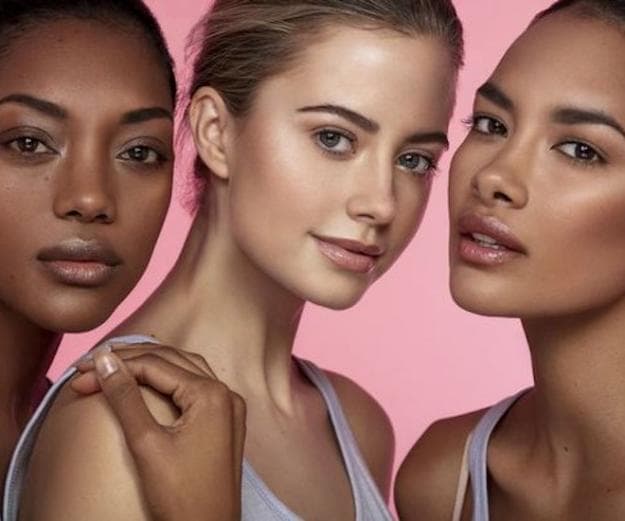
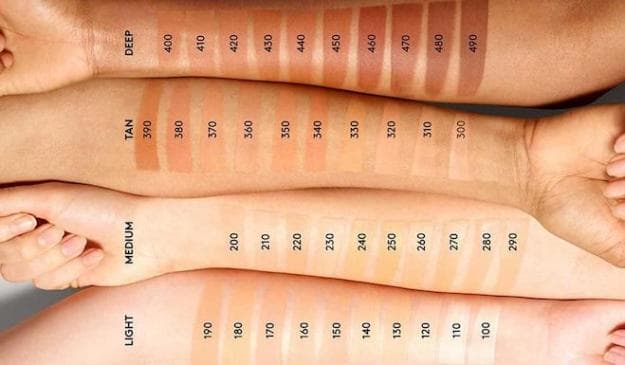
Brands are becoming more inclusive with their foundation shade range
When Fenty Beauty first launched in 2017, it released a whopping total of 40 shades of foundation and this became a clarion call for many other brands to recognise that inclusivity should be standard, and individuality and self-expression celebrated. The beauty industry soon recognised the need for products and services that could relate more closely to the consumers. To address this gap in bespoke skincare, more brands are seeking to capitalise on this increasing demand. By converging technology, data, and e-commerce, these elements combine to allow brands to engineer the perfect products that are customised to an individual’s needs, and all from the comfort of their own home.
A typical consumer journey begins with researching the skin type and conditions that we wish to treat, and the knowledge online helps with zeroing in on which products are suitable. Herein lies another problem for many, the vast array of brands which claim similar efficacy in the market means that consumers can easily feel overwhelmed and confused about finding the right products. Having a one-to-one consultation is of course the best way to have a tailored treatment that addresses whatever concerns that a consumer might have but in light of the current pandemic, it is more arduous to seek advice in stores.
Female consumers usually have an easier time picking up beauty products as many are formulated with this demographic in mind. According to beauty site Byrdie, women in the US spend around US$3,756 on their appearance annually and this translates into around US$225,360 through their entire lifetime. On the other hand, men spend only US$175,680 during their lifetime on health and beauty products. This represents an untapped portion of the market that is underserved, as men grooming is usually promoted as a blanket category.
A major pushing factor for the rise of the customised beauty trend is the changing consumer preferences and behaviours. Reports have shown that Millennials and Gen Z spenders have a different relationship with brands and this extends to their beauty needs. They use their consumption as a form of expression and individual identity while also considering the wider social impacts it may have as well. As these spenders will form the bulk of beauty brands’ consumer group, it is important that the concerns of this group are addressed. One-size-fits-all products no longer work as each person has unique needs.
To address the concerns and adapt to current times—new innovations are created to help with personalising skincare and makeup products. For example, MAC cosmetics has an online foundation shade finder that consumers can use to determine the best shade. This is helpful for consumers as testers may not be available when due to pandemic. Using AI technology, the makeup brand is able to recommend the right foundation. Bringing the use of technology to the next level is Swedish brand Foreo, their latest product the LUNA fofo uses its embedded sensors to analyse the skin to create personalised recommendations that can be accessed using their mobile application. Through machine learning, when the device is used daily, it is better able to fine-tune its recommendations.
Lastly, as mentioned, blanket solutions no longer satisfy the new generation of consumers. Understanding this new trend is Skin Inc, a skincare brand from Singapore. “Customisation didn’t exist when we started the business,” said founder Sabrina Tan in an interview. “By launching the world’s first supplement bar and customised cocktail serum with the ability to fit up to 10 active ingredients for a personalised touch, we set the bar for innovation in one of the most competitive categories in beauty.” Responding to the needs of the consumer, the brand has over 60 data-driven formulations and utilising this knowledge has enabled it to create targeted formulations. Similarly, haute perfumery maker Maison 21G also employed the use of technology to help its consumers personalise their fragrance.
More than just personalisation, what consumers are also looking for is preservation and even better formulations. Given that more information is constantly being collated, brands can take the chance to look over the data, scrutinise the findings and upgrade their products. As the world of beauty becomes increasingly competitive, it is pertinent that brands are able to distinguish themselves. Simplifying the process of finding the right product and taking lead in consultation will encourage consumers to be more loyal to the brand. Harnessing the power of technology can enable brands to be heard in the changing buyer habits and ultimately, it will help to pump up a brand’s profit.
The fashion industry, for a moment, was left in a frenzy when French designer Jean Paul Gaultier removed its profile picture from its official Instagram account. Accompanying the dramatic change was a post with the words “The End”. Following this unexpected move, many fans left comments questioning the motives behind such a cryptic post. To make matters worse, the couturier’s bio was also changed to include “the end of an era”, therefore it is unsurprising that speculations abound almost immediately after the post. But is this really the end of Jean Paul Gaultier?
Last year in January, fashion’s “enfant terrible” announced his retirement from the runway but reassured fans that the label would remain. The last show he did was his spring 2020 haute couture show. A new concept will take hold at the fashion house where in a tweet the designer told his followers: “Each season, I will invite a designer to interpret the codes of the House and I am doubly pleased that Chitose Abe of @sacaiofficial will be the first one!” The upcoming Paris Haute Couture Week will be Abe’s debut collection for the brand. In response, Abe said, “[She] have a long-held admiration for Jean Paul’s unique vision of subversive femininity and his originality, both of which I’ve strived towards in my work since the beginning. It’s a true honour to be given the opportunity to be custodian of his house as the first designer of this project.”
Collaborations seem to be a trend that many labels are taking on nowadays as they can be seen in fashion houses like Louis Vuitton under Virgil Abloh and Dior’s Kim Jones, then there’s also the Moncler Genius project. This nascent way of creating a collection creates buzz among jaded consumers who may be bored of brands churning out same-ish designs. With partnerships, it can also help to elevate brand image with the more prominent brand putting the spotlight on emerging designers who may have a cult following that can also be tapped on, and thus creating a mutually beneficial relationship.
A day after posting that enigmatic Instagram post, Gaultier posted a GIF teasing fans who they can expect to see design for the label along with the hashtag #FutureisCollective. The list includes: Dr. Woo, Ottolinger, SSENSE, Palomo Spain and Pierre Hardy. The brand updated its bio to read, “Welcome to the new era of Jean Paul Gaultier.”