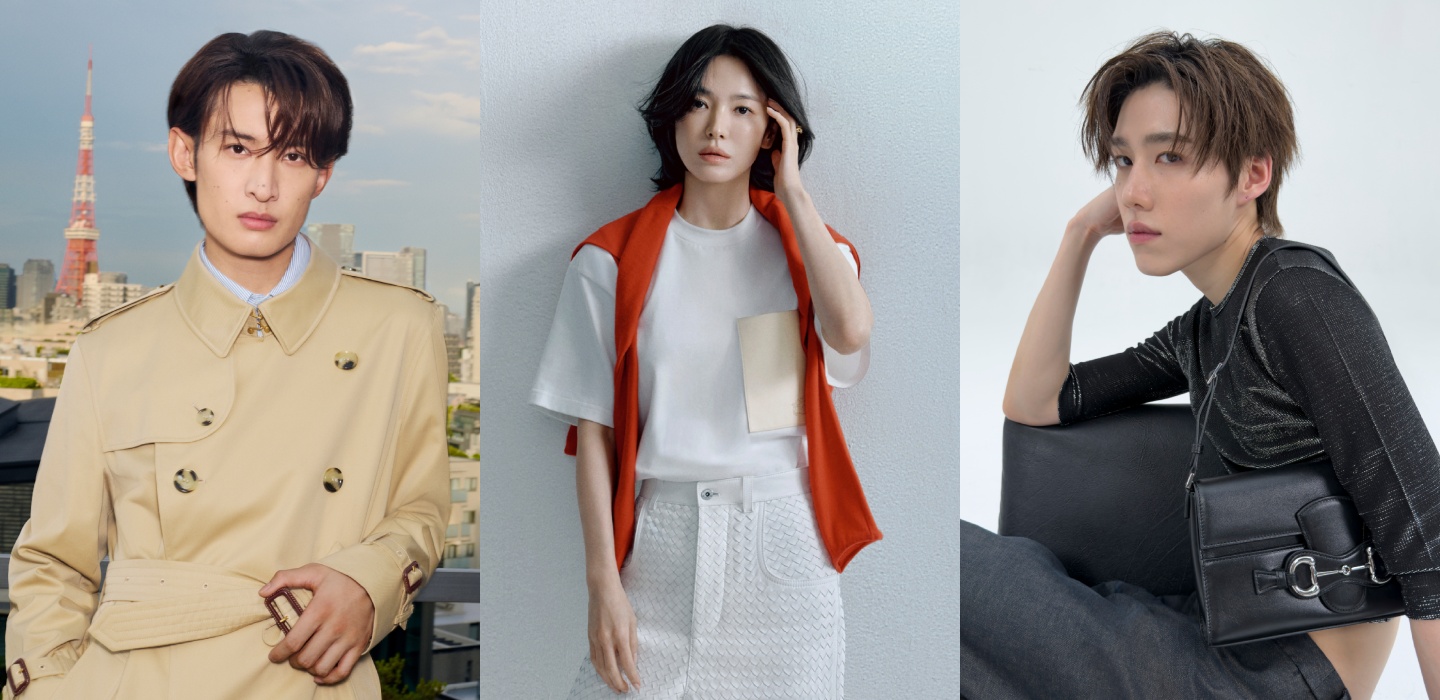
Luxury’s newest ambassadors are increasingly coming from Asia — and September 2026 made that difficult to overlook. Within weeks, Song Hye-kyo joined Bottega Veneta as Global Ambassador, Phuwin Tangsakyuen became a LOEWE Brand Ambassador and Koji Mukai joined Burberry. Soobin of TOMORROW X TOGETHER (TXT) became Dolce & Gabbana’s new Global Ambassador for fashion and beauty, while Gucci welcomed Thailand’s PP Krit and Chinese actress Tian Xi Wei. Prada appointed Namtan Tipnaree, and Bvlgari added aespa’s Ningning to its roster.
The announcements follow a year in which Jung Kook became a Global Brand Ambassador for Hublot before joining Graff, Yang Zi became Pomellato’s Global Brand Ambassador, Shin Min-a joined OMEGA and Go Youn Jung became an ambassador for Tiffany & Co.
Read more: Luxury’s New Global Faces: The Latest Maison Ambassadors
Beyond the individual appointments, the collective momentum signals a broader shift in how luxury maisons chooses and defines global influence. The luxury world is no longer looking to Asia simply for consumers. It is increasingly looking to Asia for the personalities through which it presents itself to the world.
Follow the Attention
The shift is supported by more than celebrity headlines. Data from influencer-marketing platform Lefty shows how dramatically the geography of fashion influence is changing. During the Autumn/Winter 2026 fashion season, Asian personalities were among the strongest generators of digital visibility, with Thai and Korean talent proving especially powerful in converting fashion-week appearances into online attention.
The underlying business logic is straightforward: luxury follows attention, and attention has become increasingly globalised. The ambassador once functioned primarily as a recognisable face attached to advertising. Today, the right personality brings an entire cultural network — followers, fan communities, social amplification, fashion-week visibility and sustained conversation that can continue long after a campaign image has disappeared.
The shift is becoming increasingly important as luxury consumers expect more than status and recognition from the brands they choose. McKinsey’s 2026 research of more than 2,000 luxury clients in China and the United States found that emotional connection has overtaken traditional markers such as heritage, craftsmanship and exclusivity as a leading driver of brand desirability. Consumers increasingly want brands that reflect identity and aspiration rather than merely communicate status.
In this evolved environment, an ambassador capable of creating genuine emotional engagement becomes far more valuable than conventional fame alone.
From Asian Ambassador to Global Ambassador
There is another important distinction in the appointments themselves: the increasing use of the word global. Soobin is not representing Dolce & Gabbana only in South Korea. The maison explicitly appointed him Global Ambassador in September, describing the relationship as one built around creativity, authenticity and individual expression.
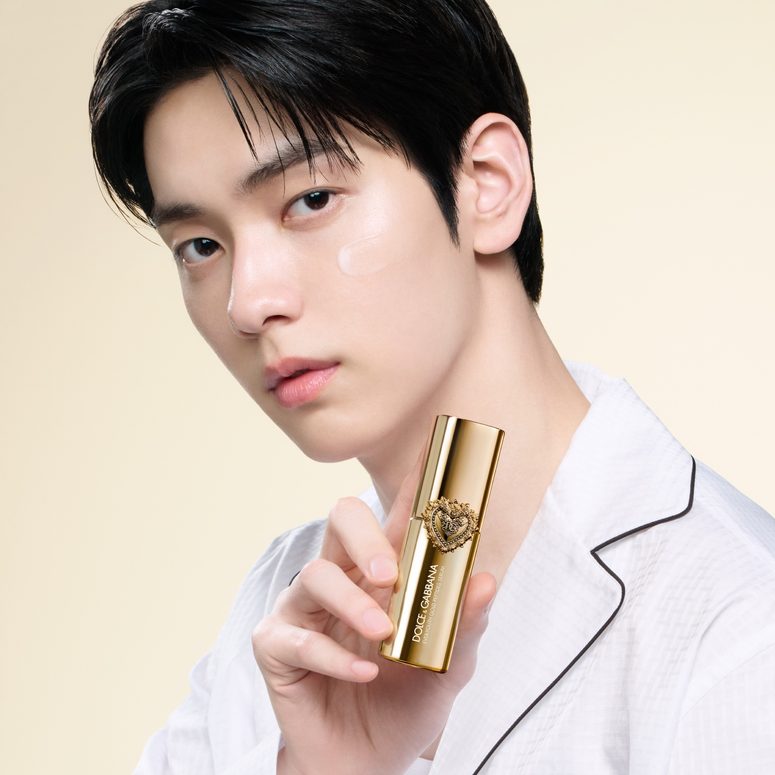
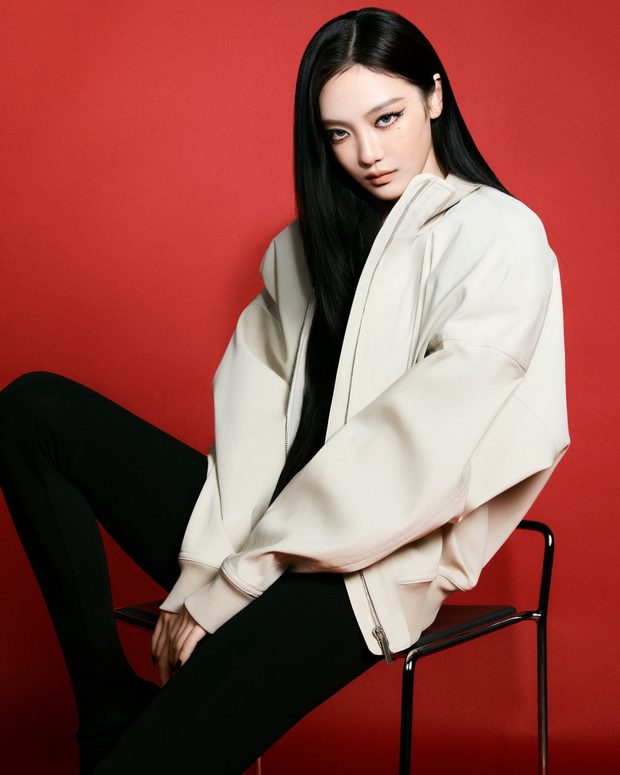
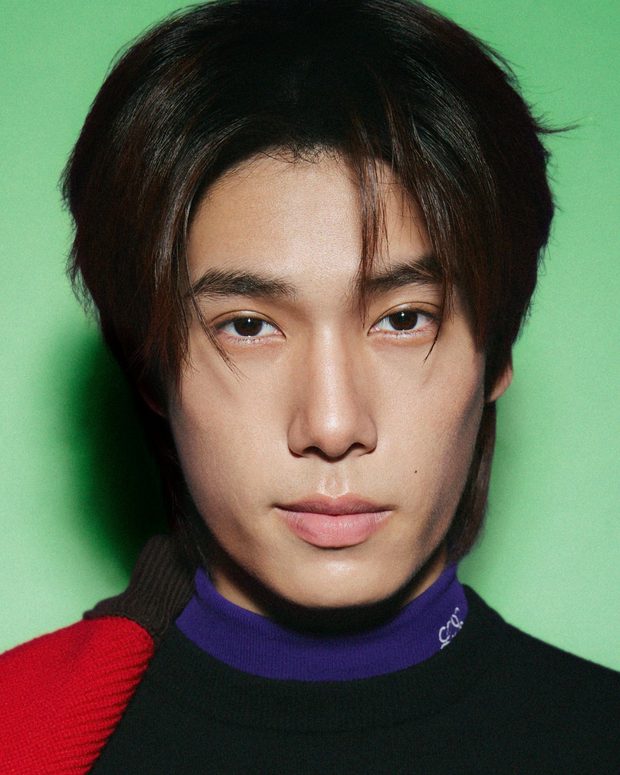
Soobin of TOMORROW X TOGETHER (TXT) for the Dolce & Gabbana’s latest beauty campaign and aespa’s Ningning for Gucci. Images courtesy of Dolce & Gabbana and Gucci.
Jung Kook’s Hublot appointment is similarly international. When the Swiss watchmaker named him Global Brand Ambassador in February, it framed the partnership around two worlds — music and watchmaking — capable of crossing cultural boundaries.
Even more telling is how frequently individual personalities now operate across luxury categories. Jung Kook’s relationship with Hublot is complemented by Graff in high jewellery. Ningning represents Gucci while also entering Bvlgari’s jewellery universe. These are no longer stars being deployed only to translate European luxury for domestic Asian consumers.
They increasingly represent luxury itself. That marks a significant evolution in an industry whose international imagery was historically dominated by Hollywood actors, European models and a relatively narrow group of Western musicians.
Hollywood has not disappeared. It simply no longer possesses a monopoly on global aspiration.
Asia Is Not One Cultural Market
Reducing the change to the rise of K-pop would also miss a more interesting development. South Korea remains enormously influential, from Jung Kook and Soobin to Song Hye-kyo, Shin Min-a and Go Youn Jung. But the 2026 appointments demonstrate that luxury’s Asian ambassador strategy is becoming increasingly diverse.
China offers Yang Zi, Tian Xi Wei and Ningning, personalities whose influence spans television, music and fashion.
Thailand has become particularly significant. PP Krit, Phuwin Tangsakyuen and Namtan Tipnaree reflect an entertainment industry whose actors command highly organised international communities extending well beyond Southeast Asia.
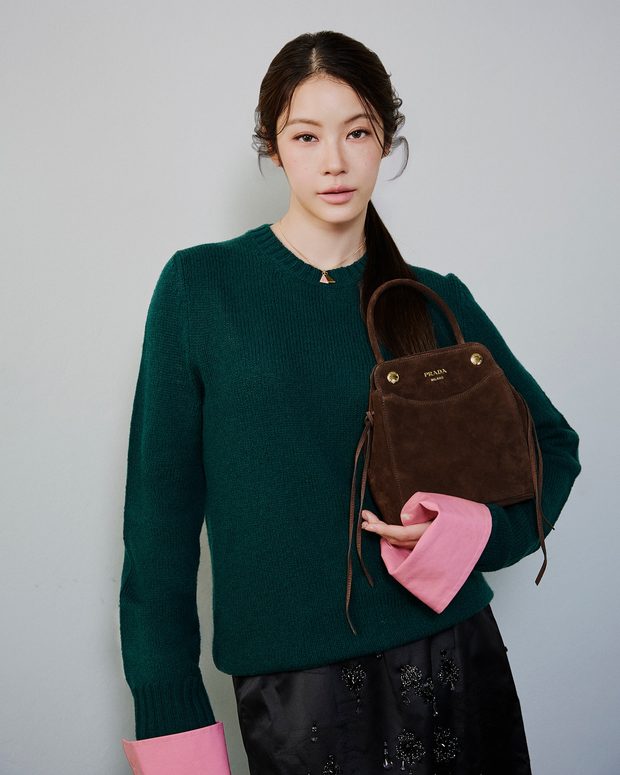
Namtan Tipnaree and Phuwin Tangsakyuen join Prada and LOEWE respectively as their brand ambassador. Images courtesy of Prada and LOEWE.
Japan operates differently again. Burberry’s appointment of Koji Mukai sits alongside the international reach of athletes such as Shohei Ohtani, whose longstanding relationship with Seiko expanded into a global ambassadorship in April 2026. Grand Seiko separately established a global partnership with him through its Grand Moments Project.
The significance lies precisely in that variety. There is no single “Asian luxury consumer”, just as there is no single form of Asian celebrity. Music, cinema, television, sport and digital fandom create different routes towards international relevance.
Why Fandom Matters to Luxury Today
For maisons, those communities offer something traditional advertising struggles to manufacture: participation. A devoted fan does not simply encounter an ambassador campaign. They discuss it, translate it, circulate images from it, follow the celebrity to fashion shows and often learn the history of the maison through that relationship.
Luxury once depended heavily on distance. Its greatest houses cultivated mystique precisely by remaining difficult to access. Modern fandom works almost in reverse. It thrives on frequency, intimacy and the feeling of knowing a personality. Unexpectedly, those opposing forces can complement each other.
The ambassador can remain continuously visible while the object remains scarce. Millions may watch Jung Kook wear a Graff jewel or Hublot watch without making either product commonplace. The celebrity democratises attention, not necessarily ownership. That distinction helps explain why global fandom has become so valuable to luxury.
When Every Maison Has an Ambassador
There is nevertheless a danger in the sheer volume of appointments. Celebrity partnerships become less meaningful when audiences struggle to remember which person represents which house. An ambassador connected simultaneously to too many unrelated brands can also weaken the sense that any individual partnership represents genuine affinity.
Luxury cannot build an icon through visibility alone. The strongest relationships develop when there is a believable correspondence between personality and maison — whether through style, values, creative discipline or a relationship cultivated over several years.
Soobin’s appointment, for example, follows an existing relationship with Dolce&Gabbana rather than appearing as an isolated contract. Ohtani’s move into a global role with Seiko follows a decade-long association with the watchmaker. Such continuity is key because recognition is not the same as cultural permanence.
From Celebrity to Cultural Icon
Hollywood remains relevant. So do established European actors, athletes and musicians. In the past, there is the assumption that global aspiration must originate from a small number of traditional cultural capitals. This principle may no longer applies today.
Luxury is moving towards a more multipolar landscape. Seoul, Bangkok, Shanghai, Tokyo and other Asian centres are producing personalities capable of generating attention, loyalty and cultural relevance far beyond their domestic markets. For maisons, the opportunity is therefore larger than appointing another recognisable face. The strongest partnerships can introduce heritage brands to new audiences while allowing those brands to participate meaningfully in contemporary culture.
That is ultimately what separates visibility from lasting influence. The most successful ambassadors do more than generate attention around a campaign; over time, they can become closely associated with the values, aesthetics and identity of the maison itself. The rise of Asian ambassadors signals not the end of an old luxury order, but the expansion of it — towards a landscape where icons can emerge from anywhere and resonate everywhere.
For more on the latest in luxury fashion and style reads, click here.
The post The New Global Face of Luxury is Increasingly Asian appeared first on LUXUO.
from LUXUO

No comments:
Post a Comment